
Free Estimate
888-698-1958
Call for Priority Scheduling
888-698-1958
Call for Priority Scheduling
Book Online
Basement waterproofing in Dunlap, TN helps protect homes from groundwater pressure, heavy rainfall, and clay-rich soil conditions that can lead to moisture intrusion. Learn how interior drainage systems, sump pumps, and vapor barriers work together to keep basements dry and healthy.





Basement Waterproofing in Dunlap, TN
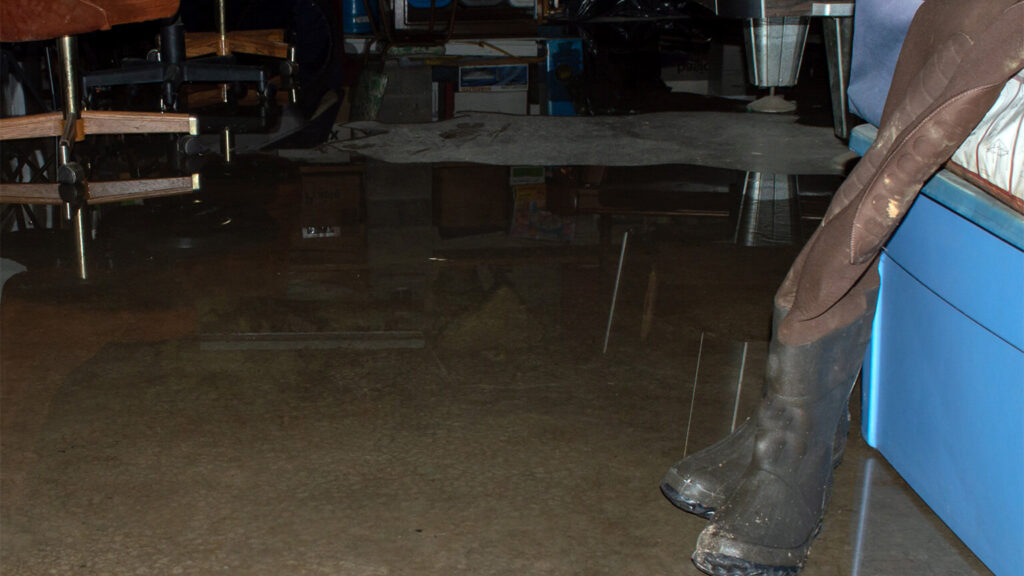
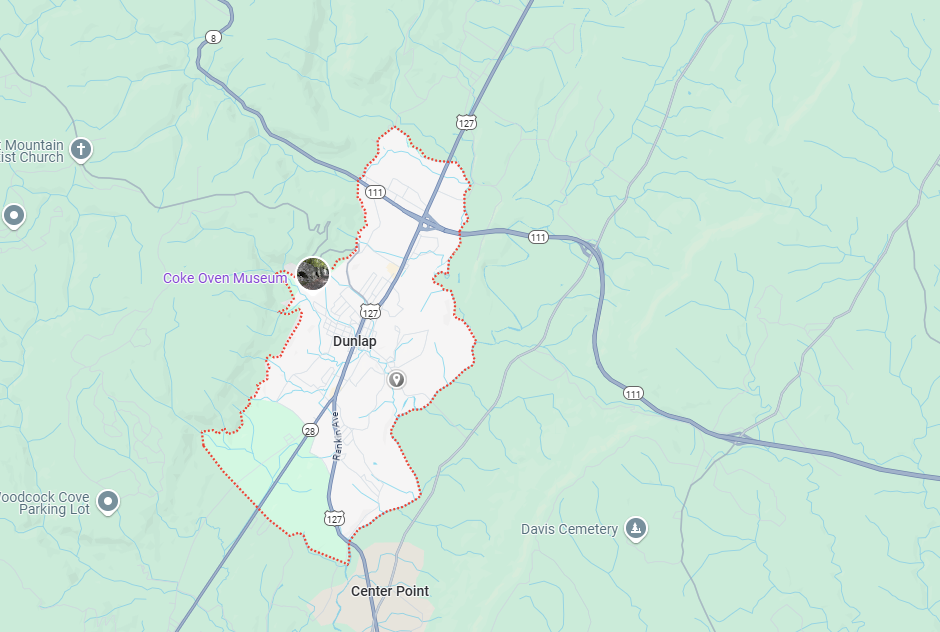
Dunlap sits at the bottom of one of the narrowest valleys in Tennessee. The Cumberland Plateau rises over a thousand feet above the valley floor to the west, and Walden Ridge climbs nearly as steeply to the east. When it rains, water moves off those escarpments and toward the center of the valley, where most of Dunlap's homes are built. Basements here deal with seepage, standing water, mold, and walls that show the effects of years of ground pressure, and those problems tend to compound the longer they go unaddressed.
'58 Foundations & Waterproofing has been doing this work since 1958. Our Certified Foundation Specialists handle everything from interior drainage and sump pump systems to vapor barriers and humidity control, and every inspection comes free with a written estimate.
The Sequatchie Valley is only three to five miles wide at most points, and Dunlap sits near its center. The plateau escarpments on both sides channel stormwater toward the valley floor with little to slow it down. By the time that runoff reaches the flat ground where homes are built, the soil is already working to absorb more than it can handle quickly.
The valley floor soils compound that problem. The black alluvial soil that makes this area so fertile for farming has a clay subsoil that drains slowly and holds moisture for extended periods after a storm. That sustained saturation keeps hydrostatic pressure against foundation walls long after the rain has stopped. When the soil eventually dries out, it contracts, opening small gaps at the foundation perimeter that the next rain fills immediately.
The Sequatchie River runs along the southeastern edge of the city, and its presence raises the water table in low-lying areas during wet periods. Homes closer to the river or on the lower sections of the valley floor feel that influence most directly, but the narrow geography means few properties in Dunlap are entirely removed from it.
Water on the floor after heavy rain is hard to ignore. Most of what we see on inspections is subtler than that, things that have been present long enough to become familiar. A smell, a stain, a patch of wall that never looks quite dry. Here is what those signs actually mean.
Orange or brown discoloration spreading from a bolt head, pipe bracket, or metal column base is a record of how long moisture has been present. Metal doesn't streak and stain from a single wet event. If you're seeing it in more than one spot, or if a stain you painted over has come back through, water has been finding its way there regularly. Learn more about rust stains in the basement.
Run your hand along the bottom foot of any finished wall in the basement. Material that has been absorbing moisture feels different than dry drywall. It gives slightly under pressure, the surface may feel cool and dense, and the paint above it often shows fine horizontal cracking or has begun to separate from the paper face. What you feel on the outside typically understates what's happened inside the wall. Learn more about water-damaged drywall.
Not all water stains look the same. Some are a faint gray shadow on a concrete floor that only darkens after rain. Others are a yellowish ring where water pooled and evaporated, or a white outline on a wall where minerals were left behind. The common thread is that they reappear in the same location. Learn more about water stains in the basement.
In Dunlap's humid valley summers, a wet basement is an open invitation. Termites follow moisture into wood framing, floor joists, and structural members near the foundation. What they leave behind includes hollow-sounding wood, narrow mud tubes running up masonry surfaces, and small accumulations of debris near wood that look like fine sand rather than dust. Learn more about termite damage.
The fuzzy or powdery growth people expect to see is often not the first sign. Before visible mold appears, cardboard boxes stored against the wall may show dark staining on their bottoms, wood shelving may feel slightly tacky, and the smell of something organic and damp arrives without an obvious source. By the time mold is clearly visible on a wall surface, it has usually been established elsewhere in the space for some time. Learn more about basement mold.
Efflorescence is the white or chalky powder that accumulates on concrete or block walls when water passes through the material and leaves dissolved minerals behind on the surface as it evaporates. It is not structural damage on its own, but it is direct evidence that water is moving through the wall on a recurring basis. Learn more about efflorescence.
In the Sequatchie Valley, where humidity stays elevated through much of the year, basement odors can be easy to dismiss as just how things smell down there. They aren't. That smell is produced by mold and mildew growing in damp materials, and it indicates an active moisture problem even when the floor looks dry. Learn more about musty odors in the basement.
Some cracks are dry and stable. Others tell a different story. A vertical crack with white mineral streaking running down from it has carried water. A crack that develops a dark, damp border within hours of heavy rain is under pressure from saturated soil outside. The difference matters because one is a monitoring situation and the other needs attention. Learn more about leaking basement cracks.
The clay subsoil beneath the Sequatchie Valley floor expands when wet and contracts when dry, applying that force against foundation walls and slabs season after season. A floor crack with mismatched edges, a stair-step crack running along mortar joints in a block wall, or a crack that has visibly widened since you first noticed it are all signs of that cumulative movement. Learn more about basement floor and wall cracks.
We've been waterproofing basements in this part of Tennessee since 1958, and the work we do in Dunlap reflects what this valley actually demands. What we install is determined by the inspection, not a preset menu. These are the services we provide most often here.
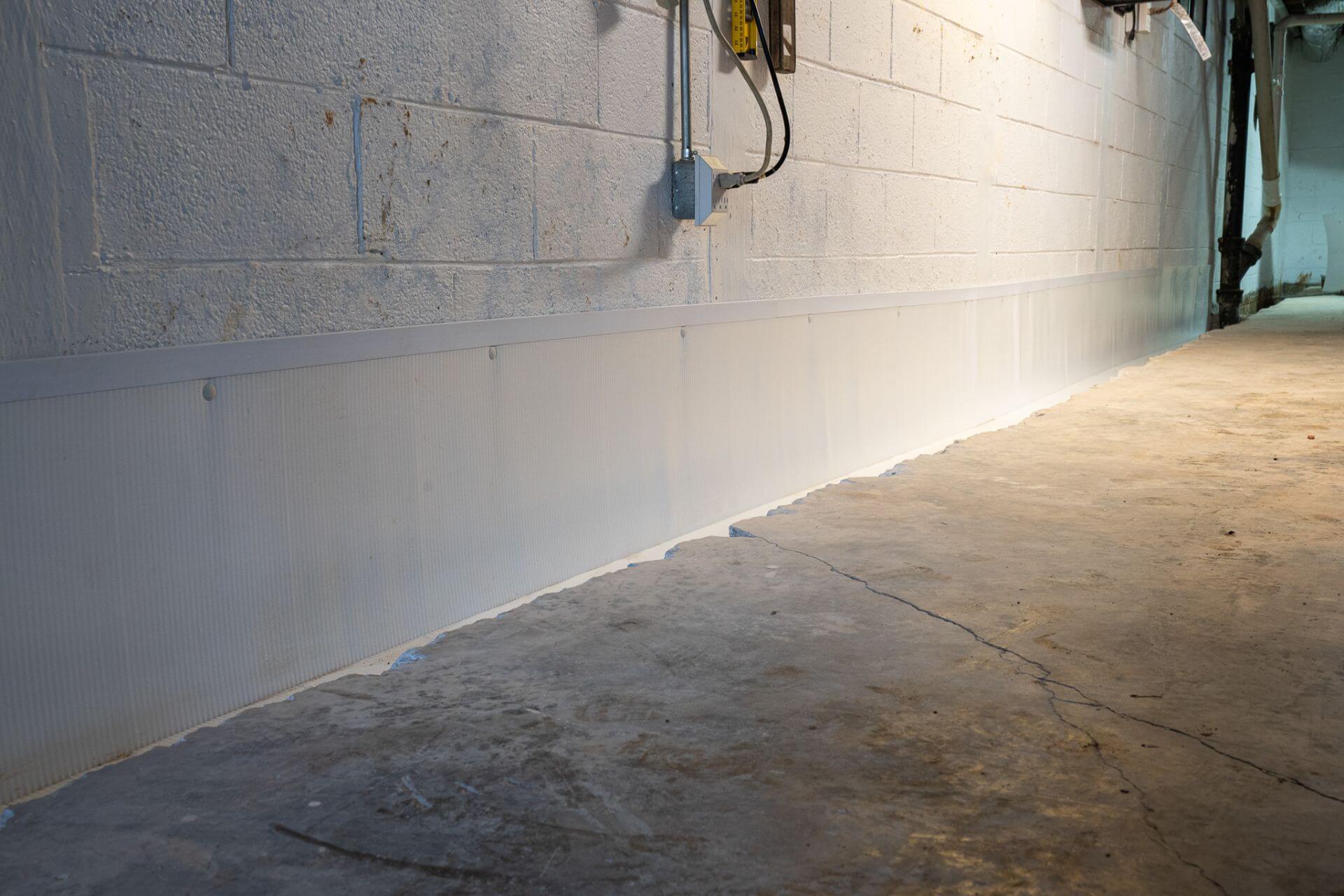
Water that gets past a foundation wall needs somewhere to go before it reaches the floor drain or spreads across the slab. Channel 58 interior drainage is installed at the base of the foundation perimeter, collecting what comes in and moving it to the sump pit before it becomes standing water.
The sump pump is what empties the pit and sends water away from the structure. The Workhorse OT battery backup ensures the pump keeps running when the power goes out, which in a rural area like Dunlap tends to happen during the same storms driving water into the basement.
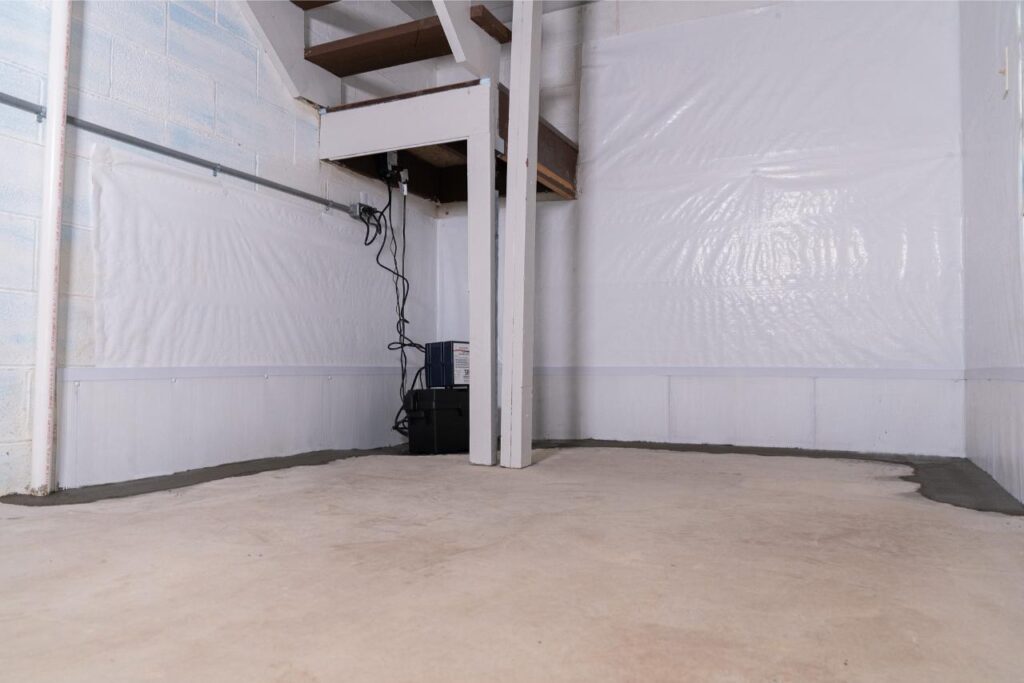
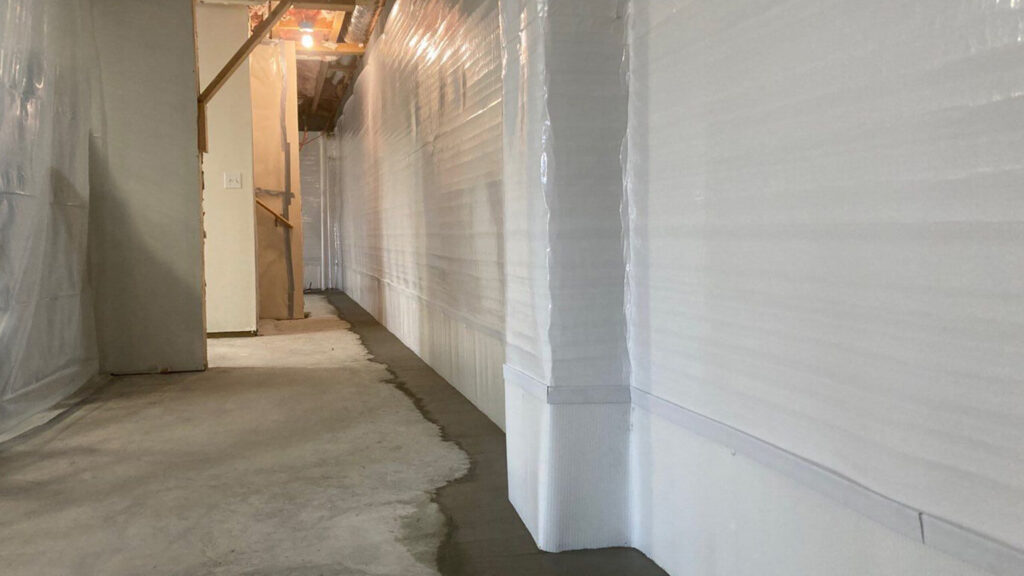
Not all moisture enters as a visible leak. Vapor barriers and wall membranes applied to interior foundation walls stop moisture transmission through the wall material itself and channel anything that does come through into the drainage system below.
After active water intrusion is under control, residual humidity can keep feeding mold growth and odor problems on its own. Our HumidiGuard dehumidifier runs continuously to keep moisture levels in check regardless of what the weather outside is doing.
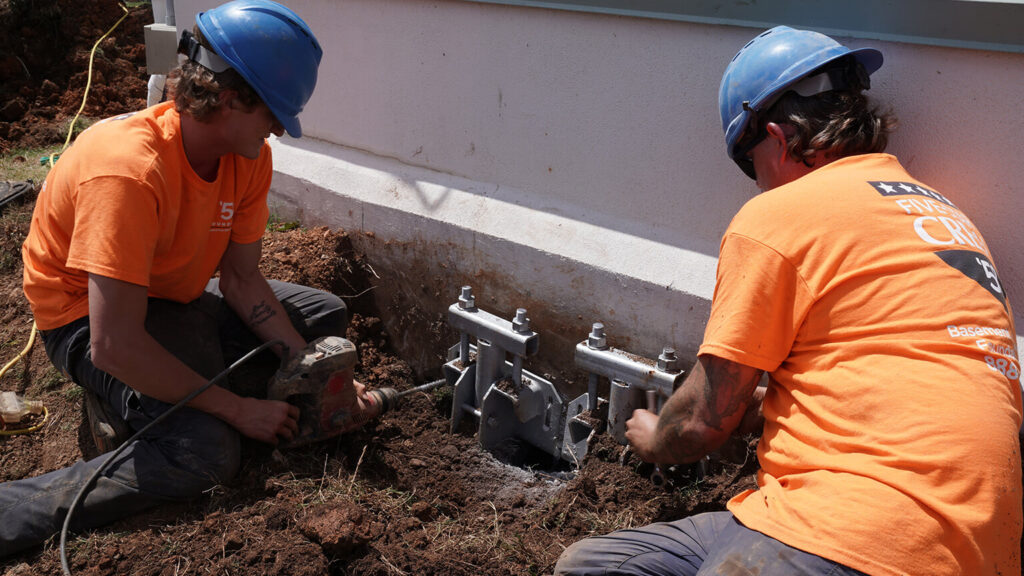
When surface water is moving toward the foundation rather than away from it, the interior system carries more than it should. Exterior drainage intercepts the water before it reaches the wall.
When the inspection finds mold already established in the space, it gets addressed before any waterproofing work begins. We provide professional mold remediation as part of that process.
Our Life-of-the-Structure Warranty backs every system we install. Learn more about our Basement Waterproofing services »
A sump pump has one job: move water out of the pit and away from the home before it backs up. How well it does that job depends on whether it's sized correctly for the space and whether it stays running when it's needed most.
Dunlap sits in a low point between two significant plateau escarpments, and a sustained storm can move a meaningful volume of water through a valley-floor basement in a short period. Our Certified Foundation Specialists size the pump to what the home actually requires based on the drainage configuration and the conditions found during the inspection.
The Workhorse OT battery backup exists for the gap between when the power goes out and when it comes back on. In a rural county like Sequatchie, that gap can stretch for hours, and the storms that cause outages are the same ones putting the most water against the foundation.
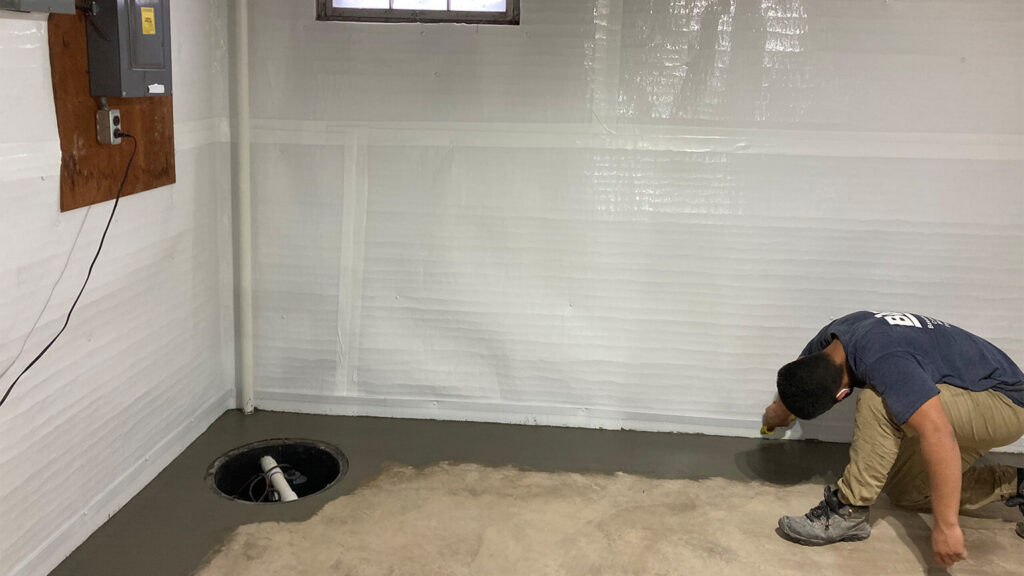
What waterproofing costs in Dunlap depends on what's behind the problem, and that isn't always clear until someone has looked at the space. A basement that smells musty after rain might have vapor pushing through a wall that never fully dries out between storms. One with a wet corner might have a crack under pressure, a grading issue at the surface, or a failed footing drain that worked fine for decades before it didn't. The inspection separates one from another.
Some projects are contained. Others involve the full perimeter. What the Certified Foundation Specialist finds on-site determines the scope.
These are the factors that shape what a waterproofing project involves:
What You Can Expect
'58 Foundations & Waterproofing provides free inspections with written estimates. Your Certified Foundation Specialist will assess the basement, identify what's driving the moisture, and walk you through what the work involves before anything is scheduled.
Finding a contractor willing to work in Sequatchie County isn't the hard part. Finding one who will accurately diagnose what's driving a basement water problem, recommend only what the home actually needs, and install a system that holds up through years of wet seasons is a different matter. That's what we do on every job.
'58 Foundations & Waterproofing has been in business since 1958. Our crews are our own, not subcontractors, and every inspection is carried out by a Certified Foundation Specialist. The BBB has recognized us with the Torch Award for Ethics four times across three regions in three years, and This Old House has cited us as the most experienced company in the industry.
Every system we install is backed by our Life-of-the-Structure Warranty. The work we do is meant to last, and the warranty reflects that.

Mold spreads. Saturated drywall doesn't dry out and recover. A crack that lets water through this season will let more through the next. Whatever is happening in your basement right now is not going to resolve on its own, and the longer it continues the more of the home it affects.
'58 Foundations & Waterproofing offers free inspections with written estimates in Dunlap and throughout Sequatchie County. A Certified Foundation Specialist will assess your basement, identify what's driving the problem, and give you a straight answer about what it will take to fix it.
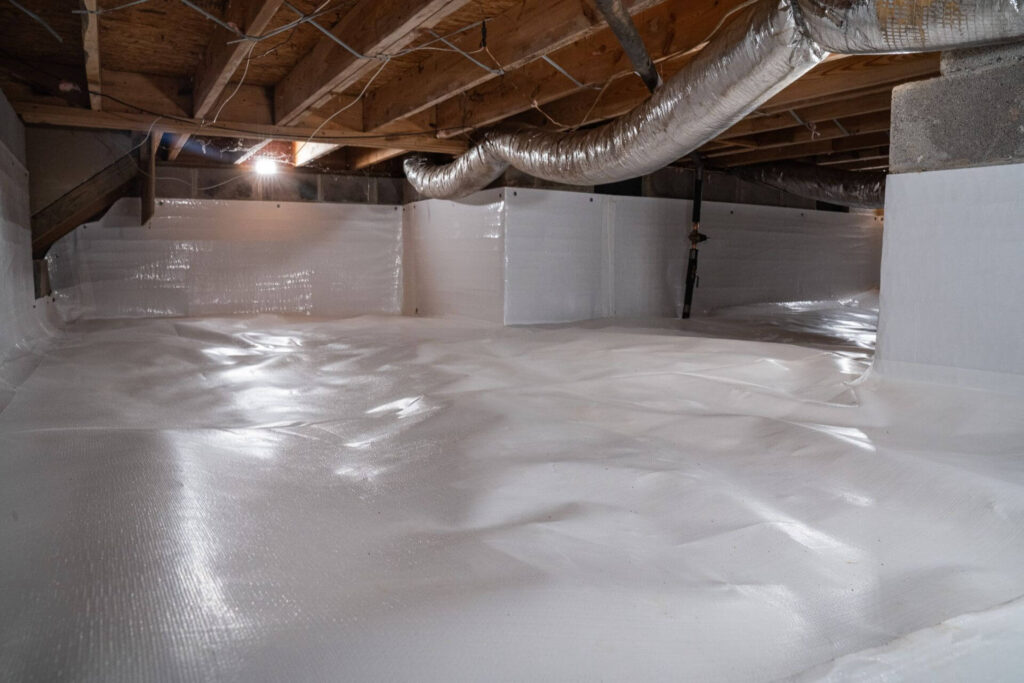
Dunlap Crawl Space Encapsulation
We respect your privacy. By submitting, you authorize '58 Foundations and Waterproofing to reach you via call, email or text for information about your project needs. We will never share your personal information with third parties for marketing purposes. You can opt out at any time. Message/data rates may apply. Consent is not a condition of purchase. Privacy Policy