
Free Estimate
888-698-1958
Call for Priority Scheduling
888-698-1958
Call for Priority Scheduling
Book Online
Keep your Washington, DC basement dry and protected with waterproofing from '58 Foundations & Waterproofing. Our professional team eliminates leaks and moisture, helping your home stay comfortable, healthy, and safe all year.
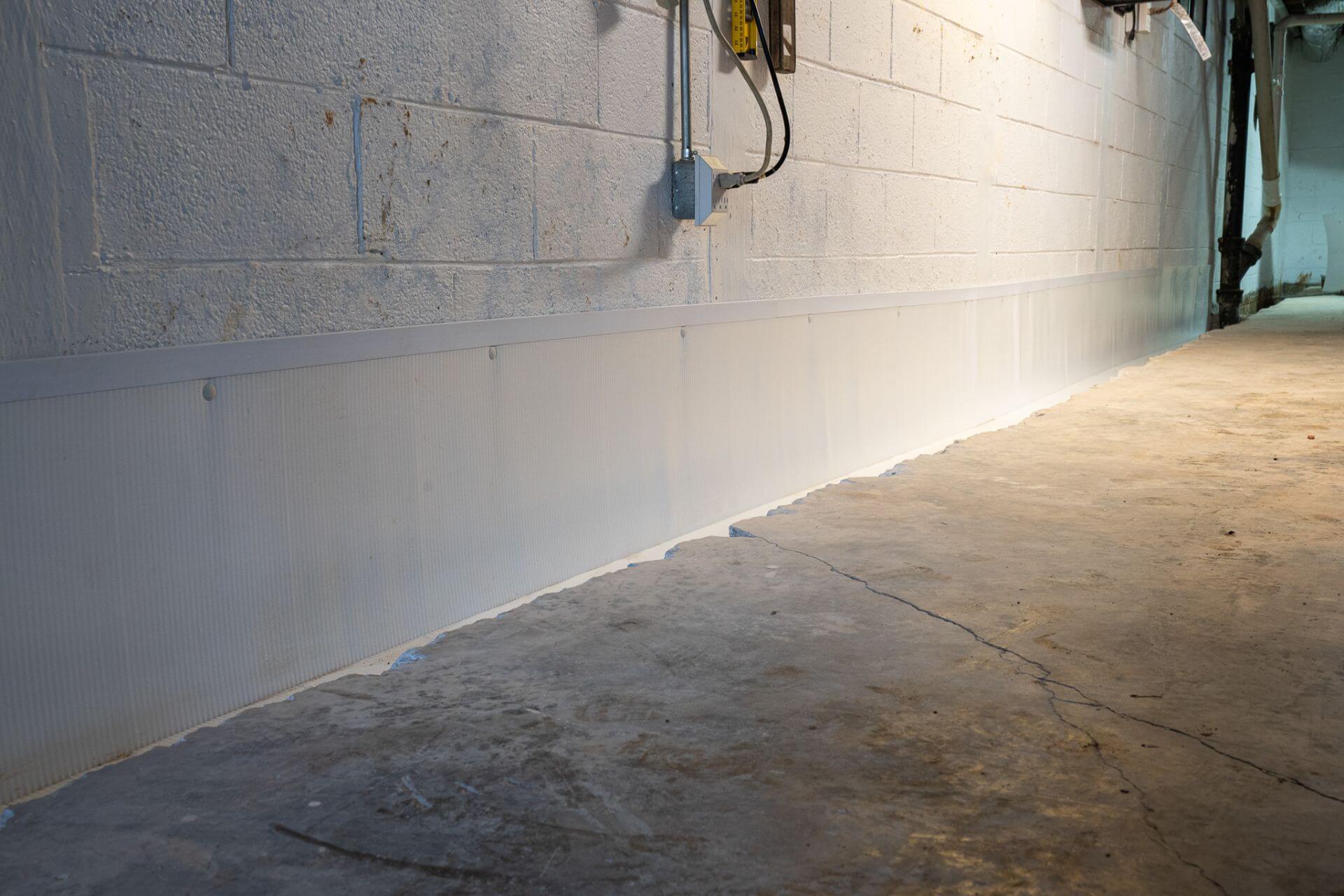




In Washington, DC, it does not take a major flood for a basement to feel wet. After a stretch of heavy rain or a line of fast summer storms, many homeowners start to see water along the base of the walls, damp spots on the floor, or paint and drywall that are bubbling and peeling near the foundation. Boxes stored on the concrete stay damp, and that musty basement smell hangs in the air even when everything looks clean. That is moisture working its way into the space and staying there.
Across the District, clay-rich soils, older masonry foundations, and overloaded drainage systems all make it easier for water to reach your basement. When the ground around your home stays saturated, water can move through cracks, gaps around pipes, and porous concrete. Over time, it can stain walls and floors, rust appliances and stored belongings, and create the kind of humid environment where mold can grow behind finishes. A basement you hoped to use for storage or living space starts to feel like a risk every time the forecast calls for more rain.
Homeowners across Washington, DC turn to ’58 Foundations & Waterproofing when they need a basement waterproofing company they can trust. Our foundation repair contractors look at how water is getting into your basement, explain what is happening in plain language, and design a basement waterproofing system that fits your home and budget. When you schedule a free inspection, you will know what is causing the moisture, what it will cost to repair, and how to keep your basement drier and more usable in the years ahead.

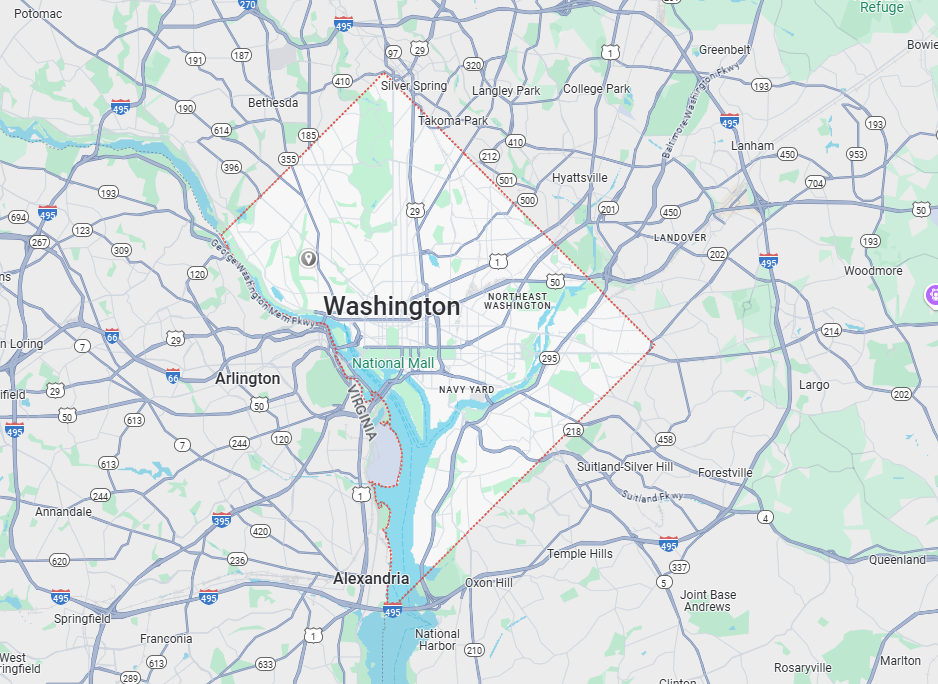
Washington, DC sits between the Potomac and Anacostia rivers, with a lot of neighborhoods built on hills, filled-in low areas, and older streets that move water quickly. When a summer storm stalls over the city, or when winter snow and ice start to melt, a large amount of runoff is pushed toward storm drains, alleys, and backyards in a short amount of time. In places like Bloomingdale, LeDroit Park, parts of Capitol Hill, and areas closer to Rock Creek or the rivers, that can mean water collecting around foundations long after the rain has stopped. Basements that are already below street level are simply in the path of that water.
Under many of these homes is clay-rich soil. Those clays soak up water and swell when they are wet, then shrink and crack as they dry out. That constant movement puts extra pressure on basement walls and can open small gaps around the footing, along cracks, and where pipes or utility lines pass through. In some parts of the region, the clay is soft and highly plastic, so it holds moisture for a long time and keeps the soil around the foundation saturated. When that happens, water is pushed against the concrete or block and has more time to find a way inside.
The way Washington, DC housing was built adds to the problem. Many basements sit under older brick rowhomes and townhouses that were never designed as finished living spaces. Over the years, sidewalks, patios, and rear additions have been poured or built right up against the exterior walls. Downspouts may still empty near the foundation, and some blocks rely on aging combined sewer and storm systems that can back up during heavy rain. In English basements and garden-level apartments, living space is partly below the sidewalk or street, so any water that pools outside is already above the level of the interior floor. Put together, those local conditions are why so many Washington, DC homeowners end up needing real basement waterproofing instead of short-term patches.
Basement problems in Washington, DC all have signs that you may be overlooking. After a few storms, the same corners stay damp, the air never feels fully dry, and things stored on the floor develop water and mold stains. Catching these early signs can help you address the problem before it turns into real water damage and a more expensive repair.
Musty smells after rain.
A lingering musty or earthy smell in the basement, especially after storms, is often the first sign that moisture is getting into the space. In DC’s climate, even slow seepage through walls or the slab can keep surfaces damp long enough for mildew and mold to start on hidden areas behind storage or finishes.
Heavy, humid air in the basement.
If the basement feels muggy or “sticky,” or you see basement windows fogging up while the rest of the house feels normal, moisture is likely entering through the walls, floor, or foundation seams. That extra humidity can spread to upper floors, making the whole home feel less comfortable and harder to keep cool.
Discoloration or staining on walls and floors.
Brown, yellow, or rust-colored streaks on concrete, along with dark patches that keep reappearing on the floor or lower walls, are often the marks left behind when water seeps through from the outside. Even if those areas dry between storms, recurring stains point to ongoing water intrusion.
Efflorescence on concrete or block.
A white, powdery film on concrete or block walls is called efflorescence. It forms when water moves through the wall, dissolves minerals inside the masonry, and leaves them behind as it evaporates. Efflorescence means moisture is regularly working through your foundation, even if the surface looks dry when you touch it.
Rust or corrosion on metal surfaces.
Rust at the base of metal shelving, support posts, appliances, or ductwork is another clear sign of a damp basement. Metal begins to corrode when it is exposed to moisture over time, so rust lines or flaking at the bottom of these items usually mean the air and surfaces near the floor are staying wet too often.
Soft or rotting wood near the floor.
Wood trim, sill plates, or framing that looks darkened, feels soft, or shows early signs of rot along the lower few inches has likely been exposed to repeated moisture. In finished English basements and garden-level apartments, this often shows up along exterior walls and around door frames, where water is finding its way in behind the finished surface.
Peeling paint, soft drywall, or warped trim.
When water reaches finished walls, it can cause paint to bubble or peel, drywall to swell or crumble near the floor, and baseboards to bow or pull away. These changes may start in small sections, but they are strong indicators that moisture is trapped behind the wall surface, not just on the outside.
Cracks and leaks during storms.
Hairline cracks in basement walls or floors can widen over time as saturated soil expands and contracts around the foundation. If you see water seeping from these cracks during heavy rain, or notice leaks where the wall meets the floor or around window wells, the basement is under pressure from water outside and needs more than a temporary cleanup.
If your Washington, DC basement is showing several of these signs, it is a good time to have ’58 Foundations & Waterproofing inspect the space and recommend a basement waterproofing solution that addresses the source of the moisture, not just the symptoms.

Basement waterproofing in Washington, DC has to do more than mop up after the latest storm. It needs to deal with clay-heavy soil, older masonry foundations, English basements below street level, and drainage that can overload when the weather turns. ’58 Foundations & Waterproofing designs each system around how water is reaching your basement, whether you are in a brick rowhome near Capitol Hill, a townhouse in Petworth, or a single-family home farther out in the District.
Channel ’58 interior drainage systems.
For many DC basements, the first step is giving water a controlled path to follow. Our Channel ’58 drainage system is installed along the inside edge of the basement floor, below the slab. It is sealed at the floor–wall joint and engineered to capture water coming down the wall, across the floor, and from beneath the slab, then direct it into a sump basin instead of letting it show up along the perimeter during storms. Because it is built to handle high volumes and resist clogging, Channel ’58 is well-suited to the heavy bursts of rain and saturated clay soils that are common around Washington, DC.
Sump pump installation and backup protection.
Once water is collected, it has to be moved safely away from the house. A properly sized sump pump is the workhorse of most basement waterproofing systems in the District. ’58 Foundations & Waterproofing installs sump pumps matched to the amount of water your system will see, then ties them into discharge lines that move water away from the foundation. We can also add a battery backup so the pump keeps working during power outages, when your basement is often under the most stress.
Basement wall membranes and vapor barriers.
In older DC basements with block or brick walls, and in finished English basements, it often makes sense to protect the interior face of the foundation. We install vapor barriers and interior wall systems that help control seepage and condensation, guide moisture into the drainage system, and provide a clean, bright surface. That way, water that tries to work through the wall is managed instead of bleeding into drywall, insulation, or paneling.
Foundation crack repair and sealing.
Basements around Washington, DC frequently take on water through cracks in the walls or slab, gaps around pipes, and other small openings. As part of a basement waterproofing plan, we locate active leak points and seal them with flexible repair materials designed to bond to the concrete or block and expand inside the crack. Addressing these weak spots helps cut off easy paths for water as the soil around your home continues to shift with wet and dry cycles.
Yard and exterior drainage to protect the basement.
Some basements stay wet because the yard holds water against the house. In rowhouse alleys, narrow side yards, or small backyards that slope toward the foundation, heavy rain can pool and keep the soil saturated long after the storm passes. When that is part of the problem, ’58 Foundations & Waterproofing can add exterior drainage systems such as French drains, shallow trench drains, and extended downspout lines to pull surface water away from the home before it reaches the foundation. Managing water in the yard and at the surface makes it easier for your basement waterproofing system to do its job.
Basement humidity control and air quality.
Even when you no longer see standing water, high humidity can keep a Washington, DC basement uncomfortable and hard on your belongings. We install high-capacity dehumidifiers sized for the space and, when appropriate, integrate them with the waterproofing system. Keeping moisture levels in a healthy range helps protect flooring, furniture, stored items, and the air your family breathes throughout the home.
Mold cleanup support.
If your basement has been damp for a long time, there may already be mold growth or damaged materials. As part of a complete solution, we can help you identify what needs to be cleaned of mold, removed, or replaced once the water source is under control. With a properly designed basement waterproofing system in place, your Washington, DC basement is in a much better position to stay dry, usable, and healthier over the long term.
Learn more about our Basement Waterproofing solutions ›
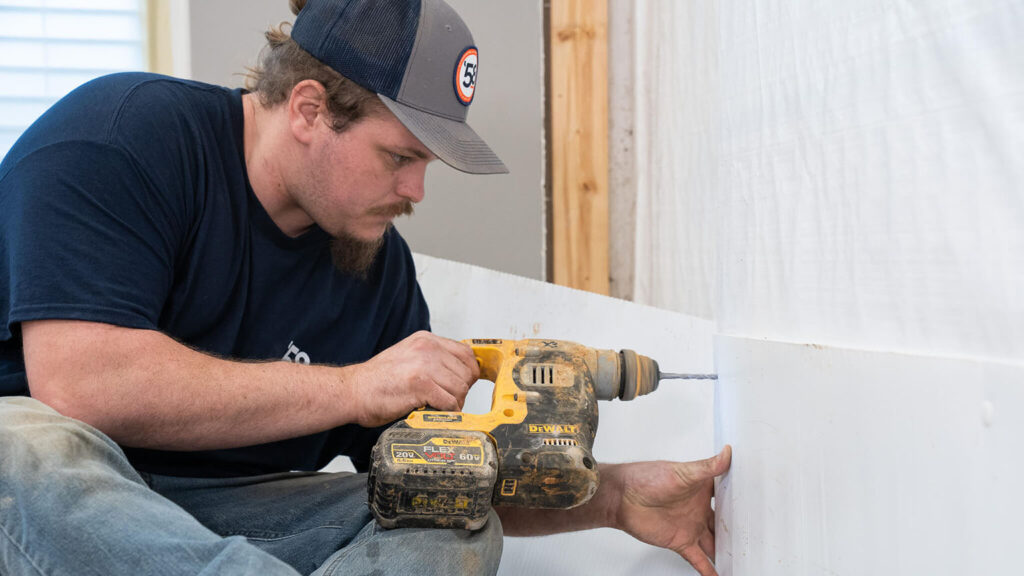
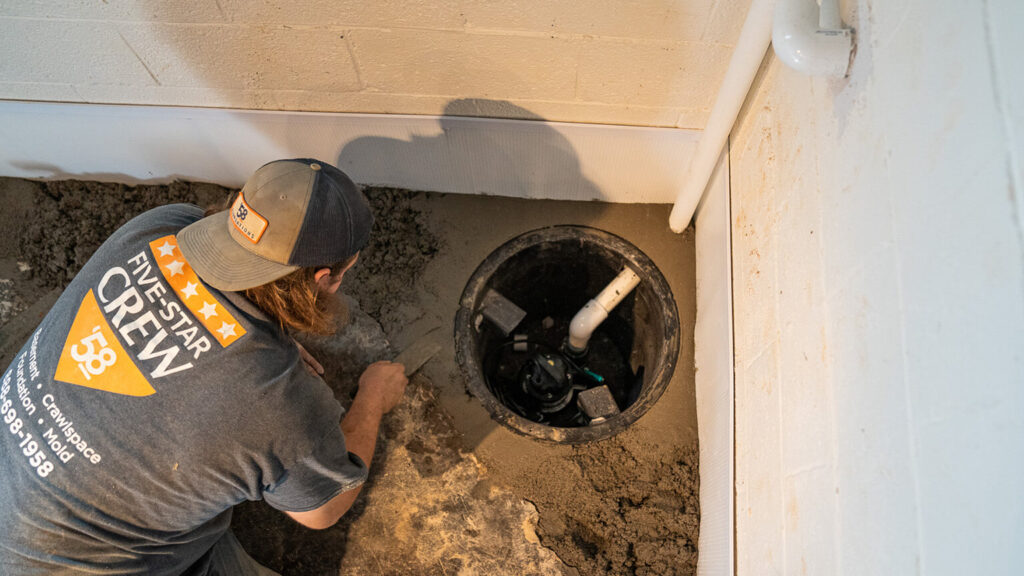
A sump pump system is a core part of protecting a Washington, DC basement from water damage. When storms move through and the clay-rich soil around your home stays saturated, water builds up along the walls and under the slab. Interior drainage and Channel ’58 can collect that water, but it is the sump pump that decides whether it stays under control or ends up on your basement floor.
For homes with basements below street level, older brick rowhouses, or yards that slope toward the back wall, a working sump system often decides whether a storm is just another rainy night or the start of a major cleanup.
A basement sump pump system is built to gather water at the lowest point in the basement and move it away from the foundation before it can cause damage. In a Washington, DC home, a complete system typically includes:
Washington, DC combines clay-heavy soils, aging storm and sewer infrastructure, and intense summer thunderstorms. The soil around many homes holds water long after the rain ends, keeping steady pressure on basement walls. In low-lying blocks, near alleys, or in yards that slope toward the house, that water has even more opportunity to collect against the foundation.
A sump pump system helps relieve that pressure by giving water a controlled path out of your basement. For homeowners, that translates into fewer worries about flooding during storms, better protection for finished spaces and stored belongings, and a basement that feels like part of the home instead of a constant source of stress when the forecast calls for more rain.
Basement waterproofing costs in Washington, DC vary based on how your home was built, how water is entering the basement, and what it will take to control that moisture long term. Basements below sidewalk level, older brick rowhomes, and properties sitting on moisture-retaining clay soil often require more involved drainage and water management than homes built on higher, better-drained lots.
At ’58 Foundations & Waterproofing, pricing is based on a detailed inspection of your basement, not a preset package. We focus on identifying the exact source of the water, explaining the recommended system, and outlining the total investment required to protect your home in a way that makes sense for the District’s conditions.
Factors That Can Affect Waterproofing Cost:
We do not push unnecessary systems or inflate scope. Every recommendation is made by a Certified Foundation Specialist who understands how Washington, DC homes are constructed and how water behaves in this area.
What You Can Expect
We provide free basement inspections throughout Washington, DC. After reviewing your basement and the surrounding drainage conditions, we deliver a clear, written proposal that includes:
There is no obligation and no guesswork, just direct answers from a company experienced in protecting Washington, DC basements from ongoing moisture problems.
When Washington, DC homeowners look for basement waterproofing, they want a company that understands rowhouses, English basements, tight alleys that trap water, and clay soils that hold moisture long after a storm. ’58 Foundations & Waterproofing has been working in these conditions for years, helping homeowners across the District turn damp basements into spaces they can rely on.
When a Certified Foundation Specialist visits your home, they listen to what you have seen, walk the full space with you, and look at how water is actually reaching your basement. You get a clear explanation of the problem, a customized waterproofing plan, and straightforward pricing. There is no pressure to sign on the spot, just information you can use to make a decision.
Our crews are trained to respect your home and schedule. From Capitol Hill and Shaw to Brookland, Petworth, and beyond, we install systems designed for DC weather and soil, not a generic setup borrowed from somewhere else. Many of our basement waterproofing systems qualify for our Lifetime TotalCare Maintenance Program, which includes a lifetime warranty on covered components, money-back protection, product replacement coverage, and ongoing inspections to help keep your basement dry for the long term.

If you are seeing damp spots, musty air, or signs of water in your Washington, DC basement, the next step is a careful look at what is causing it. ’58 Foundations & Waterproofing will send a Certified Foundation Specialist to your home to inspect the basement, check the foundation and yard drainage, and explain what is happening in clear terms. You will see what kind of system our basement waterproofing company recommends, why it fits your home, and what the projected cost will be before any work begins.
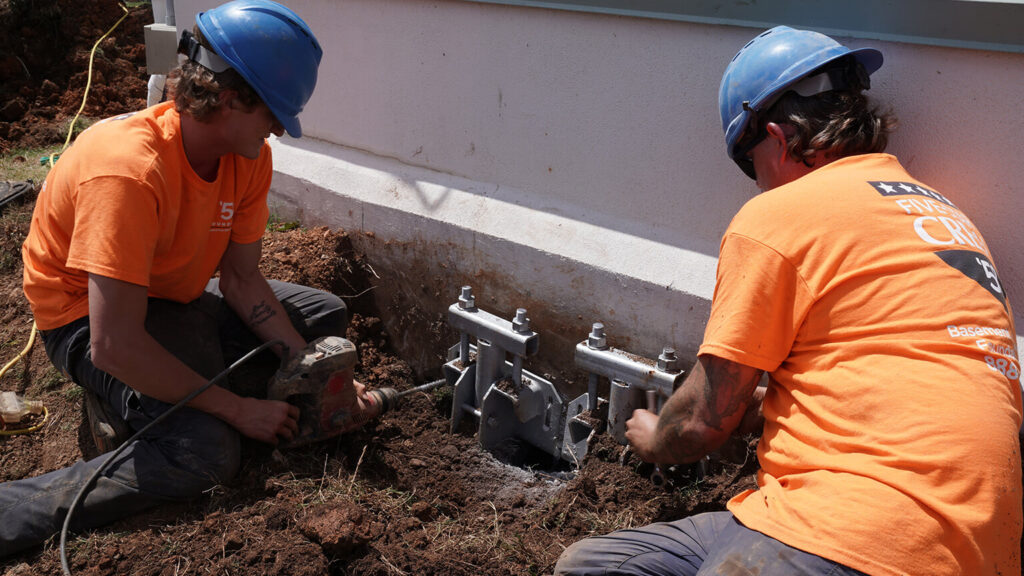
Washington, DC Foundation Repair
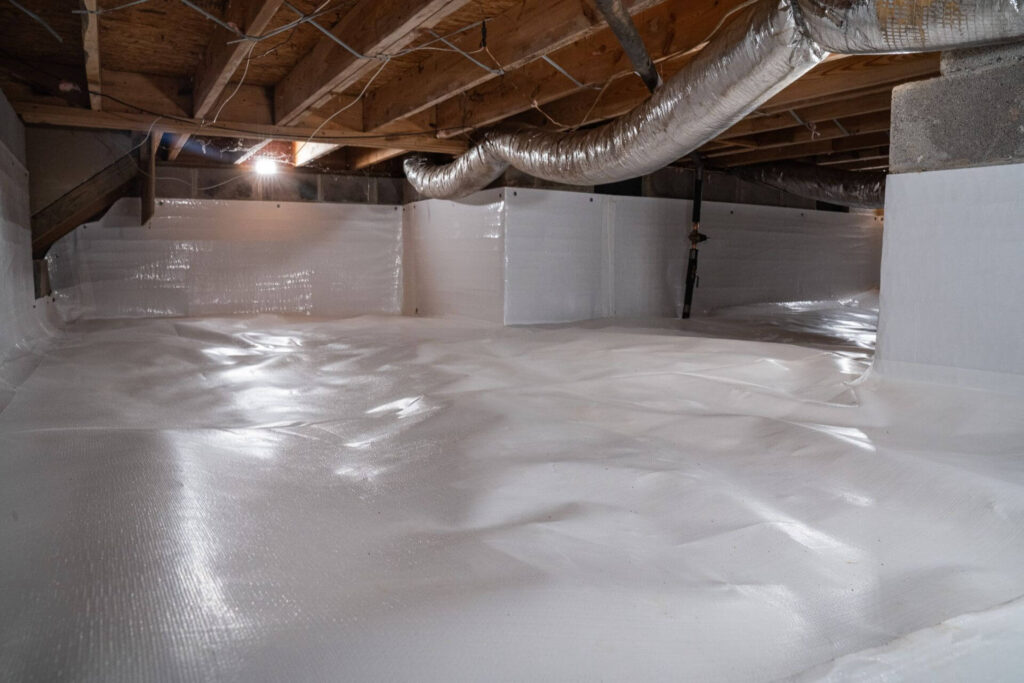
Washington, DC Crawl Space Encapsulation
We respect your privacy. By submitting, you authorize '58 Foundations and Waterproofing to reach you via call, email or text for information about your project needs. We will never share your personal information with third parties for marketing purposes. You can opt out at any time. Message/data rates may apply. Consent is not a condition of purchase. Privacy Policy