
Free Estimate
888-698-1958
Call for Priority Scheduling
888-698-1958
Call for Priority Scheduling
Book Online
Frequent rain and groundwater in Huntingdon County can lead to basement flooding, humidity, and foundation damage. '58 Foundations & Waterproofing provides expert waterproofing services, including sump pump installation, drainage systems, dehumidifiers, and mold remediation.





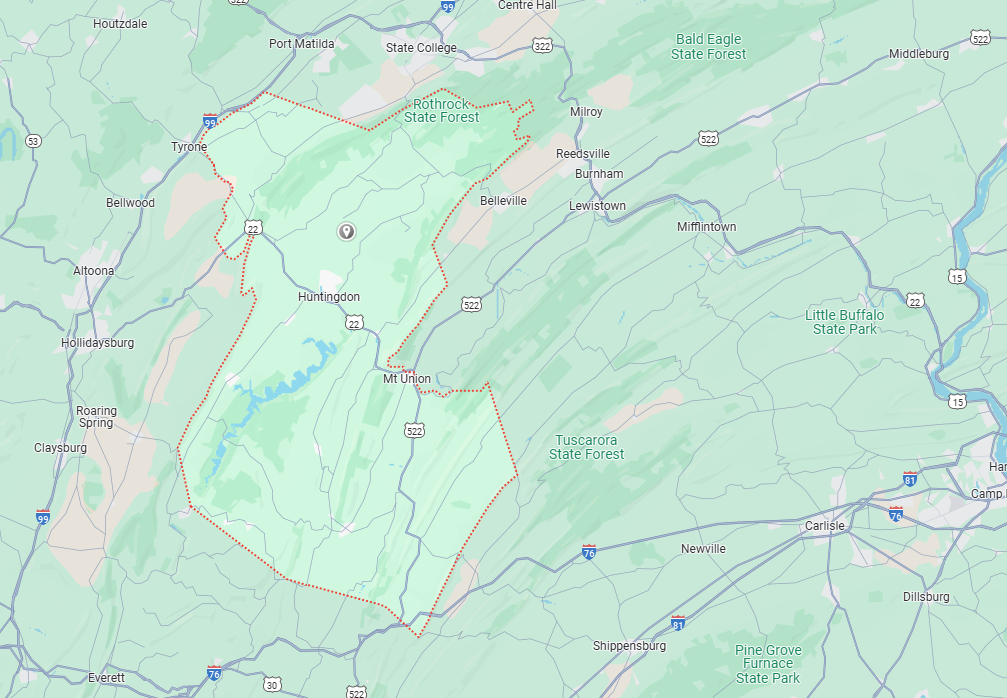
Huntingdon County is defined by its ridges. Steep, parallel Appalachian ridges run the length of the county, and the narrow valleys between them are where most homes sit. When rain falls on those ridges, it moves fast. The forested slopes concentrate runoff into the valley floors, where the Juniata River and its tributaries drain a watershed stretching across more than 800 square miles. That combination of steep terrain above and a major river system running through means basement water problems here are shaped by the landscape in ways that are specific to this county.
'58 Foundations & Waterproofing has been keeping basements dry in central Pennsylvania since 1958. Our Certified Foundation Specialists inspect each home, identify what is driving the moisture, and design a drainage and waterproofing system built for the conditions they find. Every job comes with a written estimate before work begins, and every system we install is backed by a Life-of-the-Structure Warranty. We don't use subcontracted crews. Call us to schedule your free inspection.
The ridges that define Huntingdon County's landscape don't absorb much of the rain that falls on them. Steep slopes shed water quickly, and it reaches the valley floor faster than it would on flatter terrain. Homes in Huntingdon, Petersburg, Orbisonia, and the other boroughs tucked into the county's valleys sit at the base of that drainage pattern. When a significant storm moves through, the soil around foundations here takes on water from above and from the sides simultaneously.
The Juniata River and its tributaries, including Aughwick Creek, Blacklog Creek, and the Raystown Branch, run through or near most of the county's populated areas. When upstream conditions push the Juniata up, groundwater levels in the valley floor rise with it, increasing hydrostatic pressure against foundation walls even on days when no rain has fallen locally.
The valley floors where most homes are built sit on limestone bedrock beneath a layer of soil. Limestone doesn't drain the way sandy or loamy soils do. Water moves through it differently, and the soil above it tends to stay saturated longer after a rain event than homeowners often expect. On a steep-sided rural lot with limited grading, that saturated soil around a foundation can sustain pressure for days after the storm has passed.
Most homeowners don't call about a flooded basement. They call about something they've been watching for months, a stain that keeps coming back, a smell they can't get rid of, or a wall that doesn't look right. These are the things worth acting on.
Rust shows up as orange or brown streaking, usually running vertically down a wall or spreading outward from a metal post, bolt, or pipe fitting. It doesn't scrub off the way dirt does. If you're seeing it in more than one spot, or if a stain you painted over has bled back through, moisture has been present long enough to corrode the metal behind it. Learn more about rust stains in the basement.
The first sign is usually at the very bottom of the wall, where the drywall meets the floor. The paint may be flaking or bubbling in a band along the base, or the corner bead may be pulling away. Press the surface, and it will feel soft rather than solid. Once drywall reaches that point, it doesn't recover, and the damage tends to be more extensive than what is visible from the outside. Learn more about water-damaged drywall.
A water stain can look like a shadow on the wall that wasn't there before, a yellowish patch on the floor near a corner, or a white outline left behind where water evaporated. The shape matters less than the pattern. If it shows up after rain and fades when things dry out, or if it has been getting larger over time, water is finding the same way in repeatedly. Learn more about water stains in the basement.
Tap along the base of wood framing or floor joists. Wood that has been compromised by termites sounds hollow rather than solid. You may also notice small piles of fine material that looks like sawdust near wood surfaces, or pencil-thin mud tubes running up the foundation wall. These are not random. Termites follow moisture, and a damp basement brings them in. Learn more about termite damage.
Mold doesn't always look like the black spotting people expect. It can appear as a fuzzy gray or greenish growth on concrete, a dark stain spreading across stored cardboard boxes, or a powdery discoloration along the base of an unfinished wall. If you can smell something musty but can't see anything obvious, check behind furniture and storage items that have been sitting against the walls. Learn more about basement mold.
A white or light gray powdery coating on concrete or block walls is efflorescence. It looks almost like someone dusted the wall with chalk. It wipes away but returns in the same spot because the water carrying the minerals through the wall hasn't stopped. Learn more about efflorescence.
The smell hits you at the top of the stairs before you reach the basement floor. It's strongest after rain or when the weather has been wet for several days in a row. Air fresheners don't fix it because the source is moisture, not odor, and until the moisture is addressed, the smell keeps coming back. Learn more about musty odors in the basement.
Some cracks leave a white mineral trail down the wall where water has been running and evaporating over time. Others show a damp ring around them after rain. Some drip actively. Any crack that shows signs of water movement through it is under pressure from outside and will continue to let water in until that pressure is relieved. Learn more about leaking basement cracks.
A crack in the floor that has one side slightly raised is worth noting. So is a horizontal crack running across a block wall, or a diagonal crack spreading from the corner of a window opening. These aren't just cosmetic. They tend to grow, and they create pathways for moisture even before they become active leaks. Learn more about floor and wall cracks.

Narrow valley lots, steep surrounding terrain, and a river system that responds to rainfall across a wide watershed all shape what basement water problems look like in Huntingdon County. We assess each home before recommending anything.
On lots hemmed in by ridge slopes, surface water that runs off the hillside above a home has to go somewhere. When it collects against the foundation rather than moving away from it, every significant rain event loads the soil around your basement walls. Exterior drainage redirects that water at the surface before it becomes a foundation problem.
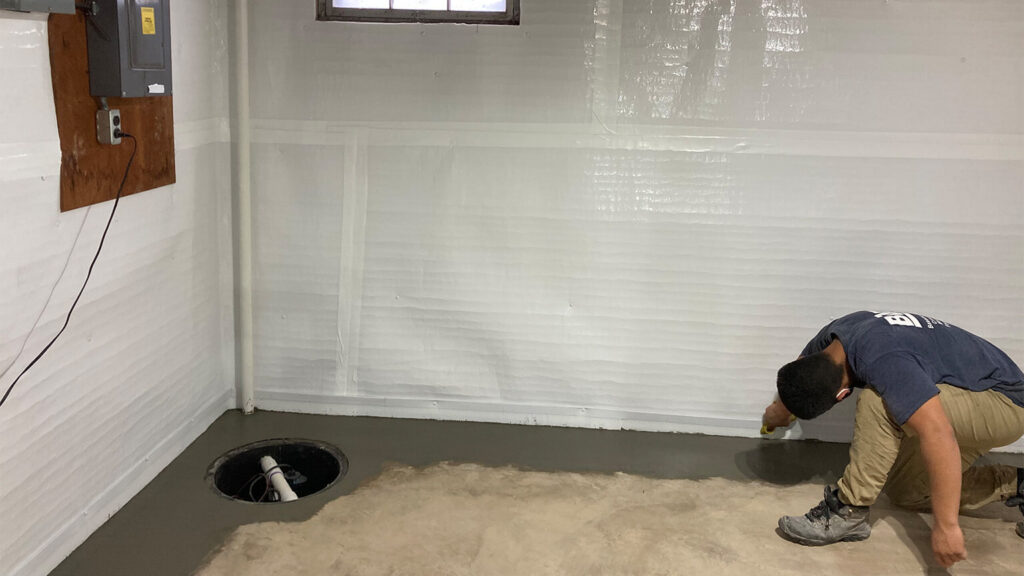
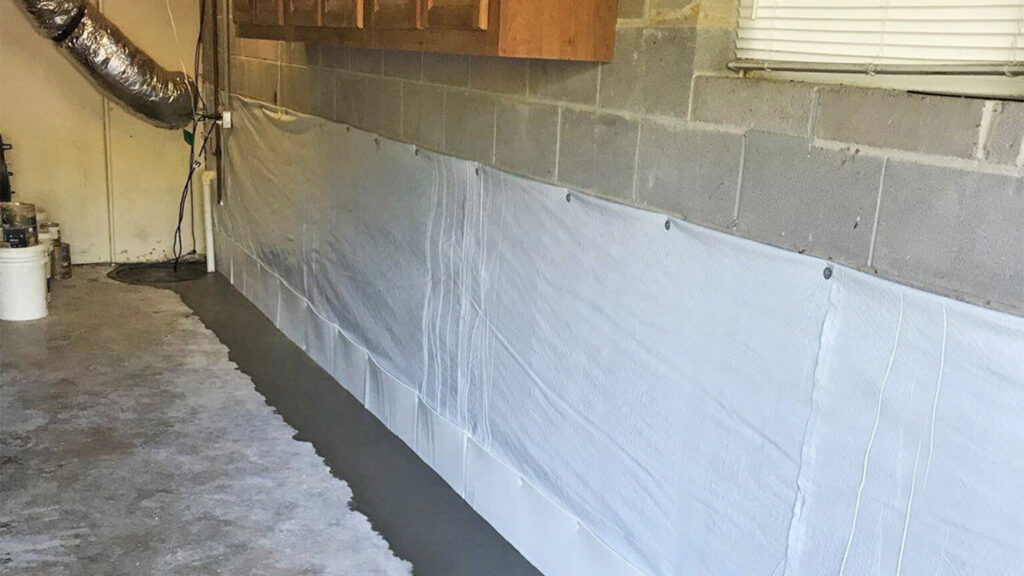
Valley-floor homes in Huntingdon County sit on limestone-based soils that hold moisture longer than most homeowners expect after a storm. That sustained moisture moves through concrete and block as vapor even without visible seepage or cracking. Vapor barriers and wall membranes stop that transmission at the wall surface.
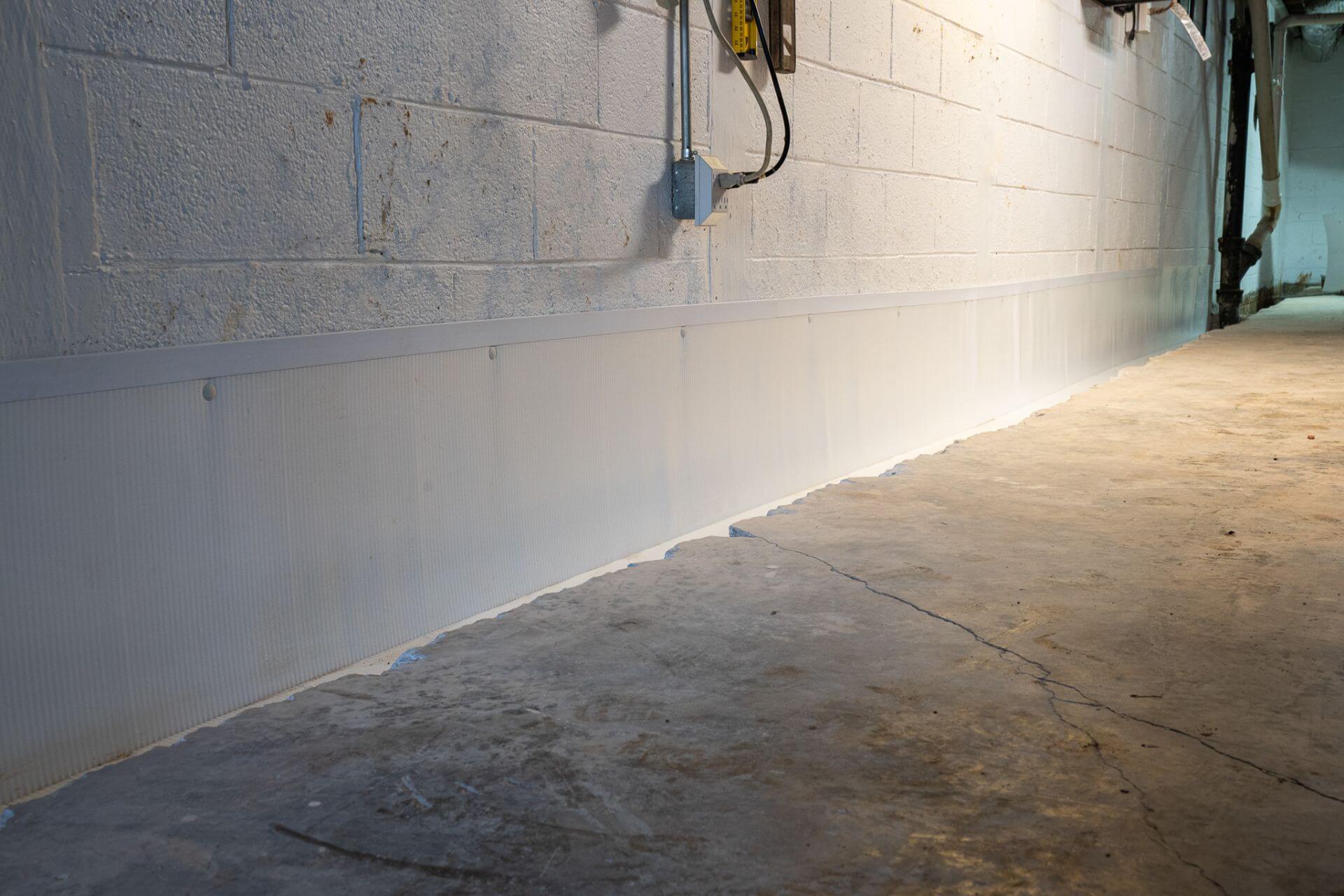
When the Juniata rises and pushes groundwater up into the valley floor, or when runoff from the ridges above saturates the soil around a foundation for days at a time, the pressure against basement walls can be sustained and significant. Channel 58 interior drainage runs along the foundation perimeter at floor level, collecting water as it enters through the wall base and routing it to the sump pit before it spreads.
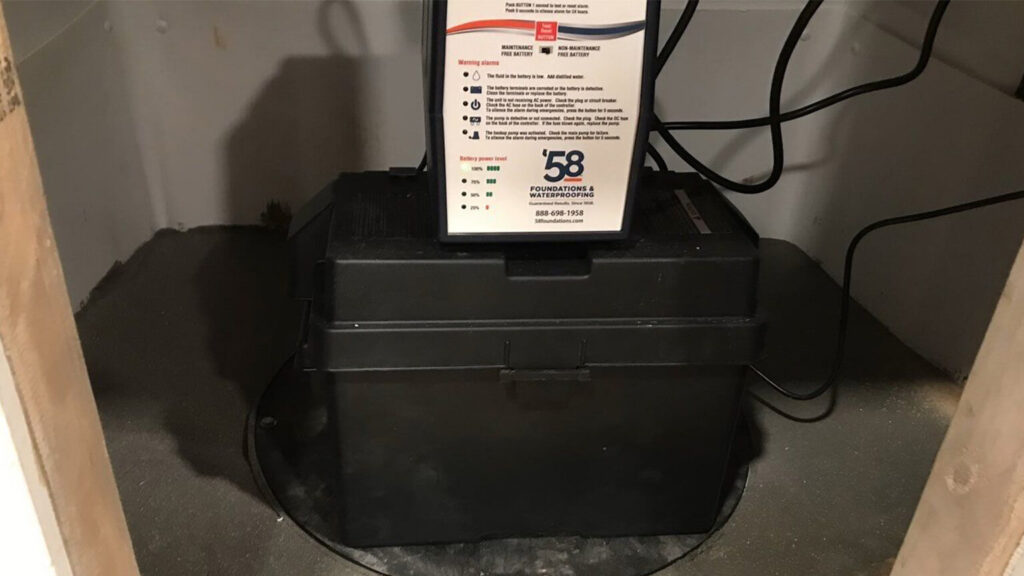
The sump pump removes what the drainage system collects and discharges it away from the home. Rural areas like Huntingdon County can lose power during the same storms that drive the most water into basements. The Workhorse OT battery backup keeps the system running through an outage automatically.
Wooded lots and valley-floor settings keep ambient humidity elevated in Huntingdon County basements even outside of active storm events. Our HumidiGuard dehumidifier handles the sustained moisture load that below-grade spaces in this environment carry through Pennsylvania's warm, wet months.
Where moisture has allowed mold to establish, it needs to be addressed before waterproofing work begins. We provide professional mold remediation when the inspection finds it.
Our Life-of-the-Structure Warranty backs every system we install. Learn more about our Basement Waterproofing services.»
A sump pump and an interior drainage system work as a unit. Channel 58 interior drainage runs along the base of the foundation perimeter, collecting water as it enters through the wall before it reaches the floor and routing it to the sump pit. The pump activates when water reaches the pit and discharges it out of the home through a line routed away from the foundation. When both components are correctly sized and installed, the basement floor stays dry even when the ground outside is saturated.
The details of the installation matter. Pit depth and placement, pump capacity relative to what the drainage system can collect during a significant storm, and where the discharge line terminates all affect how the system performs under real conditions. A discharge line that runs back toward the foundation, or one that freezes and blocks in a Pennsylvania winter, defeats the purpose of the system.
The Workhorse OT battery backup sits in the same pit as the primary pump and takes over the moment the primary loses power or fails on its own. In rural Huntingdon County, where power outages during storms can last longer than they might in a more densely serviced area, a backup that activates without any action from the homeowner is the difference between a system that holds up and one that doesn't.
Basement waterproofing costs in Huntingdon County vary because no two homes here face the same conditions. A house sitting at the base of a ridge slope with water running toward it from above is a different situation than one in a flat section of the valley where the Juniata's influence on the water table is the primary driver. A basement taking on vapor through limestone-based soil that stays wet for days after a storm requires different intervention than one with an active crack that opens during heavy rain.
The inspection determines the scope. A complete system with perimeter drainage, a primary pump, and battery backup is the right answer for some homes. Others have a more contained problem that calls for a targeted approach. What the Certified Foundation Specialist finds on-site is what drives the estimate, not a pre-set package.
These are the factors that shape what a waterproofing project involves:
What You Can Expect
'58 Foundations & Waterproofing provides free inspections with written estimates. Your Certified Foundation Specialist will assess the property, identify what is driving the moisture, and give you a clear picture of what the work involves before anything is scheduled.
Rural counties like Huntingdon don't always have a lot of options when it comes to contractors with real experience in basement waterproofing. The conditions here, steep terrain, valley-floor drainage, and a major river system running through the county, require a team that knows how to read what is actually happening beneath a home rather than applying a standard fix.
'58 Foundations & Waterproofing has been doing this work since 1958. Every inspection is handled by a Certified Foundation Specialist who evaluates the home and provides a written estimate before any work is scheduled. We don't use subcontracted crews. The people who show up are our employees, trained to our standards and accountable for the work they do.
We have earned the BBB Torch Award for Ethics four times across three regions in three years, and This Old House has recognized us as the most experienced company in our field. A Life-of-the-Structure Warranty backs every system we install.

A stain that keeps coming back, a smell that gets worse after rain, a crack that has been growing since last year. These are the things worth understanding before the next storm moves through the valley.
Contact '58 Foundations & Waterproofing today to schedule your free inspection. A Certified Foundation Specialist will evaluate your basement, explain what they find, and give you a clear plan for making it right.
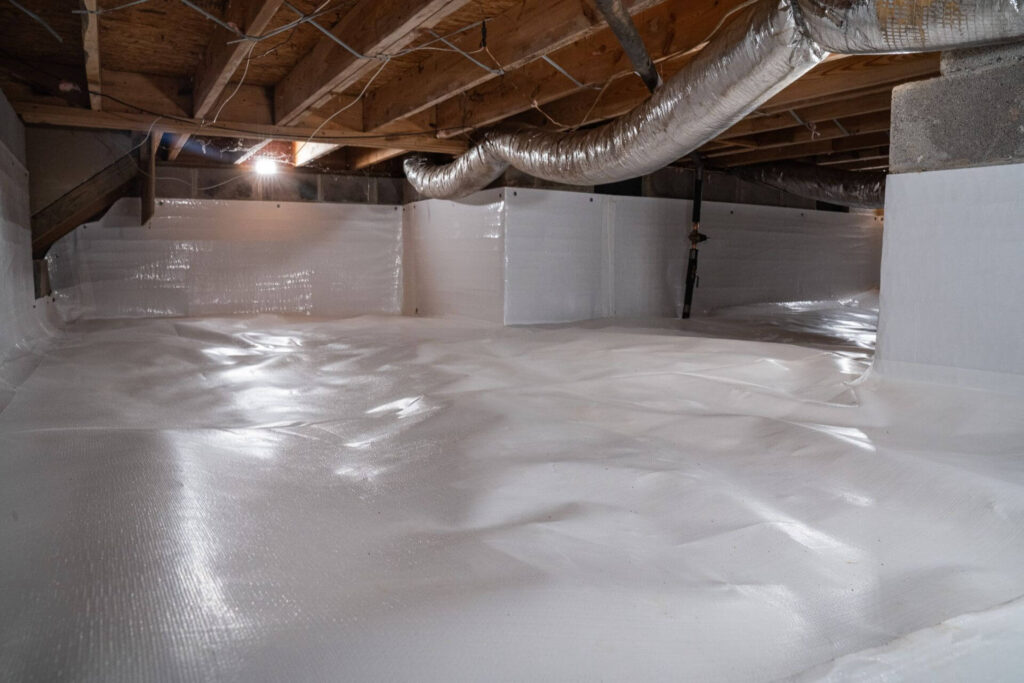
Huntingdon County Crawl Space Encapsulation
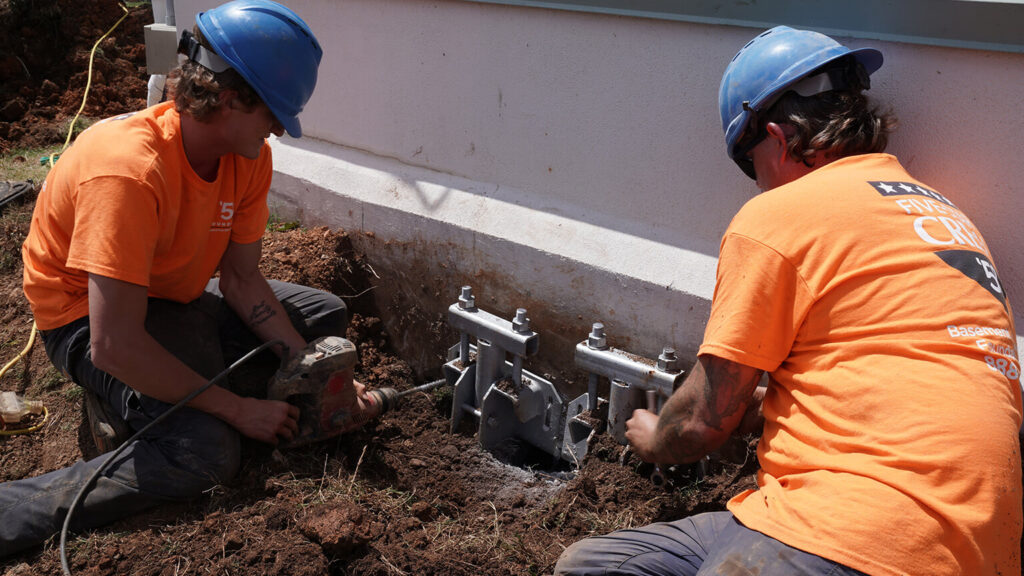
Huntingdon County Foundation Repair
We respect your privacy. By submitting, you authorize '58 Foundations and Waterproofing to reach you via call, email or text for information about your project needs. We will never share your personal information with third parties for marketing purposes. You can opt out at any time. Message/data rates may apply. Consent is not a condition of purchase. Privacy Policy