
Free Estimate
888-698-1958
Call for Priority Scheduling
888-698-1958
Call for Priority Scheduling
Book Online
Defend your Sandy Springs, GA basement against water and dampness with help from '58 Foundations & Waterproofing. Our specialists provide custom waterproofing solutions to keep your basement dry, safe, and ready for all your needs.
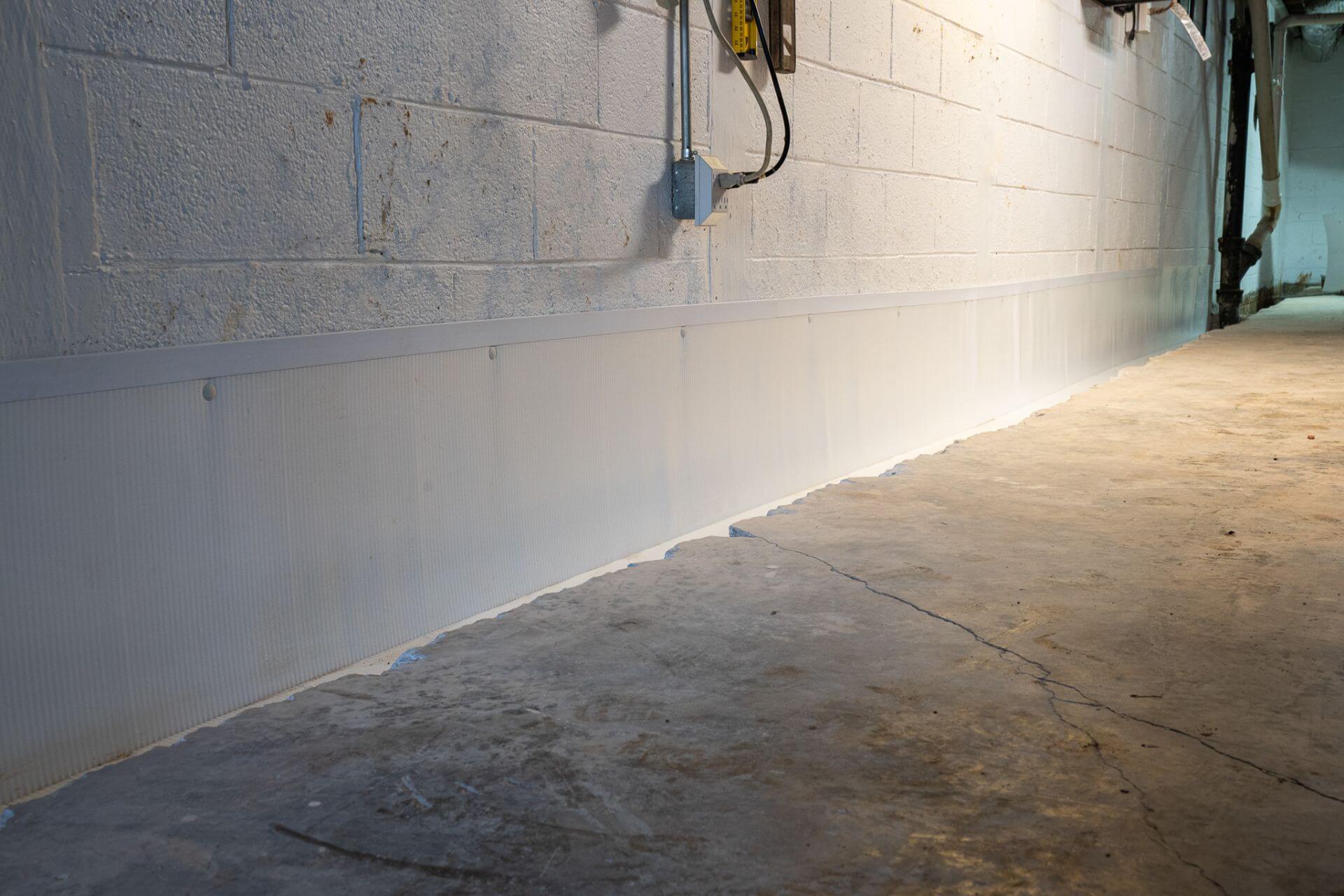




Sandy Springs sits on some of the most water-prone ground in the Atlanta metro. The city's sloped lots channel runoff toward foundations during storms, and basements that were never built with drainage systems take on water season after season. In neighborhoods like Riverside and Glenridge Hammond, where most homes went up between the late 1950s and the 1970s, that water has had decades to work through walls, stain floors, and create the kind of chronic dampness that damages framing, breeds mold, and cuts into a home's value.
'58 Foundations & Waterproofing designs basement waterproofing systems around what Sandy Springs homes actually face. Every inspection is handled by a Certified Foundation Specialist, and every system we install is backed by the Life-of-the-Structure Warranty.
Red clay soil covers most of Sandy Springs, and it behaves differently from the sandy or loamy soils found in other parts of the country. When it rains, clay absorbs water and swells, pressing against foundation walls with sustained lateral force. As it dries out between storms, it contracts and pulls away from the foundation, opening small gaps along the footing and at wall joints. That cycle repeats through every wet season, and each pass works the gaps a little wider.
Sandy Springs terrain accelerates the problem. Much of the city was developed on hilly ground, and homes built into sloped lots sit at the bottom of drainage paths that concentrate runoff from neighboring properties, driveways, and roads. When that water hits clay soil that is already saturated, it has nowhere to go but against the foundation. In established neighborhoods where original grading has settled, shifted, or been altered by landscaping over the years, the drainage picture can be significantly worse than when the house was built.
Gutters and downspouts that discharge too close to the foundation put water directly into the soil at the most vulnerable point. Older homes throughout Sandy Springs that were built before interior drainage systems were standard have no mechanism to intercept water that reaches the wall-floor joint, which is where most basement seepage begins.
Sandy Springs basements show water problems in different ways depending on where it's getting in, how long it's been happening, and what the foundation is made of. A block wall takes on moisture differently than poured concrete, and water coming up through the floor calls for a different fix than water tracking down from the wall-floor joint. These are the signs to look for.
A stale or earthy smell is usually what homeowners notice before they see anything. It hits you when you open the basement door, especially after rain or during humid stretches in summer. The smell comes from mold and mildew feeding on moisture in the walls, floor, or wood framing, and it doesn't clear out on its own. If it's strongest near the base of the walls or around stored boxes and furniture, water is almost certainly moving through the foundation nearby.
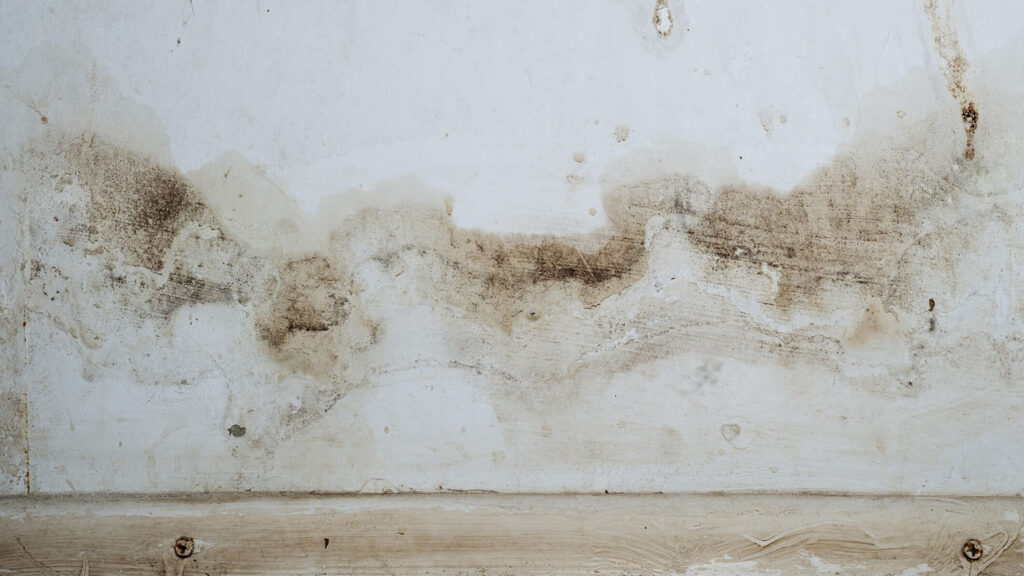
Staining along the base of a wall or spreading across the floor is one of the most common things Sandy Springs homeowners search out after a hard rain. The water comes in, sits long enough to leave a mineral deposit or discolor the concrete, then evaporates. The mark stays. Over time those stains darken and spread, and the concrete beneath them begins to deteriorate. If you're seeing a white tide line a few inches up the wall, that's where water has been reaching consistently.
Efflorescence shows up as a white or gray chalky powder on concrete or block walls. Most homeowners assume it's a surface issue and brush it off. It comes back because it's not a surface issue: it's the mineral residue left behind when water moves through the wall and evaporates on the face of it. The wall may feel completely dry, but efflorescence is confirmation that water has been passing through the masonry consistently enough to leave deposits behind.
Rust streaking on the floor, along wall bases, or around the base of steel support columns tells you the basement has been damp long enough and consistently enough to corrode metal. That's not a result of one wet event. It builds up over months or years of sustained moisture, and by the time it's visible the structural components in contact with that moisture have already been degrading.
Mold shows up as dark spotting on drywall, wood framing, stored cardboard, or along the wall-floor joint. In Sandy Springs, where summer humidity is high and basements don't dry out between storms the way they would in drier climates, mold can spread fast once it gets established. Beyond the smell and the visual, mold in the framing is structural damage. Wood that stays damp long enough softens, and the support it provides to the floor above becomes unreliable.
Water pooling on the floor after rain is active intrusion, not residual dampness. It means the wall-floor joint, a floor crack, or the slab itself is letting water through faster than it can evaporate or drain. Homeowners often assume this only happens in heavy storms, but in a basement sitting on saturated clay soil, even moderate rain can push enough hydrostatic pressure against the slab to force water up through existing cracks.
Paint that bubbles, blisters, or peels on basement walls is moisture pushing outward from behind the surface. It's easy to mistake for a painting problem, but the cause is water vapor moving through the wall and building up pressure beneath the paint film. By the time the paint fails visibly, the wall behind it has been absorbing moisture long enough to support mold growth and begin breaking down.
Condensation on basement windows, cold pipes, or concrete walls is a sign that the air in the basement is holding more moisture than it should. In a Sandy Springs summer that moisture load often comes from water vapor migrating through the walls rather than from indoor humidity alone. Left unaddressed, persistent condensation keeps surfaces wet enough to sustain mold growth and accelerate rust on any metal in contact with the walls or floor.
Termites, carpenter ants, and rodents are drawn to damp wood and dark, undisturbed spaces. A pest problem in the basement is often a moisture problem that's been running long enough to soften wood framing and make it attractive. Termite damage in particular is expensive and structurally serious, and it tends to go undetected in basements until it's well advanced.
Most of these signs appear well before water becomes visible on the floor. By the time puddles show up, the problem has usually been running through the wall or slab for months, and the damage to framing, concrete, and finishes reflects that.
'58 Foundations & Waterproofing installs basement waterproofing systems that address how water is actually getting into a Sandy Springs home, not just where it's showing up on the surface. Every system is designed around the specific conditions in your basement, installed by a Certified Foundation Specialist, and backed by the Life-of-the-Structure Warranty.
Interior Drain Tile
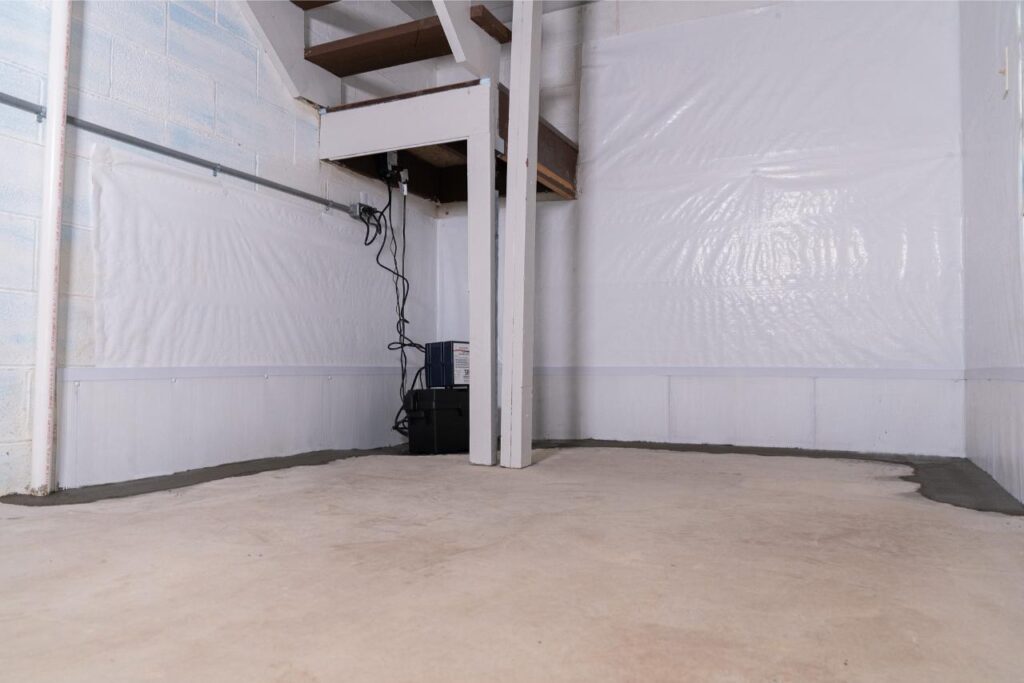
Channel 58 interior drainage runs along the base of the foundation perimeter beneath the floor, capturing water at the wall-floor joint before it reaches the living space. It's the most reliable solution for Sandy Springs basements where water enters low on the wall or pushes up through the slab during heavy rain. The system drains into a sump basin and works continuously without any intervention required.
Sump Pump Installation and Battery Backup
A Workhorse sump pump sits at the lowest point of the drainage system and removes water from the basin before it can back up into the basement. For Sandy Springs homes, where summer thunderstorms are the most likely driver of basement flooding, a Workhorse OT battery backup keeps the system running through power outages, which tend to happen during the same storms that put the most pressure on the foundation.
Wall Liners and Vapor Barriers
Wall liners and vapor barriers stop moisture from passing through porous foundation walls and direct it down into the drain tile system instead. They're particularly effective in older Sandy Springs homes with block wall construction, where mortar joints absorb water and the surface stays damp well after rain ends.
Dehumidification
A HumidiGuard dehumidifier controls moisture levels in the basement air, preventing the condensation, mold growth, and musty odors that persist even after active water intrusion has been addressed. Sandy Springs summers keep outdoor humidity high for months at a time, and without mechanical dehumidification a waterproofed basement can still feel and smell damp through the season.
Yard Drainage
When water is reaching the foundation because of poor grading or runoff from neighboring properties, yard drainage redirects it before it ever gets to the wall. French drains and surface water redirection are particularly useful on Sandy Springs lots where sloped terrain channels runoff toward the house rather than away from it.
Mold Removal
Where moisture has been present long enough to establish mold growth in the framing or on finished surfaces, mold removal is handled before waterproofing work begins. Sealing a basement without addressing existing mold traps the problem rather than solving it.
Every system '58 Foundations & Waterproofing installs is matched to the conditions in your home. A free inspection with a Certified Foundation Specialist will identify what's driving the water problem and which combination of systems will keep it out permanently.
Learn more about our Basement Waterproofing solutions ›
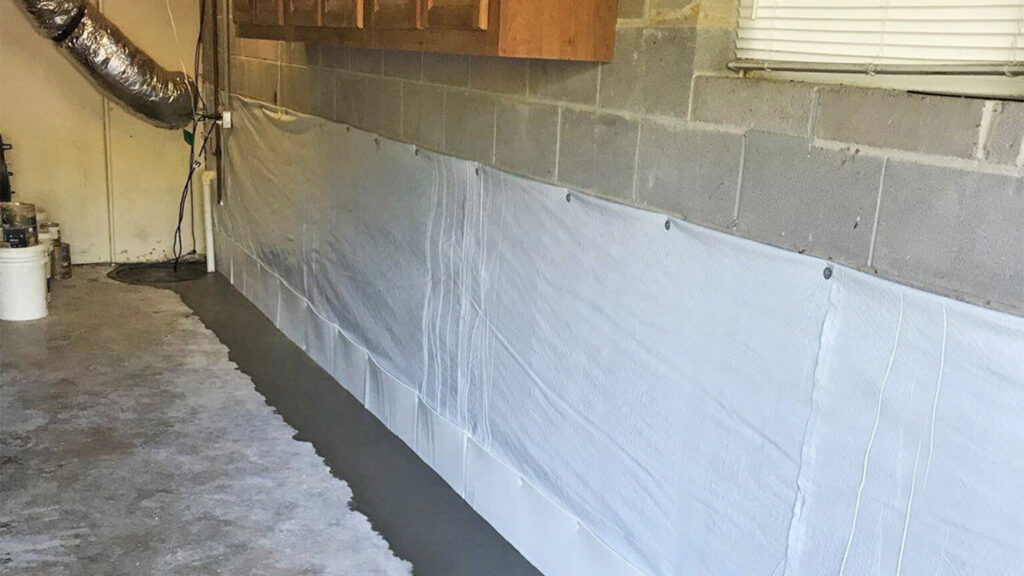
The cost of basement waterproofing in Sandy Springs depends on what's driving the water problem, how far it's progressed, and what the home needs to stay dry year-round. Several factors shape the scope: where water is entering, what the foundation is made of, how large the basement is, and whether existing mold or a failed prior system needs to be addressed before waterproofing can begin. Additional systems like battery backup, dehumidification, and yard drainage add protection and affect the total.
'58 Foundations & Waterproofing provides free inspections with no obligation. A Certified Foundation Specialist will assess the basement, identify where water is getting in, and provide a written estimate before anything is scheduled.
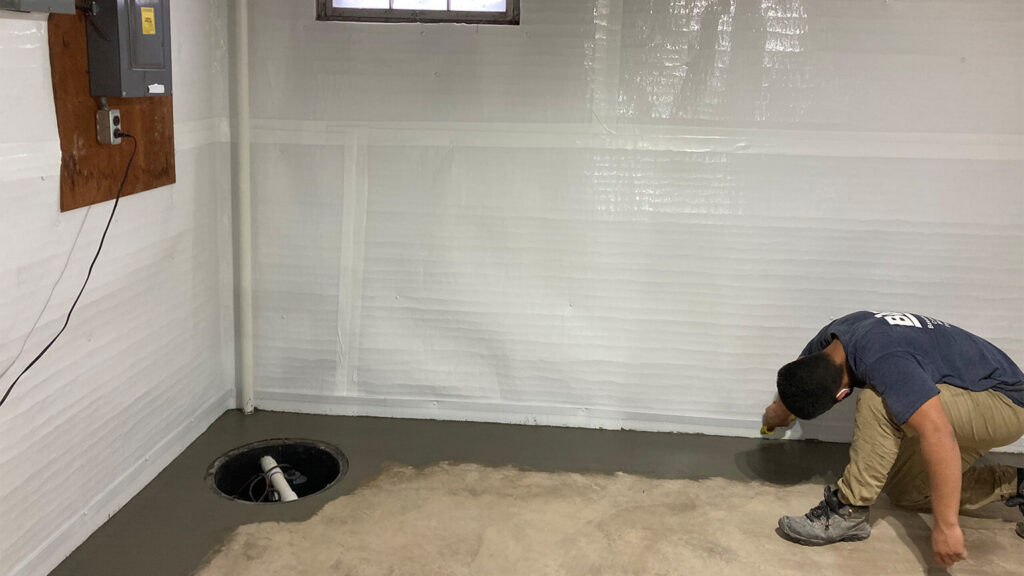
'58 Foundations & Waterproofing has been installing basement waterproofing systems since 1958. Every inspection is handled by a Certified Foundation Specialist, not a salesperson, and no work is recommended until the source of the water problem has been identified and explained. We don't use subcontracted crews. The people who install the system are our employees, trained to our standards and accountable to us directly.
Every system we install is backed by the Life-of-the-Structure Warranty. We've earned the BBB Torch Award for Ethics four times across three regions in three years, and This Old House has recognized '58 Foundations & Waterproofing as the most experienced company in our field. Over a million homeowners have trusted us with their foundations since we opened in 1958.

Water in a Sandy Springs basement doesn't resolve between storms. The clay soil stays saturated, the pressure against the foundation stays elevated, and the damage to concrete, framing, and finishes continues building until something intercepts it. If you've noticed staining, a smell that won't clear, or water showing up after rain, the source is worth identifying before another wet season runs through it.
Call '58 Foundations & Waterproofing or schedule online to set up your free inspection. A Certified Foundation Specialist will assess your basement, walk you through what they find, and give you a clear plan for making it right.
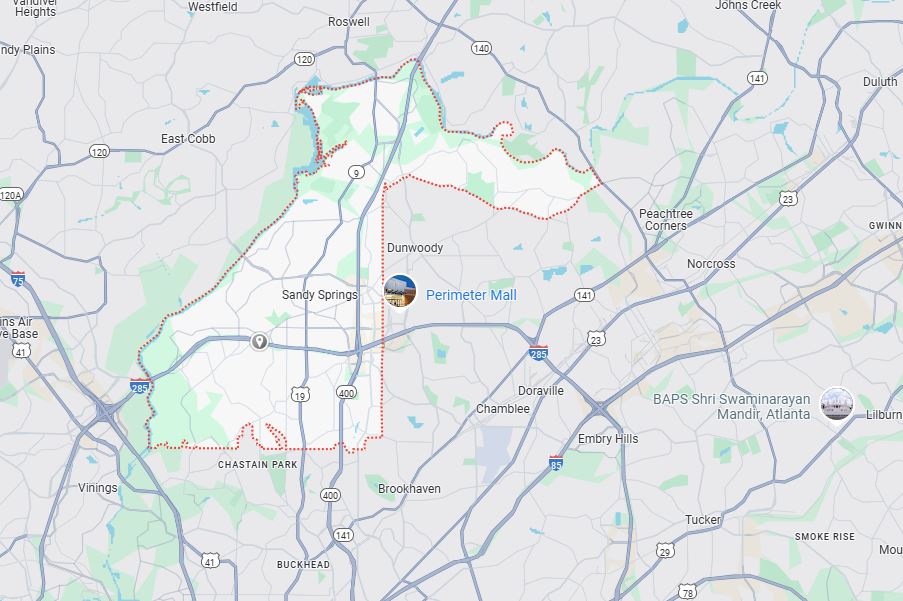
Other Services We Offer in Sandy Springs, GA
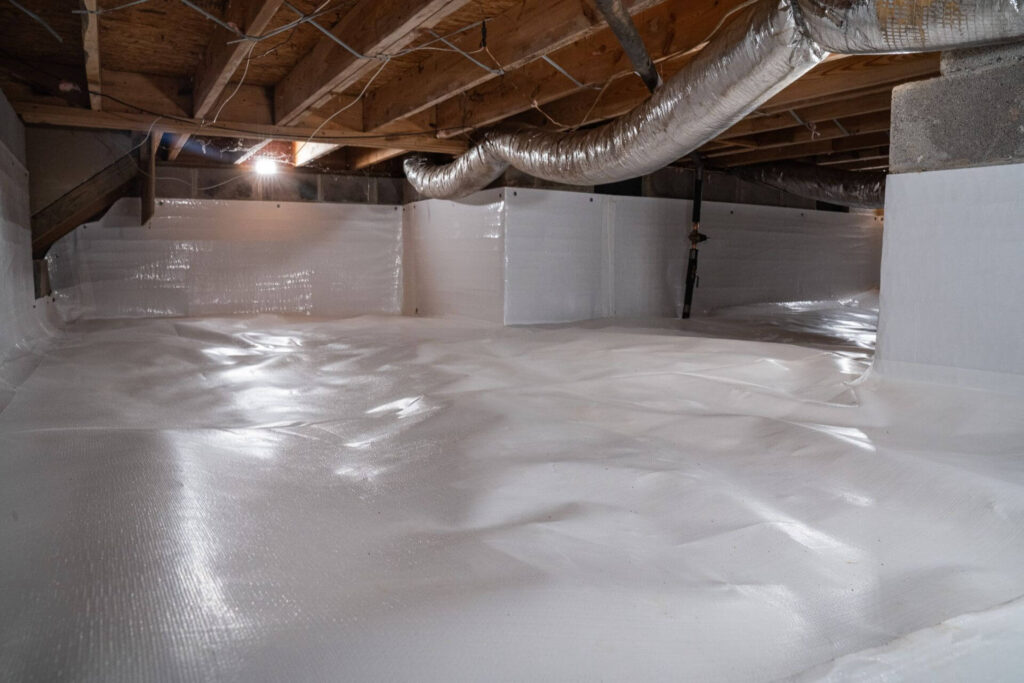
Sandy Springs Crawl Space Encapsulation
Sandy Springs Foundation Repair,
We respect your privacy. By submitting, you authorize '58 Foundations and Waterproofing to reach you via call, email or text for information about your project needs. We will never share your personal information with third parties for marketing purposes. You can opt out at any time. Message/data rates may apply. Consent is not a condition of purchase. Privacy Policy