
Free Estimate
888-698-1958
Call for Priority Scheduling
888-698-1958
Call for Priority Scheduling
Book Online
From musty smells to standing water, basement moisture issues are common in Newark homes, but they don’t have to be permanent. At '58 Foundations & Waterproofing, we design basement waterproofing systems that stop water at the source.





Newark sits at the Fall Line, the boundary where Delaware's Piedmont hills give way to the Atlantic Coastal Plain. It's a transition zone in more ways than one. The soil shifts from the firmer, rockier ground of northern New Castle County to the silty, clay-heavy sediments of the coastal plain, and that soil holds water. The White Clay Creek drains through the area, and homes anywhere near its watershed feel the effect of a water table that rises quickly after sustained rain.
Most of Newark's residential neighborhoods grew up alongside the University of Delaware through the mid-20th century. That housing stock is now sixty to eighty years old, built before modern waterproofing standards were the norm, and the basements in those homes have been managing water pressure on their own for a long time. Cracks that were minor decades ago have had years to develop, and drainage systems that were never installed are not going to appear on their own.
'58 Foundations & Waterproofing has been doing this work since 1958. Our Certified Foundation Specialists handle everything from interior drainage and sump pump systems to vapor barriers and humidity control, and every inspection comes free with a written estimate.
Newark's position at the Fall Line means foundations here sit on soil with variable drainage characteristics. In the higher elevations toward the Piedmont, soils tend to be loamy with moderate clay content. Closer to the coastal plain and along the creek corridors, silt and clay dominate, and those soils absorb water slowly and release it even more slowly. After a storm, the ground around a foundation can stay saturated for days, keeping pressure against basement walls elevated long after the rain has stopped.
Delaware averages close to 55 inches of rainfall a year, spread across all four seasons. There is no reliable dry stretch long enough for saturated soil to fully drain before the next rain event adds to the load. For foundations in low-lying sections of Newark, near White Clay Creek or in neighborhoods with flat lots and limited drainage, that sustained pressure is a constant.
The age of the housing stock compounds the problem. Homes built in the 1940s, 50s, and 60s typically have block or poured concrete foundations with no interior drainage systems and no vapor barriers. The concrete and mortar in those foundations have been absorbing and releasing water for decades, and the pathways water has found tend to widen over time.
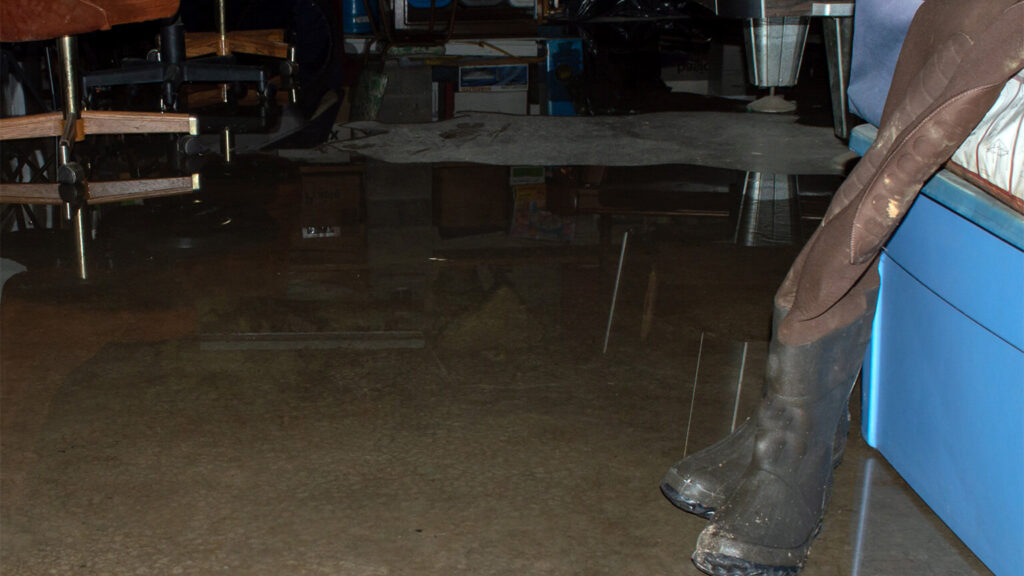
Water leaves evidence long before it becomes a problem you cannot ignore. Some of it is obvious. Some of it has been there long enough that it stopped registering. These are the signs worth paying attention to in a Newark basement.
A brown ring spreading out from the base of a steel support column, or an orange streak running down a block wall from an old pipe fitting, has been accumulating over more wet seasons than you have probably counted. It does not scrub off cleanly. Learn more about rust stains in the basement.
Run your hand along the bottom two feet of a finished basement wall. If the drywall gives slightly, feels cool and dense, or the paint is peeling away in a band near the baseboard, the material behind it has been wet. Learn more about water-damaged drywall.
A yellowish tide line on the concrete floor near the wall base, a patch on block that darkens after every rain and never quite lightens back, a discoloration that has been creeping outward over several seasons. These marks come back to the same place every time because water is using the same path every time. Learn more about water stains in the basement.
A damp Newark basement through a humid Delaware summer is exactly the environment termites look for. Press the tip of a screwdriver into wood framing near the foundation wall. If it sinks in without resistance, or tapping along a floor joist produces a hollow sound, the wood has been compromised. Pencil-thin mud tubes climbing the masonry are the other thing to look for. Learn more about termite damage.
It may be a dark patch on the back of a cardboard box stored against the wall for years, a grayish film on a concrete block corner, or a smell you have stopped noticing because it is always there. In a basement that does not get regular foot traffic, mold can establish itself well before it becomes visible. Learn more about basement mold.
The white chalky coating on the block wall is called efflorescence. It forms when water moves through the concrete, picks up dissolved minerals, and leaves them on the surface as it evaporates. In a Newark home built in the 1950s or 60s, it can cover an entire wall. Wiping it away removes the deposit, not the pathway that keeps producing it. Learn more about efflorescence.
It hits you before you reach the bottom of the stairs, and it gets noticeably worse after several days of wet weather. That smell is mold and mildew living in damp building materials. Airing the space out reduces it temporarily, but it returns until the moisture source is addressed. Learn more about musty odors in the basement.
A white mineral trail running down from a crack in the block wall tells you water has been moving through that path long enough to leave a deposit. A crack that shows a dark, damp halo around it after rain is actively conducting water under pressure from saturated soil outside. Learn more about leaking cracks.
One side of a floor crack sits noticeably higher than the other. A horizontal crack running along a block wall at about knee height. A diagonal crack spreading from the corner of a window opening. In a home that has been sitting on New Castle County's silty clay for sixty or seventy years, these reflect accumulated movement, and they tend to continue moving. Learn more about floor and wall cracks.
'58 Foundations & Waterproofing has been installing basement waterproofing systems since 1958. The products we use are ones we have tested, refined, and stood behind for decades. When we put a system in your home, it is built to last.
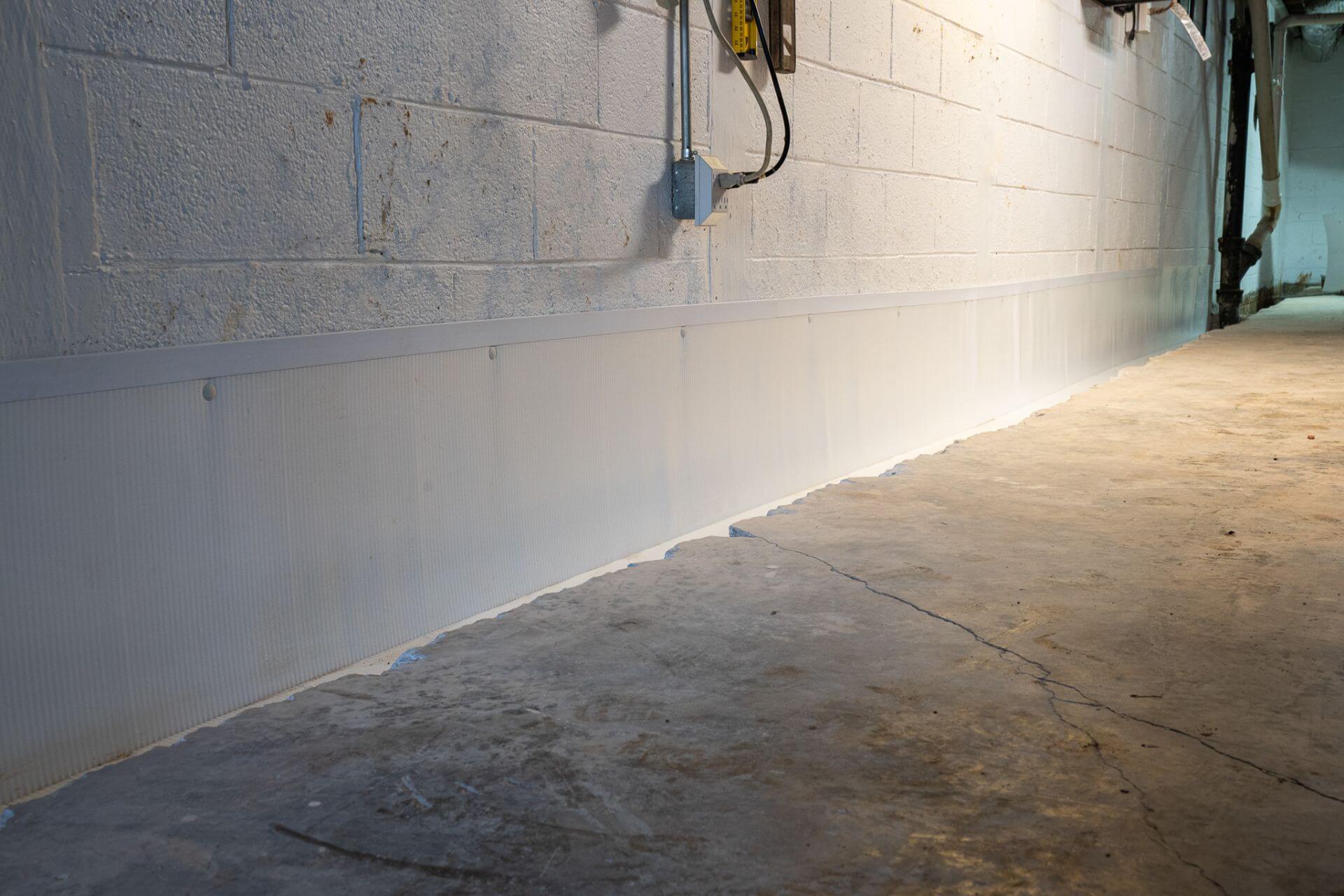
A basement that takes on water through the wall base or floor joints needs a way to capture it before it reaches the living space. Channel 58 is a perimeter drainage system that runs along the inside base of the foundation, collecting water as it enters and routing it to the sump pit quietly and out of sight.
The Workhorse sump pump pulls water out of the pit and sends it away from the home through a discharge line. The Workhorse OT battery backup runs on a marine-grade battery and switches on automatically if the power goes out, keeping the system working through the worst of a storm.
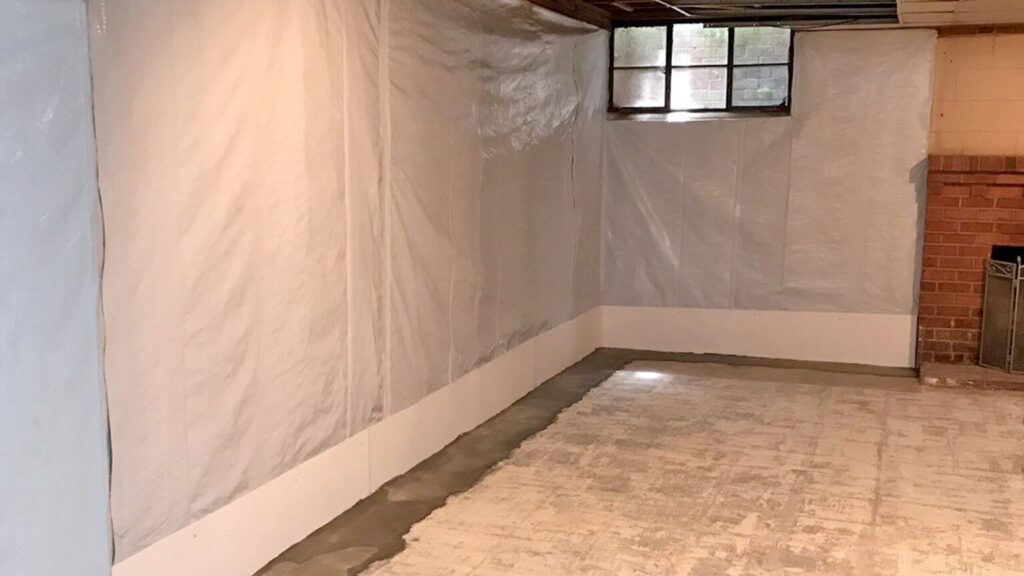
Water that moves through a concrete or block wall as vapor never shows as a visible leak, but it raises humidity, damages finished surfaces, and creates the conditions mold needs to grow. Waterproof wall membranes and vapor barriers seal that pathway and direct any moisture that does get through into the drainage system below.
Once active water intrusion is under control, the humidity that lingers in the space can keep feeding mold and odor problems independently. The HumidiGuard dehumidifier runs continuously to keep the air in the basement stable through Delaware's humid summers.
Surface water that collects against the foundation adds to the load the interior system has to manage. Exterior drainage moves that water away from the home at grade level, before it reaches the wall.
When the inspection finds active mold growth, it gets addressed before any waterproofing work begins. Professional mold remediation removes the growth, treats the affected surfaces, and clears the space for installation.
Our Life-of-the-Structure Warranty backs every system we install. Learn more about our Basement Waterproofing services.»
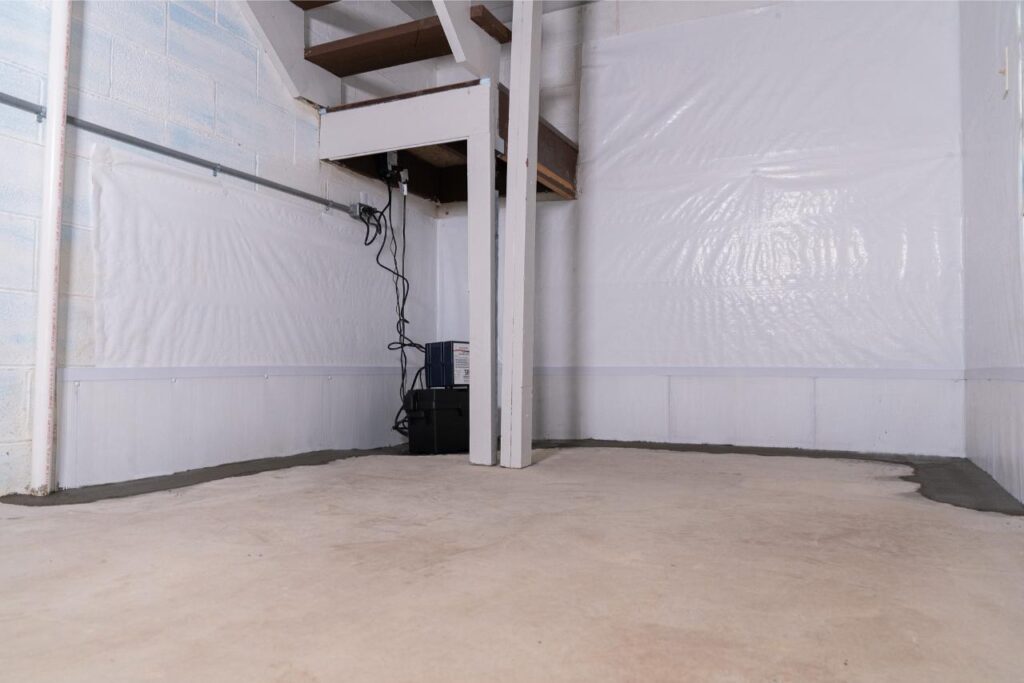
A sump pump is the component that makes everything else work. Channel 58 interior drainage collects water entering along the foundation perimeter and routes it to the pit. Without a properly sized pump to clear that pit, the drainage system has nowhere to send what it collects. The Workhorse OT battery backup closes the one gap that stops most systems cold: a power outage during a storm.
Newark's position near White Clay Creek and its low-lying neighborhoods means some homes here deal with groundwater pressure that builds from below as much as it pushes from the sides. A pump that handles a slow seep on a dry week may fall well behind what a sustained Delaware rainstorm delivers, particularly in sections of the city where the silty clay soil drains slowly and the water table sits close to the surface. Our Certified Foundation Specialists size the system to the home's specific drainage load, not to a standard package.
The Workhorse OT operates on a marine-grade battery that is independent of both the primary pump and the electrical grid. It does not require the homeowner to do anything. When power fails, it activates on its own. When power is restored, it steps back. For a home in a low-lying Newark neighborhood that has taken on water during previous outages, that automatic continuity matters.
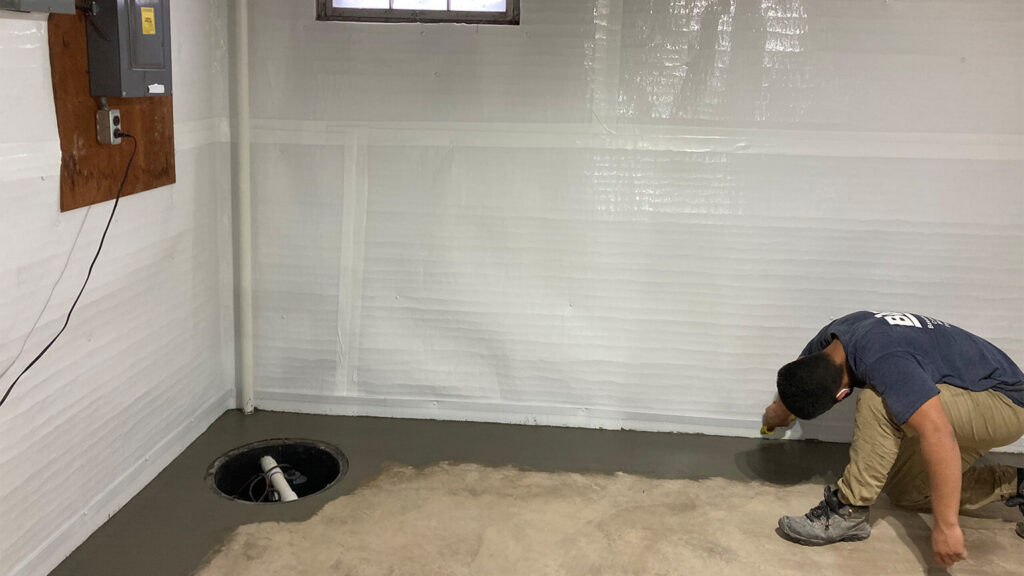
Basement waterproofing estimates in Newark vary because the source of the problem varies. A damp smell with no visible water, a wall that weeps after rain, and a floor that stays wet for days after a storm all trace back to different causes that require different responses. Until someone has looked at the space, there is no reliable way to know what the work actually involves.
Some projects address a single entry point. Others require drainage along the full foundation perimeter, humidity control, or mold remediation before installation can begin. The inspection determines which.
Here is what shapes the scope and cost of a waterproofing project:
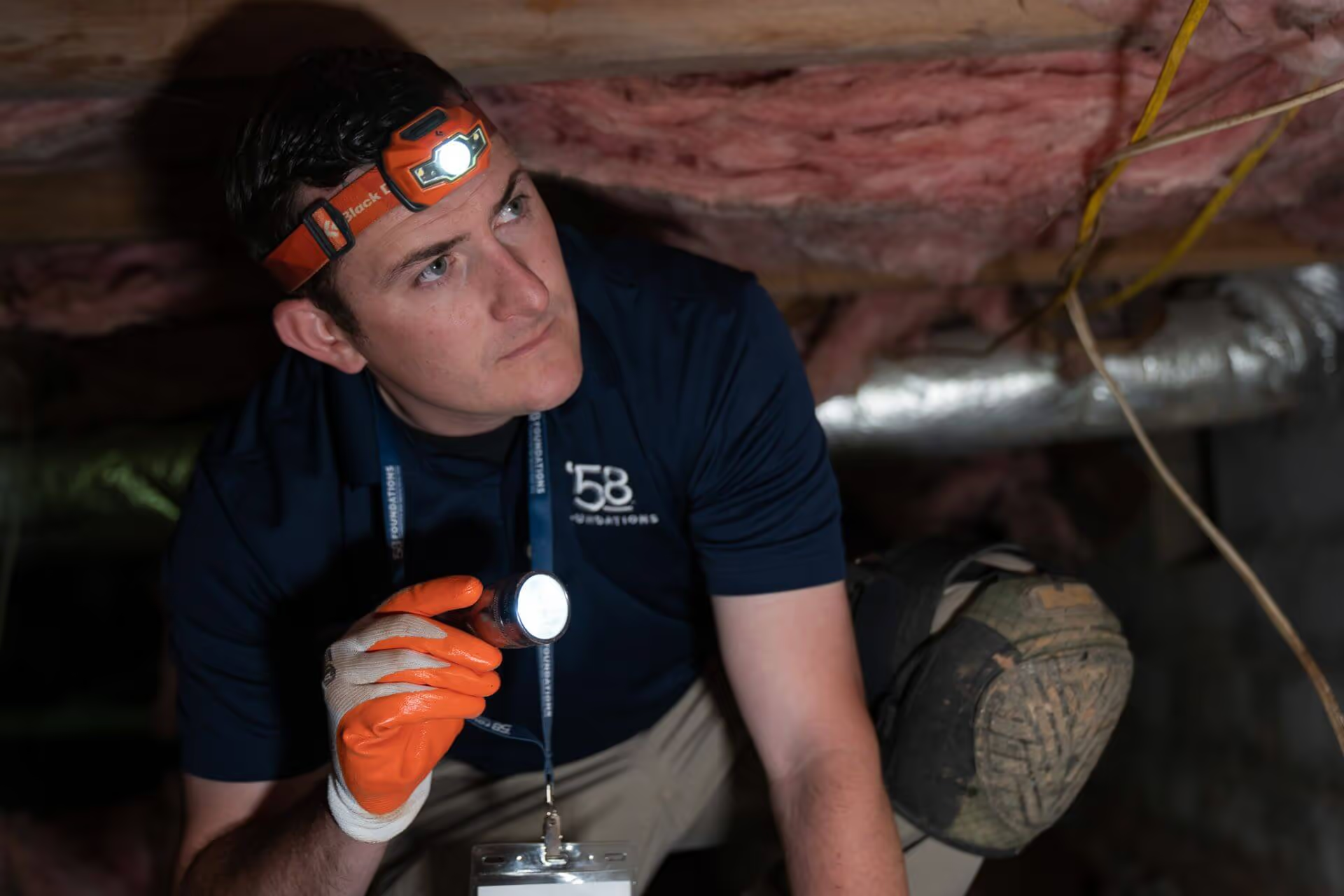
'58 Foundations & Waterproofing provides free inspections with written estimates. Your Certified Foundation Specialist will go through the basement, identify the source of the moisture, and walk you through exactly what the work involves before anything is scheduled.
Newark has a lot of mid-century homes with basement problems that have been building up for a long time. Homeowners here want someone who will correctly identify what is happening, install a system that addresses it, and back the work with something meaningful. That is what we have built our reputation on since 1958.
Every inspection is handled by a Certified Foundation Specialist who gives a straight assessment and a written estimate before anything is scheduled. Our installation crews are our own employees, not subcontractors, and they are accountable for everything they do on a job. The BBB has recognized us with the Torch Award for Ethics four times across three regions in three years, and This Old House has cited us as the most experienced company in the industry. Every system we install is backed by our Life-of-the-Structure Warranty.

Mold spreads. A soft wall does not firm back up. A crack that lets water through this season will let more through the next. Whatever is happening in your basement right now will not improve without attention, and the longer it continues, the more of the home it works its way into.
'58 Foundations & Waterproofing offers free inspections with written estimates throughout Newark and New Castle County. A Certified Foundation Specialist will assess your basement, identify what is driving the problem, and give you a straight answer about what it will take to fix it.

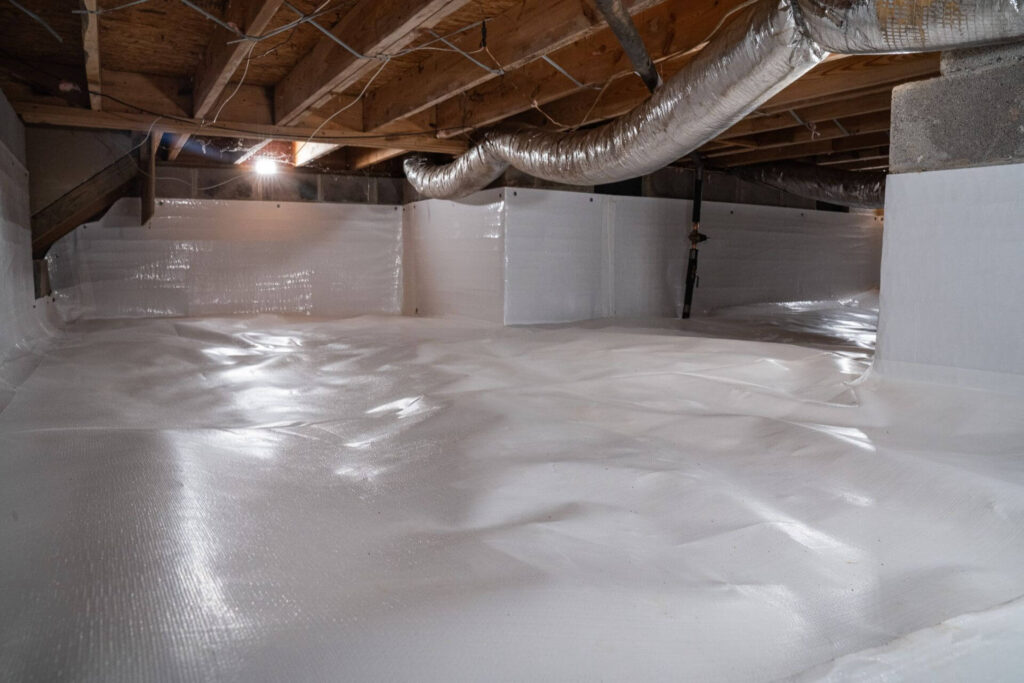
Newark, DE Crawl Space Encapsulation
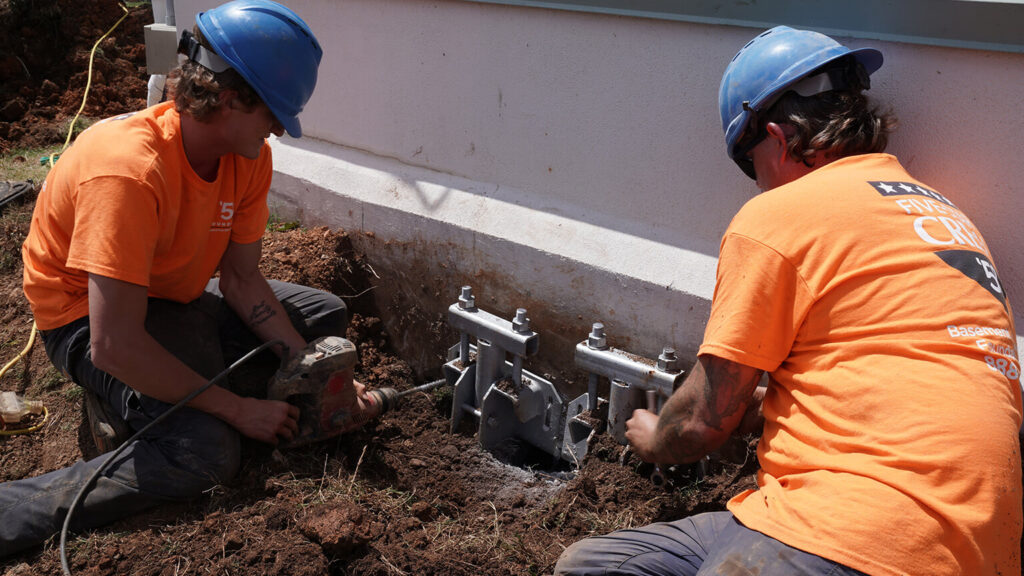
Kent County, DE Foundation Repair
We respect your privacy. By submitting, you authorize '58 Foundations and Waterproofing to reach you via call, email or text for information about your project needs. We will never share your personal information with third parties for marketing purposes. You can opt out at any time. Message/data rates may apply. Consent is not a condition of purchase. Privacy Policy