
Free Estimate
888-698-1958
Call for Priority Scheduling
888-698-1958
Call for Priority Scheduling
Book Online
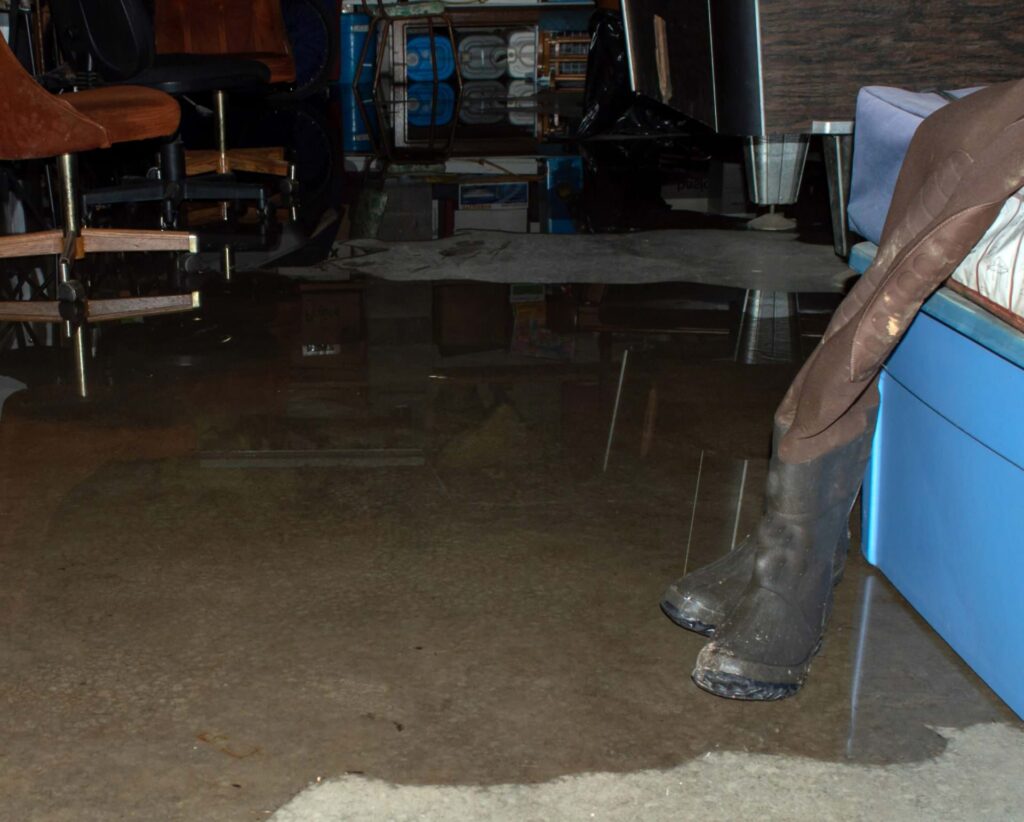
A hurricane or tropical storm can weaken well before it reaches Georgia and still bring heavy rain across the state. That rain soaks the ground around your house until the soil can’t take any more. Water then pushes against your foundation and gets into the basement through cracks, joints, and gaps in the concrete.
If you went downstairs after the storm and found water, two things matter right away. The first is where it came in. The second is how much it touched, since drywall, carpet, and wood framing can grow mold if they stay wet. A walk-out basement can take on water from the uphill side of your lot and from the yard outside the walk-out door, so the source isn’t always obvious. Checking in the right order keeps you safe and points you to what needs to happen next.
Stay on the stairs until you know the power is off. FEMA’s guidance says never to enter a flooded basement unless you’re sure the electricity is off. You can shut it off at the main breaker if you can reach the panel without standing in water. If the panel is in the basement and the floor around it is wet, call an electrician.
Anything electrical that sat in the water needs a professional check before it runs again. FEMA recommends having a licensed electrician inspect wiring and outlets that were underwater. A furnace, water heater, washer, or dryer that took on water should be looked at by a qualified technician. Turning equipment back on too soon can cause a shock or ruin it.
According to the EPA, floodwater can carry sewage or chemicals into your home. If you go in, wear boots, gloves, goggles, and an N95 respirator. Take photos of the water and the damage for your insurance company before you move anything or start cleaning up. If you’re running a portable generator to power pumps or fans, keep it outside and at least 20 feet from the house.
The spots where the water sits are your best clue to how it got in. Look before you start mopping, since cleanup wipes out the pattern. Walk the room and note which walls, floor areas, and doorways are wettest.
In a walk-out basement, the wall set into the hillside has soil against it from the floor up to the yard. After a storm you may see dark, damp patches on the block or concrete, or water trickling from a crack. A crack that’s actively dripping is a direct entry point. When the wall dries, a white, chalky residue called efflorescence can mark where water came through. Learn more about foundation cracks that leak.
A wet band along the base of a wall means water is coming in at the joint where the wall meets the floor. Carpet along that edge feels soggy while the middle of the room is dry. This is hydrostatic pressure at work. Groundwater builds up in the saturated soil and pushes against the foundation until it finds that seam. Learn more about standing water in your basement.
The crack looks dark and wet, or water spreads outward from it across the slab. That water is coming from the saturated ground under your basement. Sealing the surface of the crack won’t stop it, because the pressure underneath is what’s pushing it through. Learn more about basement floor cracks.
You find a wet threshold and water spreading across the floor just inside the door. That water ran across the yard during the storm and collected against the opening. Step outside and look at what’s around the door. A patio that slopes toward the house, a downspout emptying nearby, or a low spot in the yard can all send runoff that way.
Water can get in from more than one place during the same storm. Photograph each wet spot before it dries so you have a record of where it showed up. That record helps match the repair to the source.
Water that sits on a basement floor soaks into whatever it touches. In a finished basement, that means the bottom of the drywall, the baseboards, the carpet and pad, and the wood framing behind the walls. Some of that damage is easy to see. The rest stays hidden until you pull something back and look.
Press on the drywall near the floor. If it feels soft, crumbles, or the paint has bubbled, it has absorbed water. Drywall wicks moisture upward, so the wet area can reach higher than the water ever stood on the floor. Baseboards that have swelled or pulled away from the wall are another sign the drywall behind them got wet. Learn more about water-damaged drywall.
Carpet can feel dry on top while the pad underneath is still soaked. Pull back a corner near the wettest spot and press down on the pad with your hand. If water comes up, the pad is holding it against the concrete.
Where the framing is exposed, check the bottom board that sits directly on the floor. Dark staining or wood that feels damp means it took on water. Wood that stays wet can rot and weaken the wall it supports. Learn more about wood rot on framing.
Boxes, furniture, and anything else stored on the floor need a look too. Cardboard soaks up water and holds it against whatever is packed inside. If the basement still smells musty after the floor looks dry, something down there is still wet. Learn more about musty odors and earthy smells.
A sump pump runs on electricity, so it stops when the power goes out. Groundwater keeps filling the pit while the pump sits idle. Once the pit fills up, the water spills out onto the basement floor.
When the power is back on and the floor around the pit is dry, make sure the pump is plugged in and the outlet works. Pour a bucket of water into the pit and watch for the float to rise and the pump to kick on. If the pump hums without moving water or doesn’t start at all, leave it off and have it looked at. A pump that keeps running long after the rain has stopped may be too small for the water your basement takes on.
Next, step outside and find where the discharge line empties. Storm debris can block the end of the pipe and leave the pump pushing against a clog. The water should come out far enough from the house that it won’t run back toward the foundation. On a sloped lot, that means it drains downhill and away from the walk-out door.
If a power outage is what flooded your basement, a backup pump covers that gap. The Workhorse OT battery backup is a second pump that runs on a marine battery when the power fails or the main pump falls behind. Sizing matters for the main pump too. The Workhorse sump pump is matched to the water your basement takes on, because an undersized pump overworks and an oversized one cycles too often.
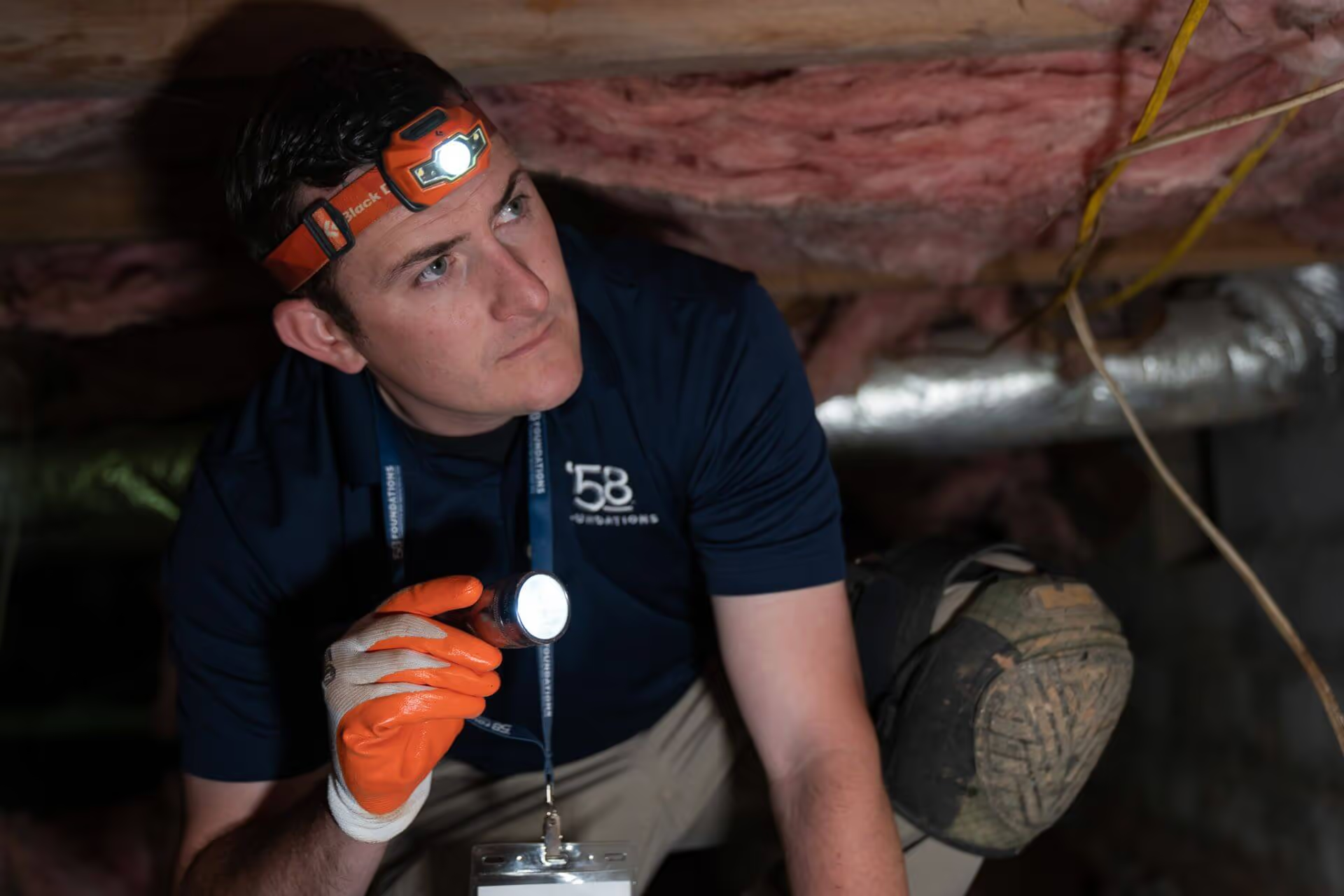
If part of your home sits over a crawl space, the same rain that reached your basement can collect under that section of the house. Look in from the access opening before you crawl in. Crawl spaces are dark and tight, so a strong flashlight does most of the work. Stay out if there’s standing water anywhere near wiring or equipment.
Water on the dirt or pooled on top of the plastic sheeting means runoff got in or the ground underneath is saturated. Insulation that sags between the floor joists or has dropped to the ground has soaked up water and lost its grip on the framing. Shine the light across the joists and beams and check for dark, damp wood. Learn more about water in your crawl space and damp crawl space insulation.
A crawl space that took on water has to dry out along with the basement. If yours has a crawl space sump pump, test it the same way you tested the basement pump. When a crawl space keeps taking on water, crawl space encapsulation seals it off from ground moisture and outside air.
The EPA’s mold cleanup guide advises drying your home and everything in it within 24 to 48 hours. If you can’t, assume mold has started to grow. Get the standing water out first, then deal with what soaked it up.
Pull up wet carpet and pad so the concrete underneath can dry. Drywall that has gone soft or crumbly needs to come out, along with any wet insulation behind it. Per the same guidance, wet furniture, boxes, and other items you can’t clean and dry should be thrown away.
Once the electricity is safe to use, run fans and dehumidifiers to pull moisture out of the air. A walk-out basement makes this easier, since you can open the walk-out door and any windows to move air through the space. If mold has already started growing, the EPA says to hold off on fans, which can spread it. If water reached your ductwork or furnace, leave the HVAC system off until a professional says it’s safe.
After the basement dries, the EPA recommends keeping indoor humidity below 60 percent, ideally between 30 and 50 percent. The HumidiGuard™ dehumidifier is built for basements and crawl spaces, with high-capacity moisture removal and MERV 8 air filtration. If mold has spread across the walls or framing, ‘58 Foundations also provides mold removal.
Once your basement is safe to walk through, a ‘58 Foundations Certified Foundation Specialist can inspect it for free. The specialist will trace where the water came in and explain what it will take to keep it out. For water coming through the walls or up at the floor joint, the fix can include Channel ‘58 drainage along the inside of the foundation, feeding a Workhorse sump pump. You’ll know the cost before any work begins.
‘58 Foundations has been waterproofing basements since 1958, and its systems are backed by a Life-of-the-Structure Warranty and a money-back guarantee. Appointments are available on weekdays, evenings, and weekends, so you can book a time that fits around the cleanup. Schedule your free inspection once the storm has passed.





We respect your privacy. By submitting, you authorize '58 Foundations and Waterproofing to reach you via call, email or text for information about your project needs. We will never share your personal information with third parties for marketing purposes. You can opt out at any time. Message/data rates may apply. Consent is not a condition of purchase. Privacy Policy