
Free Estimate
888-698-1958
Call for Priority Scheduling
888-698-1958
Call for Priority Scheduling
Book Online
‘58 Foundations & Waterproofing provides expert basement waterproofing services in Centre County, including State College, Bellefonte, and nearby communities. From sump pump installations to interior drain tile systems, we offer lasting solutions to keep your basement dry and your foundation protected.





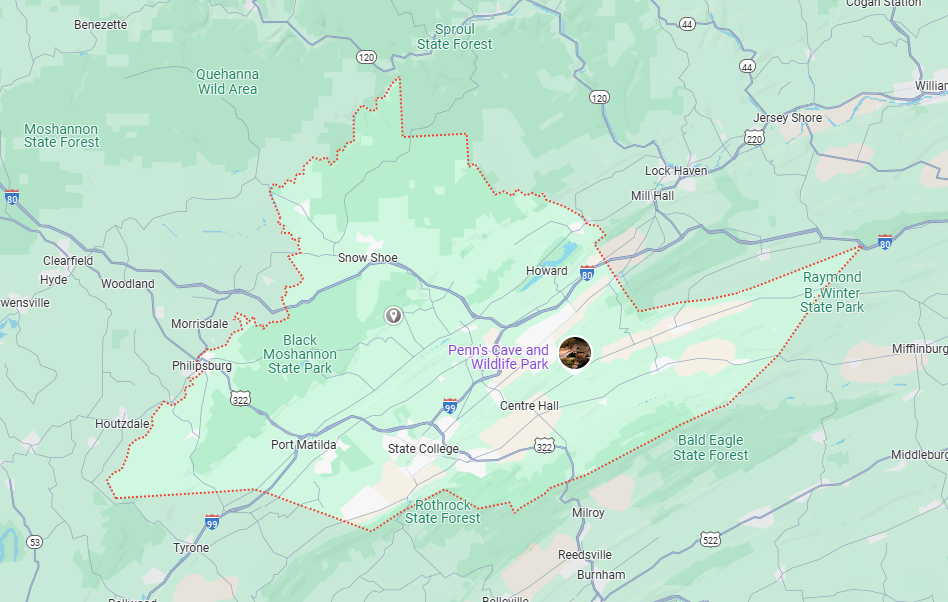
Centre County sits in the Ridge and Valley region of central Pennsylvania, with Nittany Valley running through the heart of the county between steep Appalachian ridges. The valley's limestone bedrock, active waterways, and heavy spring snowmelt create conditions that drive basement water intrusion in ways that catch a lot of homeowners off guard.
'58 Foundations & Waterproofing has been solving basement water problems since 1958. Our Certified Foundation Specialists inspect each home, identify what is driving the moisture, and provide a written estimate before any work is scheduled. We don't use subcontracted crews, and every job is backed by a Life-of-the-Structure Warranty. Call us to schedule your free inspection.
Nittany Valley sits on limestone bedrock, and limestone behaves differently than the clay soils that drive water problems in other parts of the Mid-Atlantic. Water moves through fractures in limestone rather than around it, carving underground pathways over time. That subsurface movement means groundwater in this valley can shift and surface in ways that aren't always predictable from what the yard looks like above ground. The Pennsylvania Geological Survey has formally catalogued karst features throughout Centre County, including sinkholes and surface depressions in and around State College.
The steep ridges that flank the valley accelerate the problem seasonally. When snow accumulates on those ridges through winter and then melts rapidly in spring, the runoff moves fast down toward the valley floor. Combined with spring rainfall, that surge raises the water table and saturates soil around foundations before drainage systems can keep pace. Bald Eagle Creek, Spring Creek, and Penns Creek all run through the county, and each has a documented history of elevated spring flows that affect the surrounding ground.
Homes built on the valley floor sit on soil that has been shaped by centuries of water moving through and around limestone. That soil can be inconsistent in how it drains and how much pressure it transmits to foundation walls. What looks like a simple seepage problem at the wall base is often the result of groundwater moving through the subsurface in ways that aren't visible from the surface.
Most homeowners don't call about a flooded basement. They call about a stain they have been painting over for two years, a smell that comes back every time it rains, or a crack in the wall that was hairline last spring and isn't anymore. Those are the things that disrupt daily life and quietly eat away at a home. If any of the following look familiar, the water problem behind them is worth understanding before it gets larger.
Rust stains show up as orange or brown streaks running down basement walls or spreading across the floor near metal posts, pipe connections, or wall anchors. They are easy to mistake for dirt or old paint, but the streaking pattern and the orange tint are distinctive. If you are seeing them in multiple spots, moisture has been present long enough to corrode metal. Learn more about rust stains in the basement.
The bottom foot of drywall in a finished basement is usually the first place water damage shows up. Look for paint that is bubbling or peeling at the base, soft spots when you press on the wall, or visible crumbling at the bottom edge. By the time drywall reaches that state, it has been holding moisture for a while. Learn more about water-damaged drywall.
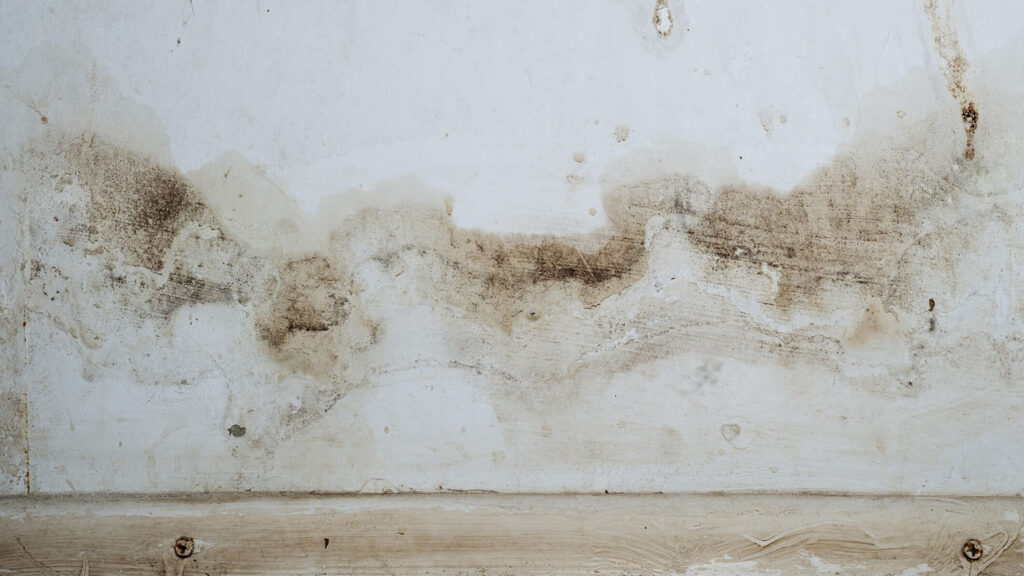
Water stains appear as dark patches, yellowish discoloration, or white mineral outlines on basement walls and floors. They mark the path water has taken through the material. A single stain after a heavy storm is one thing. The same stain coming back, or new ones appearing nearby, means water is finding the same entry points repeatedly. Learn more about water stains in the basement.
Termite damage in a basement often looks like wood that has been hollowed from the inside, leaving a thin outer shell. Tap on floor joists or wood framing and listen for a hollow sound. Mud tubes running up walls or along the foundation, and small piles of fine powdery debris near wood, are also indicators. Learn more about termite damage.
Basement mold can look like black, green, or gray spotting on walls, floors, wood framing, or stored items. It often appears first in corners, along the base of walls, or on the underside of joists. Check behind stored boxes and in areas that don't get much air circulation. Learn more about mold basement damage.
Efflorescence looks like a white or grayish chalky powder coating the surface of concrete or block walls. It wipes off easily, but comes back. If you have been scrubbing it off your basement walls for years, water has been moving through those walls for years. Learn more about efflorescence.
A basement that smells like damp earth or old laundry, especially after rain or during the spring thaw, is holding more moisture than it should. The smell is often strongest near the walls where water is entering or near areas where mold has begun to grow. Learn more about musty odors in the basement.
A crack that is actively wet, shows a white mineral trail, or has a damp halo around it is letting water through under pressure. You may notice it dripping after heavy rain or during snowmelt. The water will keep coming through the same crack until the pressure driving it is relieved. Learn more about leaking cracks.
Cracks in basement floors often appear as thin lines running across the slab, sometimes with one side slightly higher than the other. Wall cracks can run vertically, diagonally from corners, or horizontally across block walls. Any crack that has visibly widened since you first noticed it deserves attention. Learn more about floor and wall cracks.
Limestone terrain, steep ridge runoff, and a water table that climbs every spring make basement water problems in Centre County worth addressing with the right system for the specific condition. We assess each home before recommending anything.
When ridge runoff reaches the valley floor faster than the ground can absorb it, yards and foundation perimeters bear the load. Exterior drainage corrections intercept that water at the surface and redirect it before it saturates the soil against your basement walls.
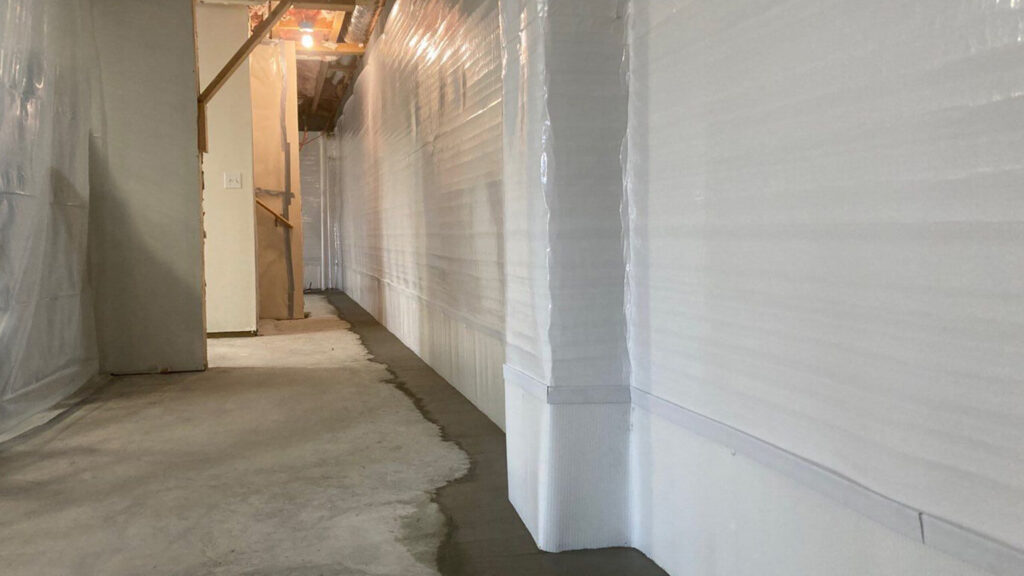
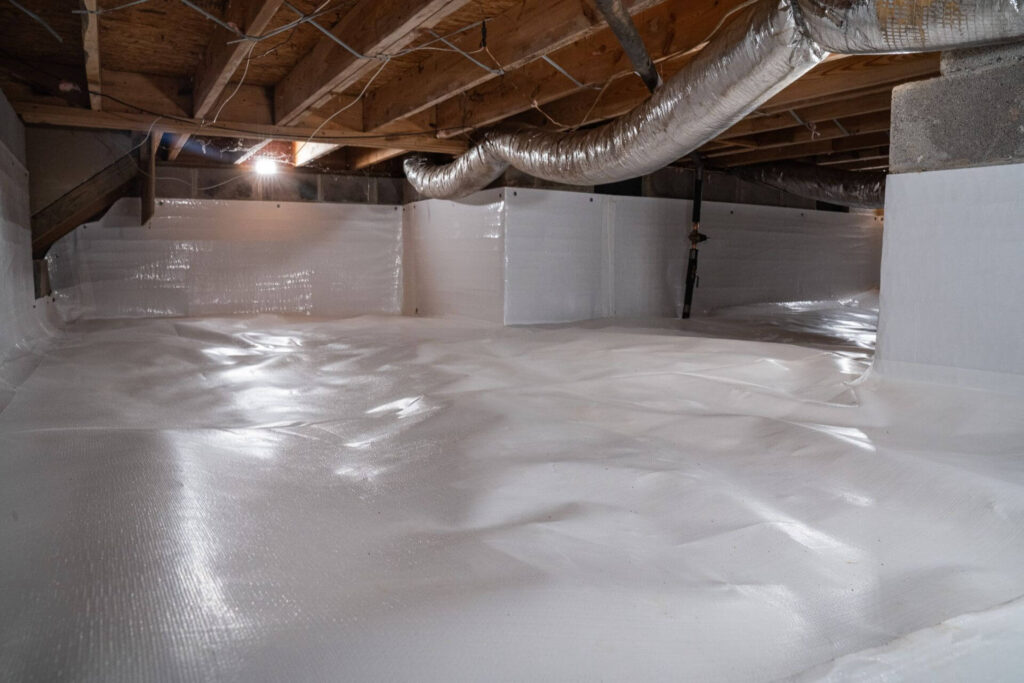
Moisture moves through concrete and block as vapor even without visible cracks or seepage. In a valley where groundwater is active beneath the surface year-round, that vapor pressure works against basement walls continuously. Vapor barriers and wall membranes stop that transmission at the wall surface.
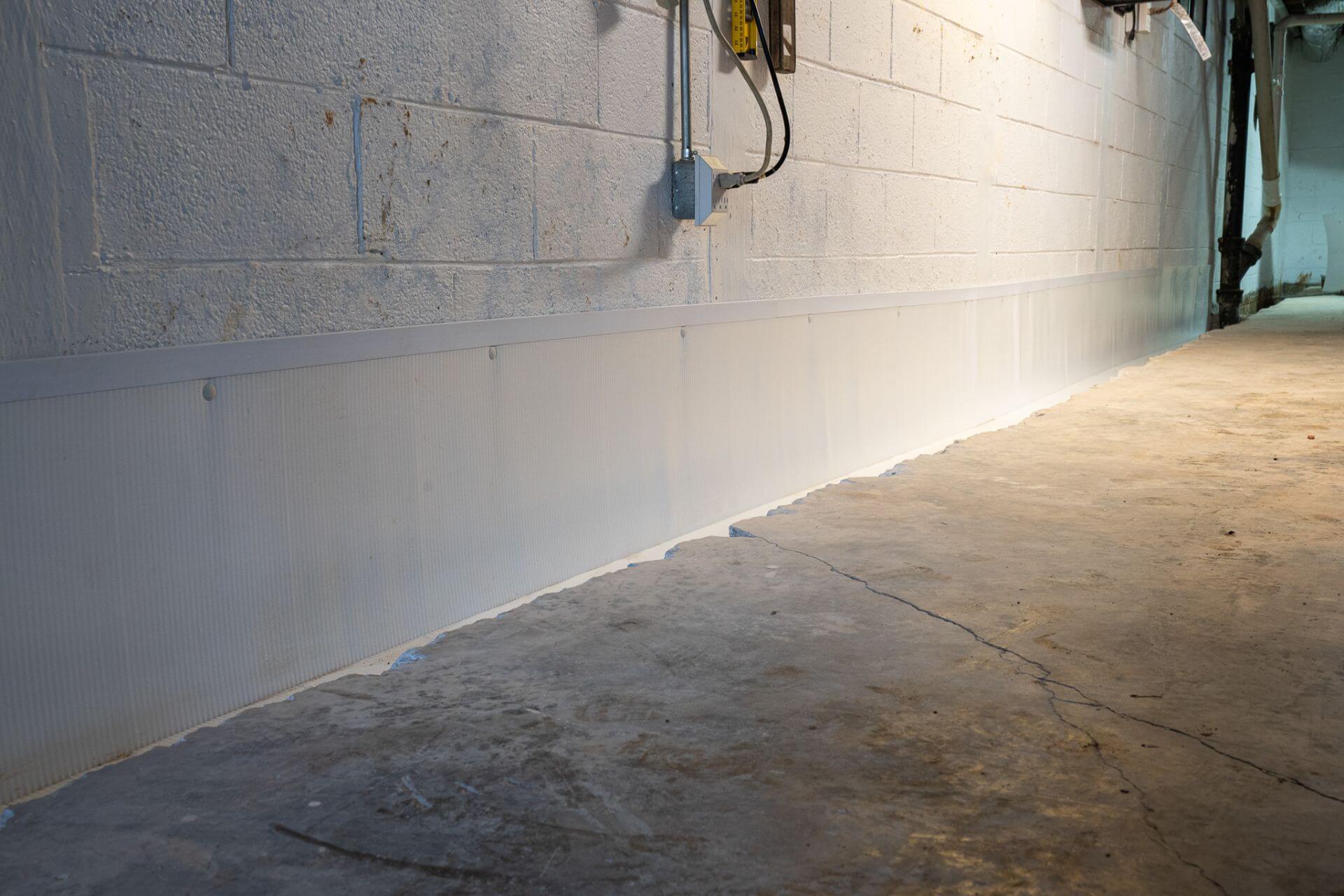
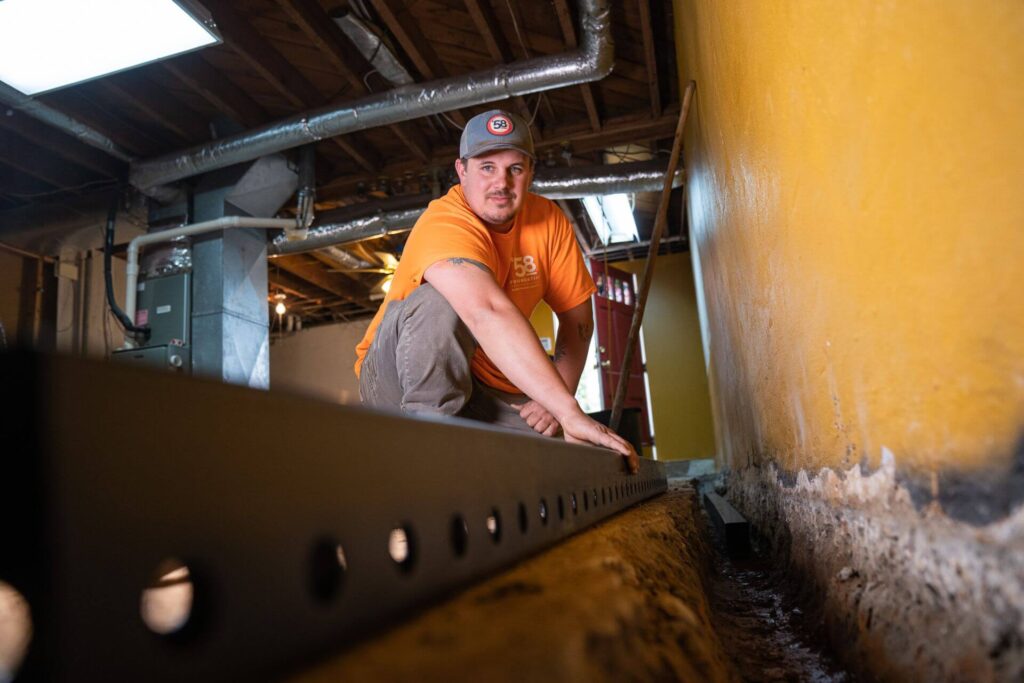
When groundwater rises each spring and presses against foundation walls for weeks at a time, managing what gets through is often more reliable than trying to keep it all out. Channel 58 interior drainage runs along the foundation perimeter at floor level, capturing water as it enters through the wall base and routing it to the sump pit before it reaches the floor and causes damage.
The sump pump removes what the drainage system collects and discharges it away from the home. During the heavy rain and snowmelt events that push water table levels up across Nittany Valley each spring, the Workhorse OT battery backup keeps the system running if the power goes out.
A basement that shows no active leaks can still carry enough airborne moisture to support mold growth and damage stored belongings. Centre County's wet winters and humid summers keep basement humidity elevated for long stretches. Our HumidiGuard dehumidifier is built for the sustained load that below-grade spaces in this climate carry year-round.
Where moisture has allowed mold to take hold, it needs to be cleared before waterproofing work begins. We provide professional mold remediation when the inspection finds it.
Learn more about our Basement Waterproofing services.»
A sump pump works by sitting in a pit at the low point of your basement and activating when water reaches a set level, pushing it out through a discharge line routed away from the house. What most homeowners don't think about is what happens between the wall and the pit. Without a drainage path feeding the pump, water spreads across the floor before the pump ever sees it.
Channel 58 interior drainage solves that. It runs along the foundation perimeter at floor level, catching water as it pushes through the wall base and directing it straight to the sump pit. In a valley where limestone bedrock channels groundwater through subsurface fractures and spring snowmelt from the surrounding ridges raises water levels across the valley floor, having a system that collects water at the point of entry rather than after it has already spread makes a real difference.
The Workhorse OT battery backup runs on a marine-grade battery and takes over the moment the primary pump fails or loses power. Heavy rainfall events in Centre County, particularly when they combine with snowmelt off the Appalachian ridges, are the conditions most likely to overwhelm a single pump setup. Having a backup that activates without any input from the homeowner means the system keeps running through the worst of it.
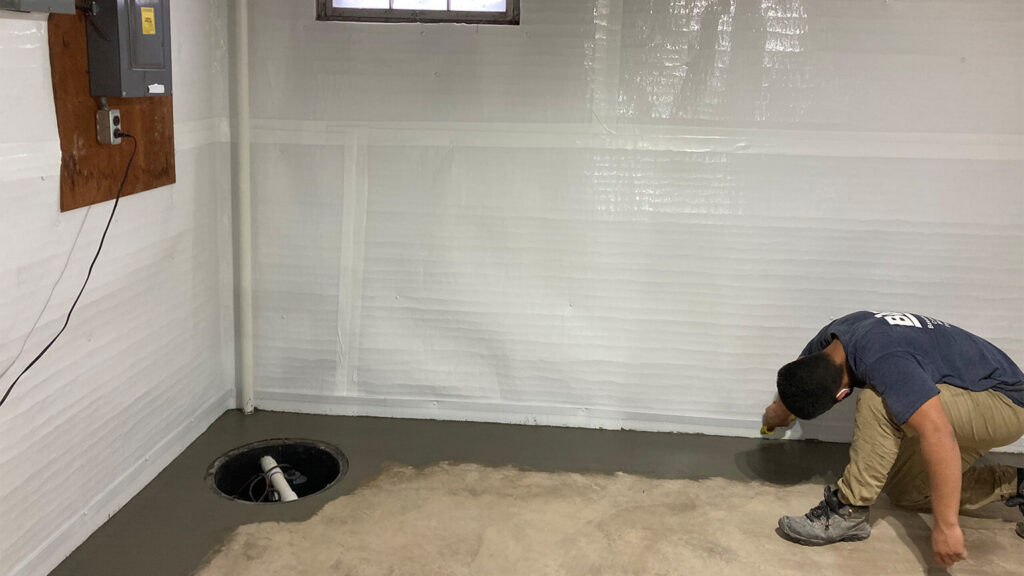
Basement waterproofing costs vary because no two water problems are the same. The crack a homeowner notices on the wall is where the problem surfaces, not necessarily where it starts.
A basement taking on water because spring snowmelt has raised the water table across the valley floor is a different scope of work than one where a single wall joint has been admitting water during heavy rain. A home where limestone groundwater is moving through subsurface fractures and surfacing unpredictably requires a different approach than one where poor yard grading is feeding runoff against the foundation. The systems needed follow what the inspection finds.
These are the factors that shape what a waterproofing project involves:
'58 Foundations & Waterproofing provides free inspections with written estimates. Your Certified Foundation Specialist will assess the property, identify what is driving the moisture, and give you a clear picture of what the work involves before anything is scheduled.
Basement water problems in karst terrain don't always follow the same pattern from one home to the next. Limestone groundwater moves through subsurface fractures, valley soils drain inconsistently, and spring snowmelt off the Appalachian ridges puts pressure on foundations that flat-terrain waterproofing approaches aren't always designed for. Getting the diagnosis right matters here more than it might elsewhere.
'58 Foundations & Waterproofing has been doing this work since 1958. Every inspection is handled by a Certified Foundation Specialist who evaluates the home and provides a written estimate before any work is scheduled. We don't use subcontracted crews. The people who show up are our employees, trained to our standards and accountable for the work they do.
We have earned the BBB Torch Award for Ethics four times across three regions in three years, and This Old House has recognized us as the most experienced company in our field. A Life-of-the-Structure Warranty backs every system we install.

Basement water problems in Nittany Valley don't resolve on their own, and the geology here means what looks like a minor issue at the surface can have more going on underneath. A free inspection with '58 Foundations & Waterproofing gives you a clear picture of what is actually happening before you decide what to do about it.
Contact '58 Foundations & Waterproofing today to schedule your free inspection. A Certified Foundation Specialist will evaluate your basement, explain what they find, and give you a clear plan for making it right.
Centre County Crawl Space Encapsulation
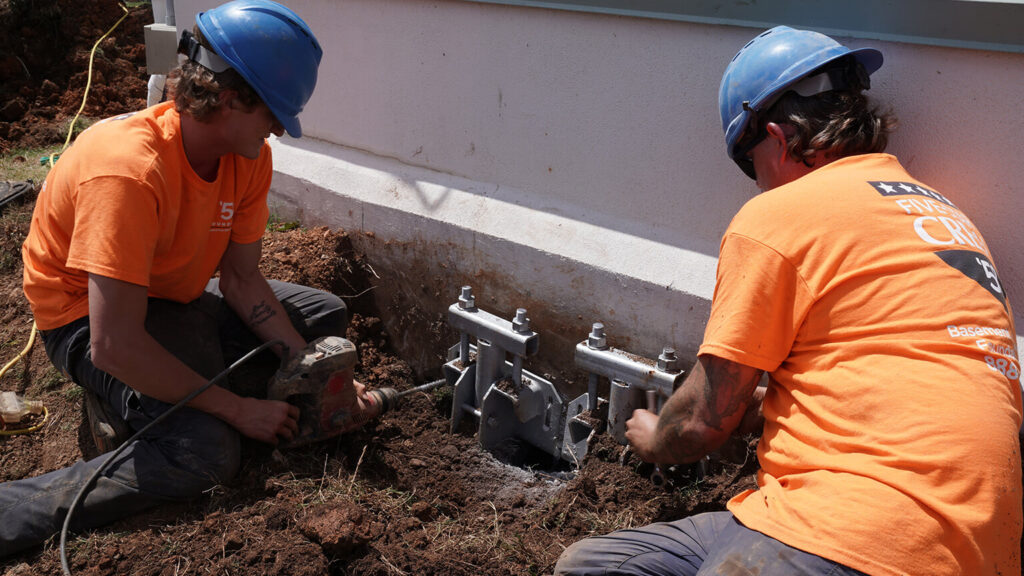
Bucks County Foundation Repair
We respect your privacy. By submitting, you authorize '58 Foundations and Waterproofing to reach you via call, email or text for information about your project needs. We will never share your personal information with third parties for marketing purposes. You can opt out at any time. Message/data rates may apply. Consent is not a condition of purchase. Privacy Policy