
Free Estimate
888-698-1958
Call for Priority Scheduling
888-698-1958
Call for Priority Scheduling
Book Online
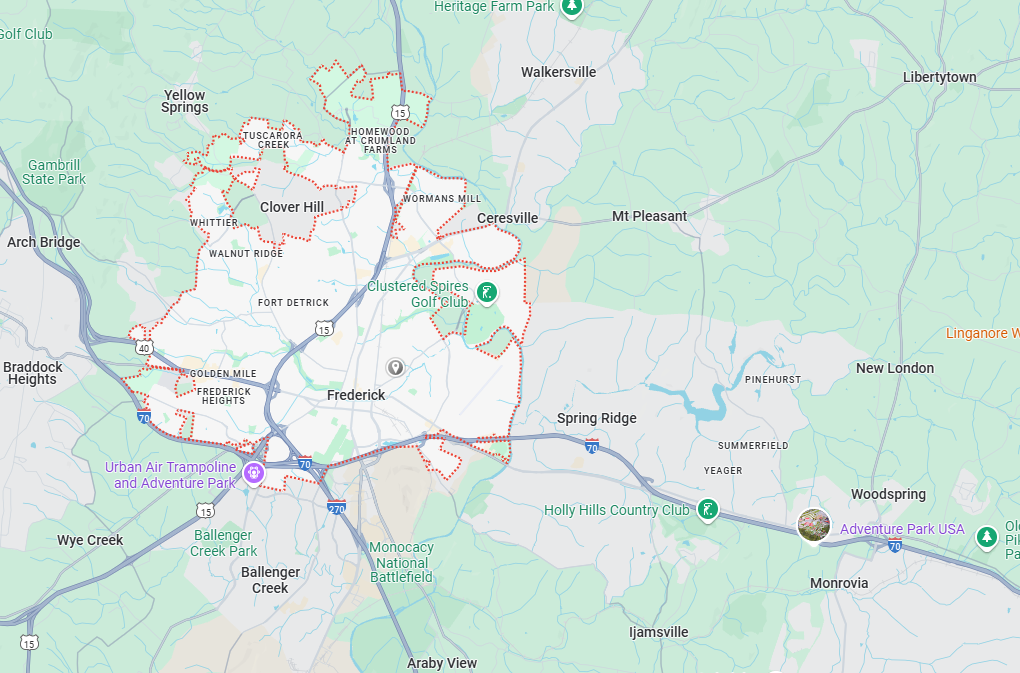
Homeowners in Frederick have relied on our experienced team for professional foundation repair since 1958. We address cracks, settling, and structural problems with proven methods that restore your home’s stability and safeguard its value for years to come.




Protecting the Homes That Anchor Frederick
Frederick may sit between the mountains and the plains, but what’s beneath your home is just as important as what’s around it. Shifting soils, sudden storms, and the freeze-thaw rhythm of a Maryland winter can all strain your foundation over time. Cracks appear. Floors begin to slope. Doors won’t shut quite right. And the longer it’s ignored, the more a foundation problem starts to feel like a threat instead of a repairable issue.
That’s where ’58 Foundations & Waterproofing comes in. We’ve worked on homes across Frederick, from older neighborhoods near Baker Park to newer builds along the Monocacy, and we know how to read the signs before they become serious. If something feels off underfoot, we’ll find out why and help you fix it the right way. Because your home deserves a foundation that holds firm season after season, year after year.
Most foundation issues in Frederick don’t start with a dramatic event. They start with the soil. Along the Monocacy River and throughout much of Frederick County, the ground beneath your home is a mix of clay, silt, and loam. During rainy seasons, the soil swells with moisture, pressing against basement walls and weakening the structure from the outside in. When the weather turns dry, the same soil pulls back, leaving gaps and causing the foundation to shift or settle unevenly.
Winter brings another layer of pressure. The freeze-thaw cycles common in Central Maryland force water in the soil to expand and contract repeatedly. That movement pushes against your foundation, forming new cracks or widening old ones. Over time, even a solid-looking structure can start to tilt, lean, or lose its grip entirely.
Older homes near Downtown Frederick and Hood College are especially vulnerable. Many were built before modern drainage standards and now sit on aging foundations exposed to decades of groundwater changes. But newer homes aren’t immune either, especially in areas with poor grading or compacted fill soil. When water doesn’t flow away from the structure, it builds up silently around the base, setting the stage for problems to come.
Foundation damage doesn’t always start with a dramatic crack. A door that sticks when it didn’t before. A hairline fracture in the drywall. A floor that feels a little less level than it used to. In Frederick’s variable soil and shifting temperatures, those early signs often point to something happening beneath the surface.
Here’s what to watch for:
Cracks in the basement walls or crawl space blocks.
Horizontal cracks or stair-step patterns along the inside of your basement often mean soil pressure is building on the outside. That pressure increases during heavy rain or snowmelt, forcing walls to bow, shift, or leak over time.
Drywall cracks and nail pops.
Look near windows, doors, and ceiling corners. Small diagonal cracks or visible nail heads pushing through the wall may indicate foundation settlement, especially when paired with other symptoms.
Floors that slope, sag, or bounce.
If your floor feels uneven underfoot, or if you notice dips or soft spots, it could be a sign of shifting support beams, moisture damage, or a foundation that’s no longer level beneath your home.
Doors and windows that no longer open or close properly.
Misaligned frames, stubborn locks, or doors that swing open on their own can all point to subtle but serious foundation movement. Likewise, doors that stick and windows that jam also suggest that your foundation has shifted.
Cracks in exterior brick or siding.
Stair-step cracks in masonry, gaps between the siding and foundation, or crumbling mortar around your porch or chimney often show that your foundation is moving with the soil beneath it.
Leaning or separating chimneys.
If your chimney is tilting away from the house or pulling away at the base, it’s a strong sign of foundation settlement in that part of your home. A leaning chimney may not just be about the chimney; it can signal a serious imbalance beneath the surface of the entire house.
Tilting or bowing basement walls.
Walls that lean inward or bulge near the center are under active pressure. Left untreated, they can begin to fail, leading to serious structural risk.
Even one of these signs can signal a developing issue. But when several appear together, it’s time to act. Foundation damage doesn’t fix itself, but the sooner it’s addressed, the easier and less expensive the repair.

At ’58 Foundations & Waterproofing, we design repair systems that match your home’s structure, the surrounding soil, and the specific cause of the damage and not just the symptoms. Whether you’re dealing with bowing walls, foundation settlement, or aging basement infrastructure, our team delivers real, lasting solutions.
Carbon Fiber Wall Straps
For early-stage bowing or cracking, carbon fiber wall straps provide low-profile reinforcement. These flexible yet strong straps are bonded to the wall to hold it in place and prevent further inward movement. They’re ideal for homes where the wall is still structurally sound but beginning to shift.
Steel I-Beams
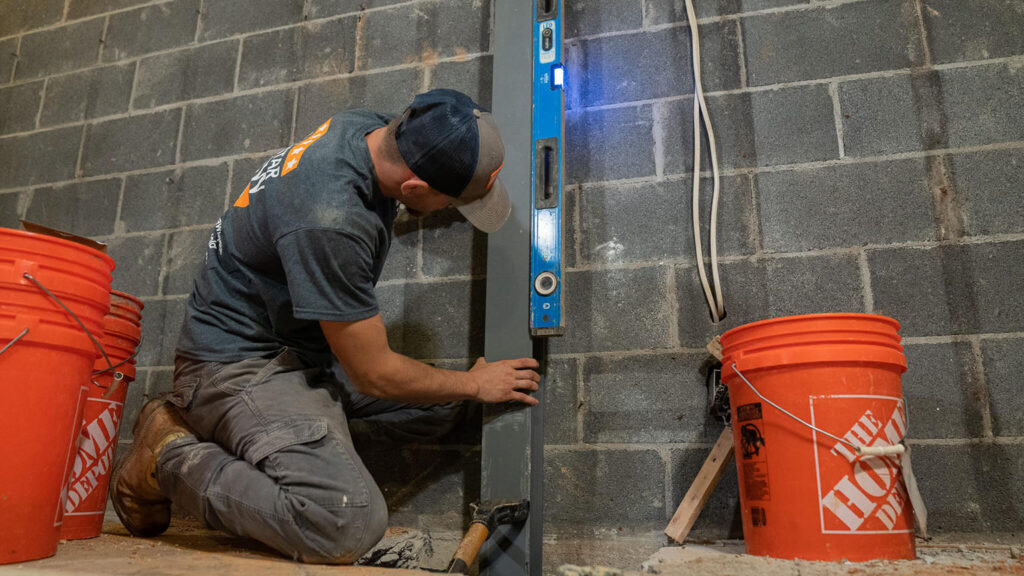
When bowing is more advanced, steel I-beams offer rigid structural support. Installed vertically along the inside of the wall, these beams brace against further deflection and restore strength without requiring excavation. They’re a common solution for older block walls throughout Frederick.
Helical Wall Anchors
For severe wall movement or walls at risk of collapse, helical anchors are installed deep into stable soil outside the foundation. Once secured, they are tensioned to pull the wall back toward plumb and permanently stabilize the structure. These anchors are ideal for homes near slopes, runoff zones, or areas with highly active soil.
Foundation Pier Systems
When a home is settling or sinking, piers are installed beneath the footing to shift the structural load to stable ground below. We use both push piers and helical piers, depending on the soil conditions and the building's weight. These systems stop further settlement and can often lift the home back toward its original position.
Carbon Fiber Floor Stitches
To address basement floor cracks caused by slab movement, we install carbon fiber floor stitches. Floor stitches are reinforcement strips that are embedded across a floor crack to prevent spreading and reduce future stress. These help preserve both structural integrity and resale value.
Crawl Space Support Beams
If your home has sagging floors or soft framing, the issue may be inside the crawl space or basement. We use permanent supports to restore the floor’s original level and stop further shifting.
Basement Wall Replacement
In cases where a wall has failed beyond repair, we can fully remove and rebuild the wall structure using modern block or poured concrete. This process ensures long-term strength and safety, especially for homes with decades-old construction.
Basement Dig-Outs
For homes with low-clearance basements or shifting floors due to undersized foundation depth, we offer full basement dig-outs. This process increases headroom, resets the structural base, and can dramatically improve usability and long-term stability.
Learn more about our Foundation Repair Solutions.»
When part of your home begins to sink, it’s not just a cosmetic concern; it’s a structural warning sign. And in Frederick, where clay-rich soil blends with softer silt and loam, foundation settlement is a slow but common threat to long-term home stability. Throw in Maryland’s freeze-thaw cycles and inconsistent rainfall, and you’ve got a recipe for shifting soil beneath even the most well-built homes.
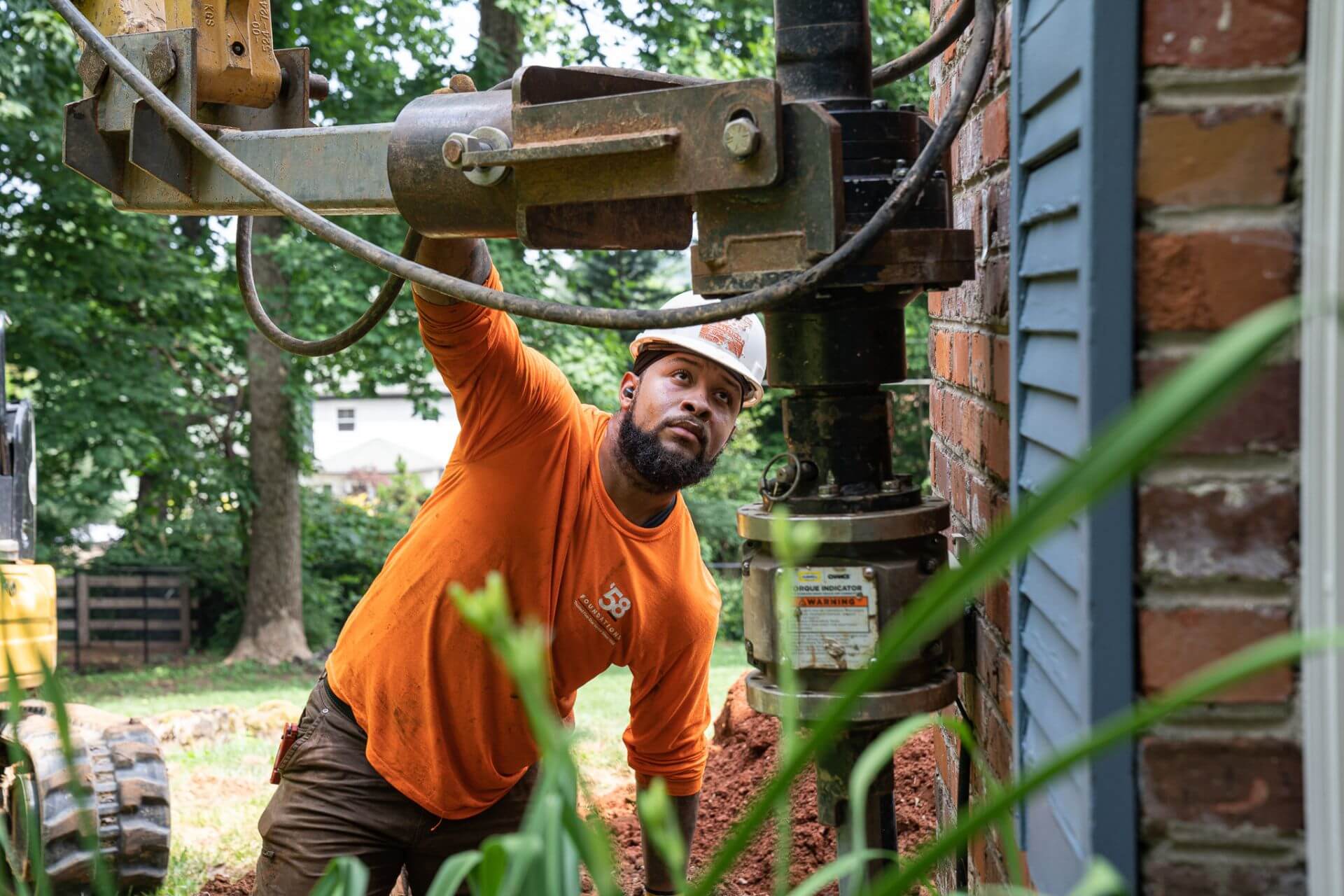
Foundation piers are one of the most effective ways to stop settling and restore support. Unlike surface-level repairs that only hide the damage, piers bypass unstable soil and transfer the weight of your home to deeper, load-bearing ground. Once installed, they prevent further movement and, in many cases, can gently lift sunken areas back toward their original elevation.
Foundation piers are structural elements installed beneath the footing of a home to stabilize it permanently. At ’58 Foundations & Waterproofing, we install two types of piers, each chosen based on your soil conditions and the weight of your home:
Helical Piers
These steel piers are twisted into the ground like large screws, making them ideal for lighter homes or areas with soft or inconsistent soil. They’re installed with minimal disruption to your landscaping and can be used year-round.
Push Piers
These piers are hydraulically driven into the ground until they reach stable soil or bedrock. The weight of your home is then transferred directly onto the piers. Push piers are typically used for heavier structures or more advanced settlement.
Each system is designed to match the specific needs of your home, not a one-size-fits-all solution. Once in place, piers provide permanent support and protect against future soil movement.
Frederick’s mix of historic neighborhoods and expanding new developments means foundation problems can show up in homes of all ages. Older homes near Hood College or along Rockwell Terrace often sit on foundations built before modern soil standards, while newer builds in fast-growing areas may rest on fill soil that settles over time.
Foundation piers help protect your home by:
Whether you're near Baker Park or along the outskirts of town, pier systems aren’t just a repair. They’re a reinforcement of everything your home depends on.

Foundation repair costs in Frederick can vary widely depending on the type of damage, the design of your home, and the repair method needed to restore stability. Some issues, like early wall movement, may be resolved with targeted reinforcement. Others, like foundation settlement or structural failure, may require full pier systems or wall replacement to correct.
At ’58 Foundations & Waterproofing, we don’t use one-size-fits-all pricing. Instead, we create a custom plan based on your home’s condition, soil, and structure. Our goal is to give you a clear, honest proposal that solves the real problem without upsells or unnecessary add-ons.
Type of repair needed:
Carbon fiber wall straps, steel I-beams, pier systems, and full wall replacements each require different materials, labor, and time.
Severity and spread of damage:
Homes with multiple failing walls, widespread cracks, or significant settlement will naturally require broader solutions.
Soil and site conditions:
Frederick’s mixed soil layers and water table changes can impact how deep we need to dig and which systems are appropriate.
Accessibility:
Tight crawl spaces, finished basements, or limited exterior access can affect both the scope and logistics of the repair.
We don’t oversell or overbuild. If your home doesn’t need a certain system, we won’t recommend it. That’s a promise.
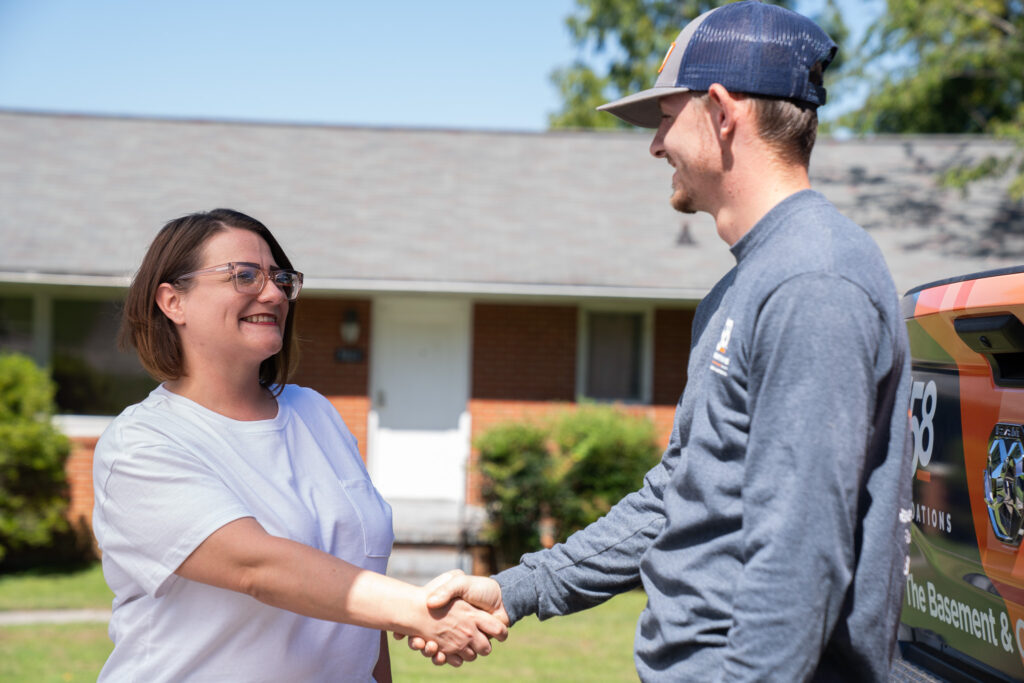
We offer free foundation inspections throughout Frederick and the surrounding area. After your evaluation, you’ll receive a detailed, written proposal that includes:
There’s no pressure, just straight answers from a Certified Foundation Specialist who understands Frederick’s homes and how to keep them standing strong.
When your foundation is showing signs of stress, you don’t just need a contractor; you need a team you can count on. At ’58 Foundations & Waterproofing, we’ve built our reputation by solving tough structural problems with care, clarity, and lasting results.
Homeowners across Frederick choose us because:
We know the local soil.
From the historic neighborhoods downtown to newer builds along the city’s edge, we understand how Frederick’s soil shifts, and we tailor every solution to match.
We don’t push what you don’t need.
Our Certified Foundation Specialists are trained to diagnose the root cause of the problem and not just sell a system. If your home doesn’t need it, we won’t recommend it.
We stand behind our work.
Most of our repairs are backed by our industry-leading Life-of-the-Structure Warranty. If something goes wrong with a covered system, we’ll make it right.
We respect your home.
Our crews are clean, professional, and careful at every job site. From setup to final walkthrough, we treat your home like it’s our own.
We make it make sense.
Foundation issues can be overwhelming. We take the time to explain what’s happening, what’s at risk, and how to fix it for good.
From cracked basement walls to sinking porches, Frederick homeowners know they can trust ’58 Foundations & Waterproofing to restore safety, value, and peace of mind.

If you’ve noticed cracks forming, floors shifting, or doors sticking in your Frederick home, don’t wait for the damage to get worse. The sooner foundation problems are diagnosed, the easier and more affordable they are to fix.
Let a Certified Foundation Specialist from ’58 Foundations & Waterproofing inspect your home and provide a repair plan you can trust. We proudly serve homeowners throughout Frederick and the surrounding areas with solutions designed to last.
Call today or fill out our online form to schedule your free, no-obligation inspection.
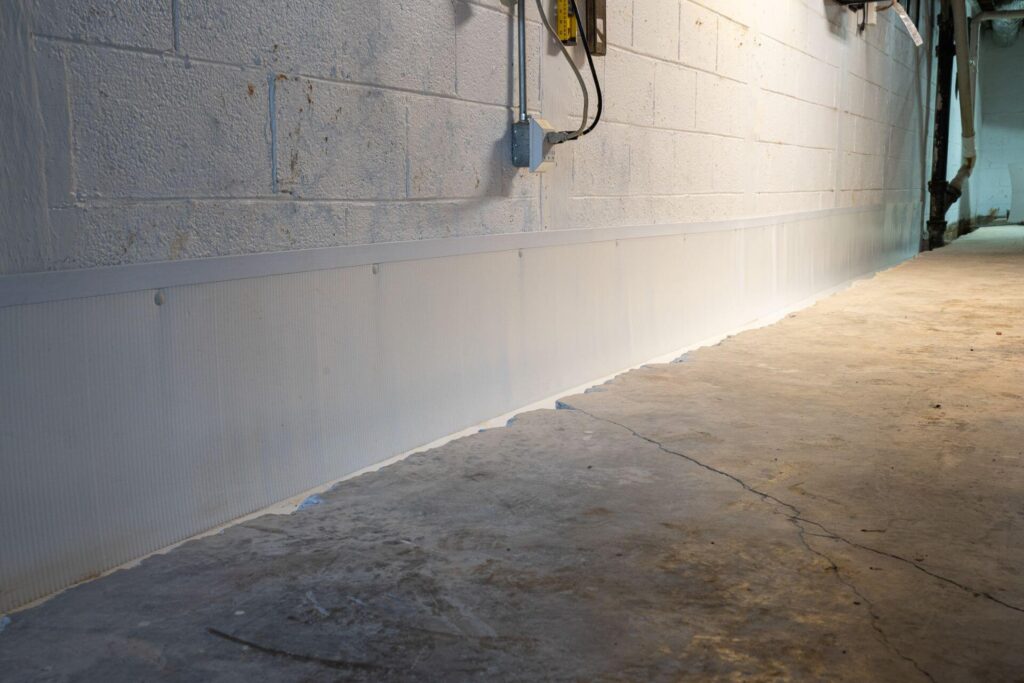
Frederick Basement Waterproofing
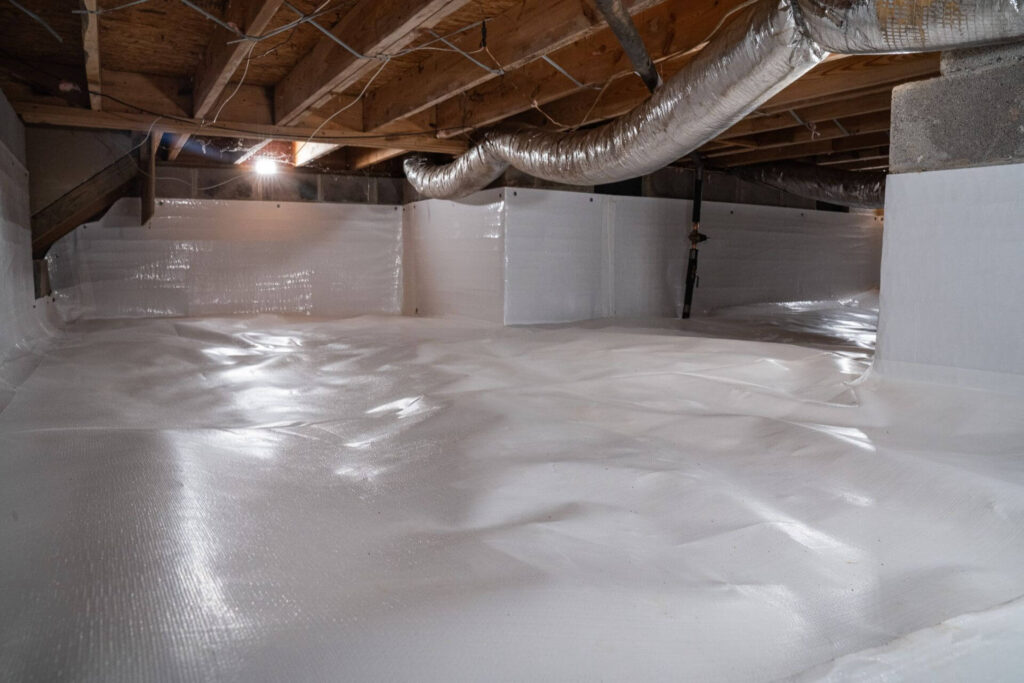
Frederick Crawl Space Encapsulation
We respect your privacy. By submitting, you authorize '58 Foundations and Waterproofing to reach you via call, email or text for information about your project needs. We will never share your personal information with third parties for marketing purposes. You can opt out at any time. Message/data rates may apply. Consent is not a condition of purchase. Privacy Policy