
Free Estimate
888-698-1958
Call for Priority Scheduling
888-698-1958
Call for Priority Scheduling
Book Online
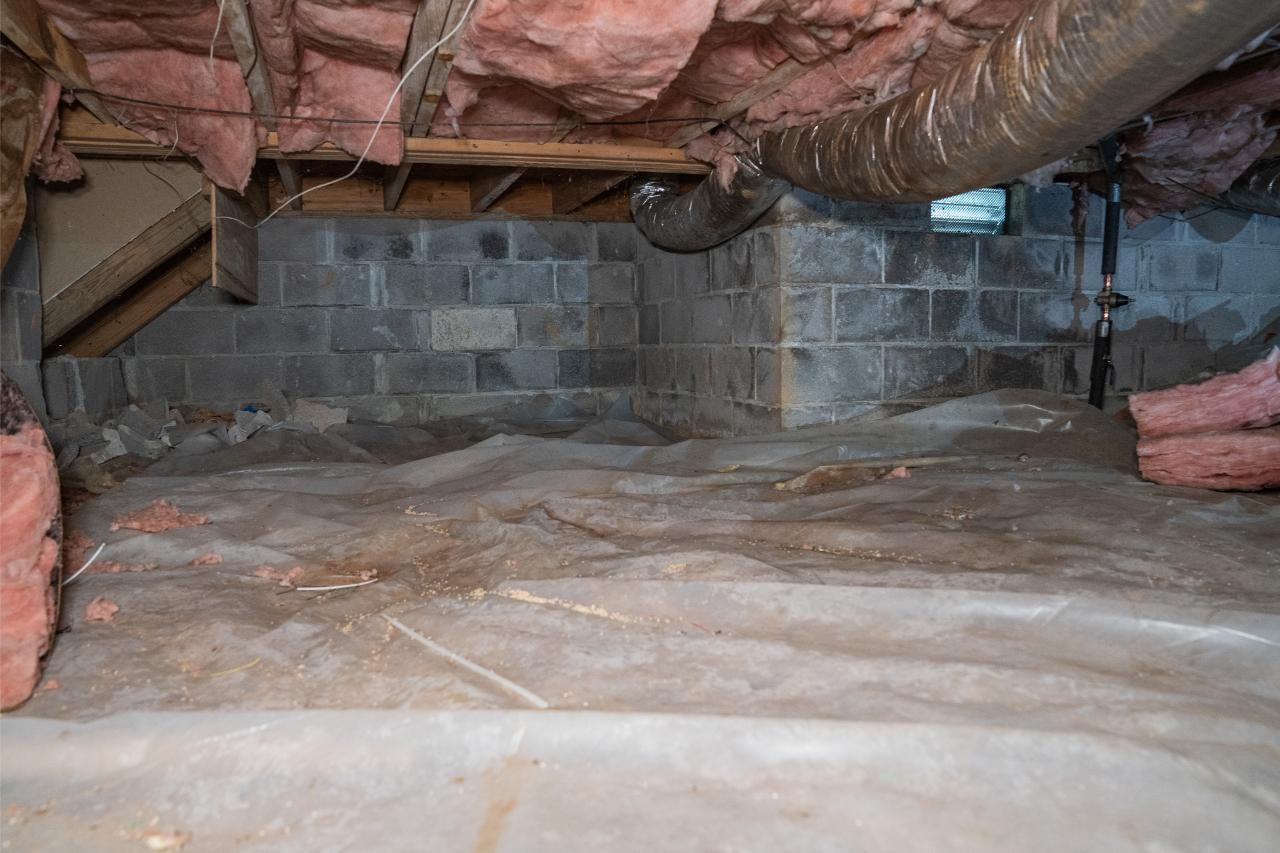
After a week of steady April rain, a lot of homeowners find themselves standing at the top of the basement stairs, noticing a smell they didn't notice before. Maybe there's a damp streak along the base of the wall, or the sump pump is running at odd hours. The basement isn't flooded. But something is happening that wasn't happening before the rain started.
Spring rain puts more sustained pressure on a basement than most homeowners expect. Saturated soil stays wet for days after the rain stops, keeping constant pressure against your foundation walls and floor. That prolonged saturation is what separates a system that works from one that simply hasn't been pushed yet.
Most basements handle winter reasonably well. Cold temperatures keep the ground frozen, which actually limits how much water moves through the soil toward your foundation. A dry February can make a basement feel perfectly sound even when the drainage system has problems that haven't surfaced yet.
Spring changes that. When the ground thaws, water that was locked in the soil starts moving again. Rain that would have run off frozen ground now soaks in. The soil around your foundation absorbs it, expands, and holds it there for days at a time. That sustained saturation creates hydrostatic pressure, the constant outward push of water-logged soil against your foundation walls and floor, that builds gradually and doesn't let up between storms the way it might in summer.
A single heavy thunderstorm in July is intense but brief. The ground drains, the pressure drops, and the basement gets a break. A stretch of spring rain that lasts four or five days gives the soil no chance to recover between events. By the time the second or third system moves through, the ground is already saturated from the first, and the pressure on your foundation is higher than it was at the start of the week.
A basement that stayed dry through winter isn't necessarily a basement with a working waterproofing system. It may just be a basement that hasn't been tested yet. Spring rain is where that distinction becomes clear. The signs that show up during or after a sustained rainy stretch are often the first real indication of how well a waterproofing system is actually performing under pressure.
The seam where your basement floor meets the wall is one of the most vulnerable points in any foundation. When hydrostatic pressure builds over several days of rain, water finds that joint first. You might see a thin bead of moisture, a damp discoloration along the base of the wall, or water that appears to be seeping up through the floor near the edges.
A pump that kept up fine last season may struggle when the water table rises and stays elevated for days. If yours is cycling on and off through the night or running without stopping, it's a sign the system is being pushed beyond what it was sized to handle.
Those white chalky deposits on basement walls are left behind when water moves through concrete and evaporates. Seeing efflorescence reappear or spread after spring rains means water is still moving through the walls regardless of what was done to address it previously.
A basement that feels damp and heavy for days after a storm, or where stored items feel clammy to the touch, is holding moisture it shouldn't be. Lingering humidity after rain has stopped is a sign that moisture is still entering and the air isn't recovering on its own.
None of these signs mean the basement is about to flood. But each one points to a system that isn't keeping up, and spring is the season when that gap tends to grow.
Plenty of homeowners have tried to get ahead of a basement moisture problem with a coat of waterproofing paint or a tube of hydraulic cement pressed into a crack. Those fixes are easy to apply, and in dry conditions they can look like they worked. Spring is usually when the results come back.
Waterproofing paint sits on the surface of the concrete. It can slow vapor transmission in low-moisture conditions, but it has no capacity to resist hydrostatic pressure. When water-saturated soil pushes against your foundation for days at a time, that pressure works from the outside in. Paint applied to the inside of the wall is pushing against the same force from the wrong direction. It peels, bubbles, or simply lets water through at the points where it couldn't bond completely, which is most cracks and joints.
Hydraulic cement and caulk have the same fundamental limitation. They fill a gap but don't address why water is reaching that gap in the first place. A crack that gets patched without any drainage correction behind it is still sitting in saturated soil every spring. The patch may hold for a season or two, but the pressure that caused the crack hasn't changed, and it will find another path or reopen the same one.
Surface fixes treat the wall as the problem. A waterproofing system treats the water as the problem, intercepting it before it builds pressure against the foundation in the first place. That difference matters most in spring, when the ground stays wet long enough to expose every shortcut taken the season before.
A basement that comes through a week of spring rain without moisture, odor, or a pump running around the clock didn't get that way by accident. It has a system behind it where every component is doing a specific job, and those jobs are connected. Trying to solve a spring moisture problem with one piece of that system while ignoring the others is why so many basements stay wet year after year. Here's what a complete system looks like and what each part contributes.
The Channel 58 system is installed beneath the basement floor along the perimeter, where it intercepts water before it has a chance to rise into the living space.
The Workhorse pump removes water collected by the drainage system and discharges it away from the home.
A dry floor with saturated air is still a basement with a moisture problem. The HumidiGuard addresses what the drainage system can't.
No single component solves the problem on its own. Drainage without a properly sized pump leaves water with nowhere to go, and neither addresses the air quality that determines whether the space is actually usable after the storm passes.
Spring rain doesn't wait for a convenient time, and neither does the damage it causes when a waterproofing system isn't keeping up. A wet basement that gets dismissed after one storm tends to get worse by the next one, as saturated soil, strained drainage, and overtaxed pumps compound over the course of the season.
'58 Foundations & Waterproofing has been solving basement water problems since 1958. Every inspection is performed by a Certified Foundation Specialist who will assess what's happening, explain what's causing it, and provide a written estimate at no cost to you. There are no subcontracted crews and no pressure to make a decision on the spot.
If your basement showed any signs of moisture this spring, or if you've never had the system evaluated, now is the right time. Schedule your free inspection before the next round of rain arrives.





We respect your privacy. By submitting, you authorize '58 Foundations and Waterproofing to reach you via call, email or text for information about your project needs. We will never share your personal information with third parties for marketing purposes. You can opt out at any time. Message/data rates may apply. Consent is not a condition of purchase. Privacy Policy