
Free Estimate
888-698-1958
Call for Priority Scheduling
888-698-1958
Call for Priority Scheduling
Book Online
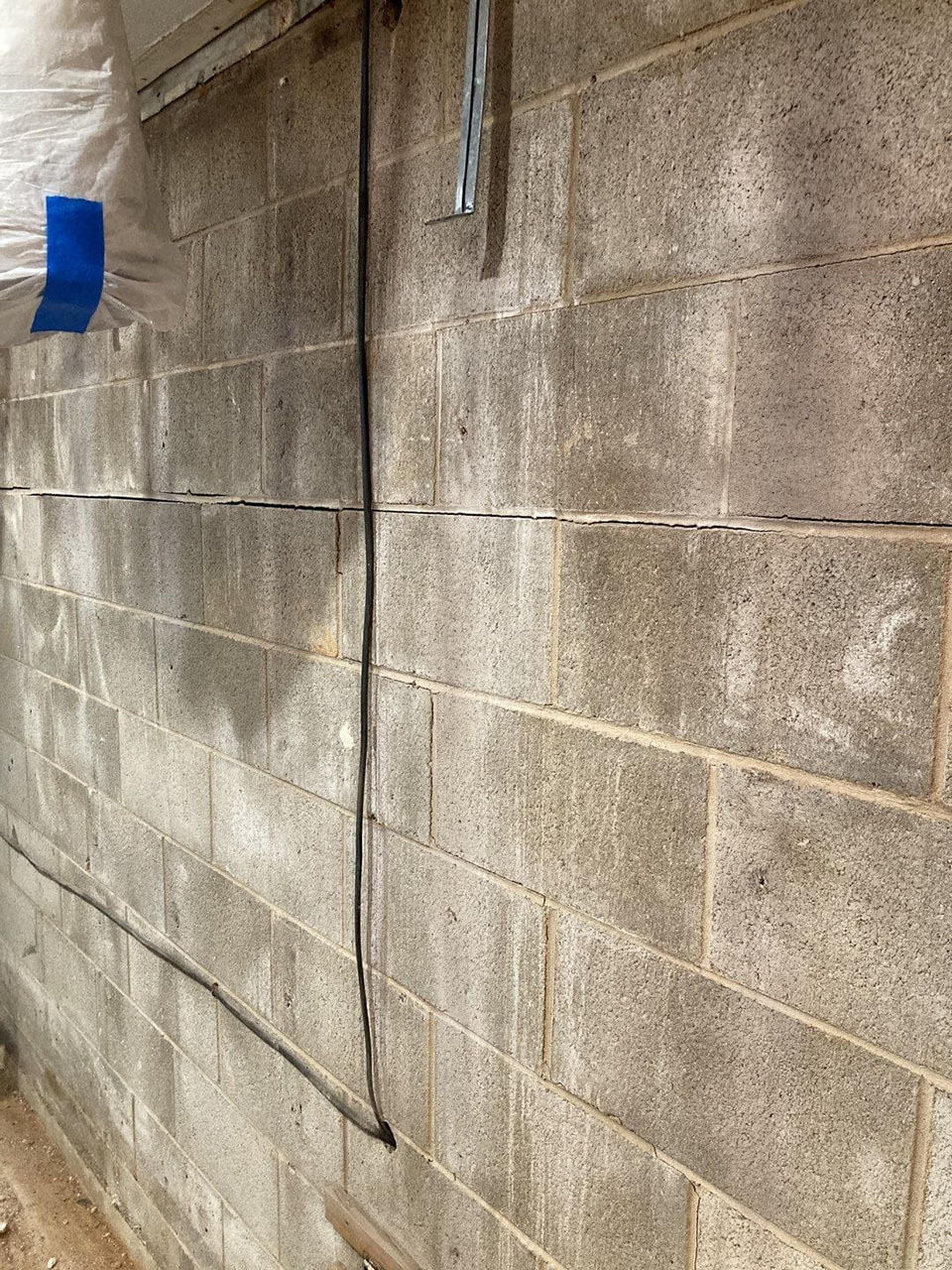
Hydrostatic pressure is the force saturated soil exerts against your foundation as water looks for somewhere to go. It's the root cause behind most basement water problems, including seeping cracks, bowing walls, and efflorescence. The damage is cumulative, and interior drainage systems with a sump pump are the most reliable way to manage it.
You've noticed it after a hard rain. Maybe it's a damp patch spreading across the lower half of a wall, or water beading up along the joint where the floor meets the foundation. You dry it out, and a few weeks later it's back. It's easy to assume there's a crack somewhere letting water in, and there probably is, but the crack isn't really the problem. The problem is the force behind it.
That force has a name: hydrostatic pressure. It's the reason water keeps finding its way into basements even after cracks are patched, and it's the reason a dry basement in August can turn into a wet one by October. Understanding what it is and where it comes from is the first step toward actually stopping it.
Hydrostatic pressure is the force that saturated soil exerts outward as water looks for somewhere to go. When rain soaks into the ground around your home, it fills the spaces between soil particles and accumulates in layers. The deeper the water table, the more weight is stacked above it, and the greater the pressure pushing against your foundation. Concrete and block walls handle vertical load well, but sustained lateral pressure from waterlogged soil is a different kind of stress. Over time, that outward push finds the path of least resistance, which is usually a hairline crack, a porous section of concrete, or the joint where your floor meets the wall.
It helps to think of your basement walls as a dam. A dam holds back water not because water isn't trying to get through, but because it's engineered to resist that force. A residential foundation wasn't built with the same intent. It was built to hold a house up, not to hold back a saturated hillside indefinitely.
Soil type, drainage, and the way your property is graded all affect how much water accumulates against your foundation and how fast it gets there. Not every home faces the same conditions, and some are set up in ways that make pressure significantly worse than it needs to be.
Any one of these conditions increases the load your foundation is working against. When two or three are present at the same time, the pressure compounds.
Contact '58 Foundations & Waterproofing
Hydrostatic pressure doesn't announce itself all at once. Most homeowners notice small things first: a damp patch on the lower portion of a wall, a white chalky residue along the base, a smell that wasn't there before. Those are early signs that pressure is working on the foundation. Left alone, the damage becomes more significant.
The most common effects include:
These symptoms share a common thread: they're all driven by the same force pushing from outside the wall, not by isolated defects in the concrete itself.
A small crack that lets in a trickle of water today creates a wider path for water tomorrow. As water moves through concrete it gradually erodes the material around the opening, making the gap larger with each cycle. A wall that shows early signs of bowing is already past the point where pressure has overcome its resistance. The further it moves, the more expensive and invasive the repair becomes.
Mold is another compounding factor. Persistent moisture along walls and at the cove joint creates the conditions mold needs to establish itself, and once it does, remediation adds cost and complexity to what started as a water problem. Wood framing and structural members in contact with a chronically damp foundation face the same risk from rot.
There's also the issue of home value. A wet basement that has been active long enough to show staining, efflorescence, and cracks is a disclosure item that buyers and inspectors will flag. Addressing it proactively is almost always less costly than addressing it under the pressure of a sale.
Hydrostatic pressure can't be eliminated entirely, but it can be managed. The goal is to give water a controlled path out before it builds enough force to cause damage.
Interior drainage systems are the most reliable solution for most homes. A channel installed along the perimeter of the basement floor collects water at the cove joint and directs it to a sump pit, where a sump pump moves it out of the house. This relieves pressure before it reaches the walls.
Exterior improvements like regrading and downspout extensions reduce the volume of water reaching the soil around your foundation in the first place. They aren't a substitute for interior drainage in a home that already has pressure-related damage, but they reduce the load.
Crack repair alone isn't a solution. Sealing a crack from the inside without addressing the pressure behind it is temporary. Water will find another path, or widen the one that was patched.
If you've noticed damp walls, seeping cracks, or efflorescence in your basement, hydrostatic pressure is likely behind it. The sooner it's assessed, the more straightforward the solution tends to be. Contact '58 Foundations & Waterproofing to schedule a free inspection with a Certified Foundation Specialist.





We respect your privacy. By submitting, you authorize '58 Foundations and Waterproofing to reach you via call, email or text for information about your project needs. We will never share your personal information with third parties for marketing purposes. You can opt out at any time. Message/data rates may apply. Consent is not a condition of purchase. Privacy Policy