
Free Estimate
888-698-1958
Call for Priority Scheduling
888-698-1958
Call for Priority Scheduling
Book Online

It happens slowly, almost invisibly. A thin crack forms near the corner of a window. One day, you notice the floor feels a little uneven. Doors don’t close quite like they used to. And you wonder: Is this just what happens to old houses… or is my foundation settling?
For South Carolina homeowners, that question isn’t always easy to answer. Humid summers, shifting clay soils, and older home construction can all contribute to movement over time. Some changes are harmless. Others are early warning signs of a foundation problem that could grow more costly with time.
Here’s how to tell the difference and when to call someone who can give you a straight answer.
Every home changes over time, even those with perfectly solid foundations. Materials expand and contract with the seasons. Paint fades. Wood dries out. Some minor signs of age are completely normal, especially in older South Carolina homes.
Here’s what you can usually chalk up to age:
These signs are cosmetic and expected as your home settles into its environment. They may come and go with the seasons, and they usually don’t point to anything deeper. But when the symptoms become more severe, or start appearing together, they may be pointing toward something below the surface.
Cracks that widen over time are one of the clearest signs your home may be settling beyond what’s normal. A small crack that slowly spreads, deepens, or runs diagonally, especially around door frames or in basement walls, can signal that your foundation is shifting unevenly.
Floors that slope or feel uneven often indicate a deeper issue. If furniture leans, balls roll, or you feel a dip as you walk across the room, it’s worth investigating. Uneven support from below could be causing the structure to tilt or sag.
Doors and windows that no longer fit right may start sticking, swinging open, or needing a push to close. This often happens when framing becomes misaligned due to pressure from foundation movement.
Cracks in exterior brick or block walls that zigzag or follow a stair-step pattern can be a sign that your foundation is settling differently in different areas. This kind of movement is common in parts of South Carolina where expansive clay soil reacts strongly to moisture changes.
Gaps between walls, floors, and ceilings often appear as the home’s framing pulls apart because of uneven settling. These separations can be especially alarming when trim begins to detach or light shines through at corners.
While any one of these signs can be unsettling, multiple symptoms appearing together or worsening over time are a strong signal that it’s time to have your foundation professionally evaluated.
South Carolina homes are especially vulnerable to foundation problems because of the region’s unique soil and weather conditions. Much of the state sits on expansive clay, a soil type that soaks up moisture like a sponge during wet seasons, then shrinks and hardens during dry spells. That constant cycle of swelling and shrinking creates uneven pressure on your foundation.
Combine that with high humidity, heavy summer rains, and occasional droughts, and it’s easy to see why even newer homes in South Carolina can experience unexpected settling.
In coastal areas and low-lying neighborhoods, poor drainage and shallow water tables can add even more stress. Water pooling near the foundation can soften the soil and lead to shifting, sinking, or hydrostatic pressure against the walls.
These conditions aren’t always within your control, but the earlier you catch them, the more options you’ll have to protect your home before major damage sets in.
If you're unsure whether the signs you're seeing are serious, you're not alone. Many South Carolina homeowners wait too long, hoping that the problem will go away or assuming it's just part of aging. But foundation issues rarely get better with time; they tend to grow, and so do the repair costs.
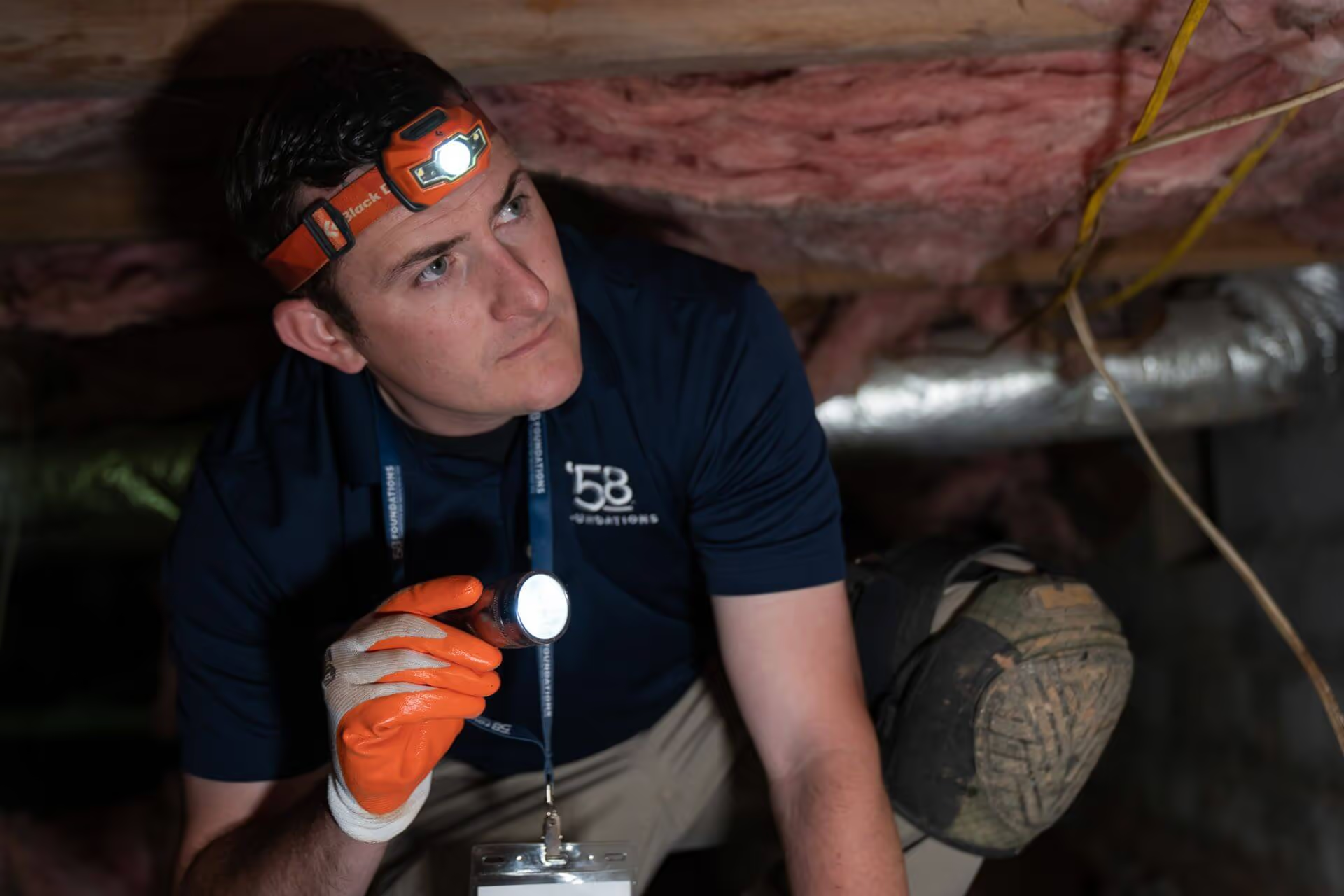
The safest move is to schedule a professional inspection. A qualified foundation contractor can determine whether you're seeing harmless aging or signs of real structural movement. And if there is a problem, catching it early can save you thousands in future repairs.
Even if you don't move forward right away, getting expert eyes on your home will give you peace of mind and a clear understanding of what you're dealing with.
If you’ve noticed cracks, sloping floors, or other changes in your home, it’s okay not to know what they mean. That’s where we come in.
At ’58 Foundations & Waterproofing, our South Carolina team is here to help you understand what’s happening beneath your home, without pressure or guesswork. Our Certified Foundation Specialists offer free inspections and honest answers, backed by a Life-of-the-Structure Warranty when repairs are needed.
You don’t have to wait until the signs get worse. Reach out today and let’s take a look together.





We respect your privacy. By submitting, you authorize '58 Foundations and Waterproofing to reach you via call, email or text for information about your project needs. We will never share your personal information with third parties for marketing purposes. You can opt out at any time. Message/data rates may apply. Consent is not a condition of purchase. Privacy Policy