
Free Estimate
888-698-1958
Call for Priority Scheduling
888-698-1958
Call for Priority Scheduling
Book Online
Choose '58 Foundations & Waterproofing for professional foundation repair in Leesburg. Our experienced team fixes cracks, settling, and structural issues to help keep your home strong, stable, and protected for years ahead.





Leesburg sits at a structural crossroads that most foundation companies don't bother to understand. The colonial-era homes near King Street and Cornwall Street were built on rubble stone and brick that predate modern engineering by a century or more. A few miles out, subdivisions like Lansdowne and Cascades were graded flat during construction, their clay soil compacted and regraded in ways that can take a decade to reveal their consequences. These are different homes with different problems, but they share the same underlying pressure: Loudoun County's heavy clay soil does not stay put.
At '58 Foundations & Waterproofing, we work across all of it. Our team understands what the ground here does across seasons, and what it takes to build a repair that holds through it.
Most foundation movement in Loudoun County starts with clay. The piedmont soils that dominate this region absorb water readily and expand when saturated. When a dry stretch follows, that same soil contracts and pulls away from footings, leaving voids beneath the structure. That cycle repeats every year, and over time, it translates into real movement.
Winter compounds the problem in ways that aren't an issue further south. Leesburg gets enough sustained freezing that frost heave is a genuine concern. When water in the soil freezes, it expands upward, pushing against slabs, footings, and foundation walls from below. A single winter can move a footing through repeated freeze-thaw cycles that wet soil alone would have taken years to shift. Homes in low spots where water pools before freezing, or on north-facing slopes that stay frozen longer, tend to feel this the most.
Properties near the Potomac River, along Goose Creek, and in the lower sections of the Leesburg area sit closer to the water table, and drainage moves slowly through that ground. After a wet stretch, hydrostatic pressure builds against foundation walls from saturated soil that has nowhere to go. It is a different mechanism than seasonal shrink-swell, but the damage it produces looks similar: bowing walls, seeping cracks, and floors that no longer sit level.
Older homes in the historic district face a separate set of challenges. Rubble stone foundations common in pre-Civil War construction were not designed for the loads placed on them by modern renovations or simply decades of use. Small amounts of soil movement that a modern poured foundation might absorb without visible change can translate into significant cracking or shifting in a foundation that was never engineered to flex.
In Leesburg, the soil is always doing something. Wet springs saturate the clay around your foundation, dry summers pull it back, and winter freeze cycles push up from below. By the time most homeowners notice something worth calling about, the ground has usually been moving beneath their home for longer than they realize. These are the signs that tend to show up first.
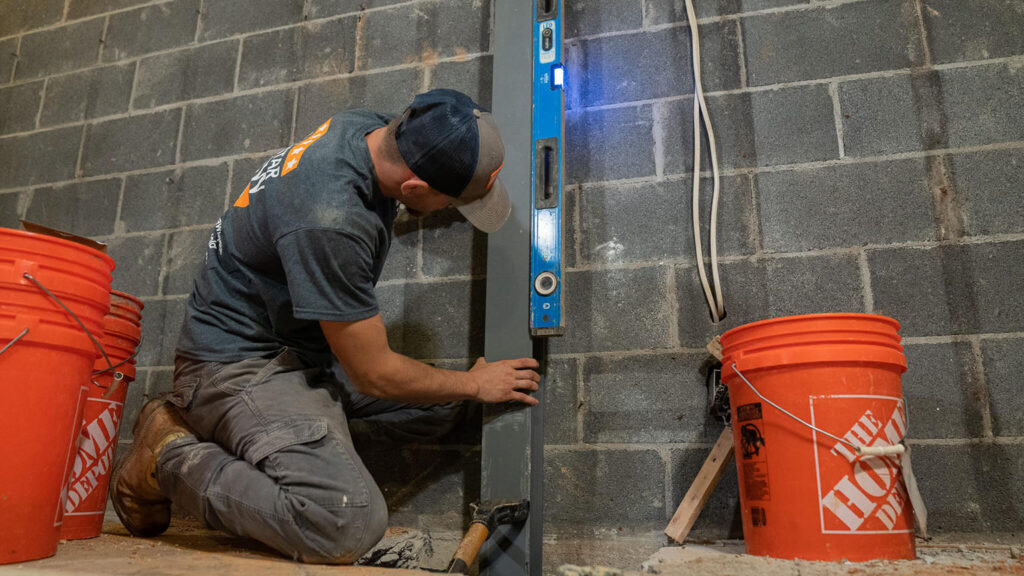
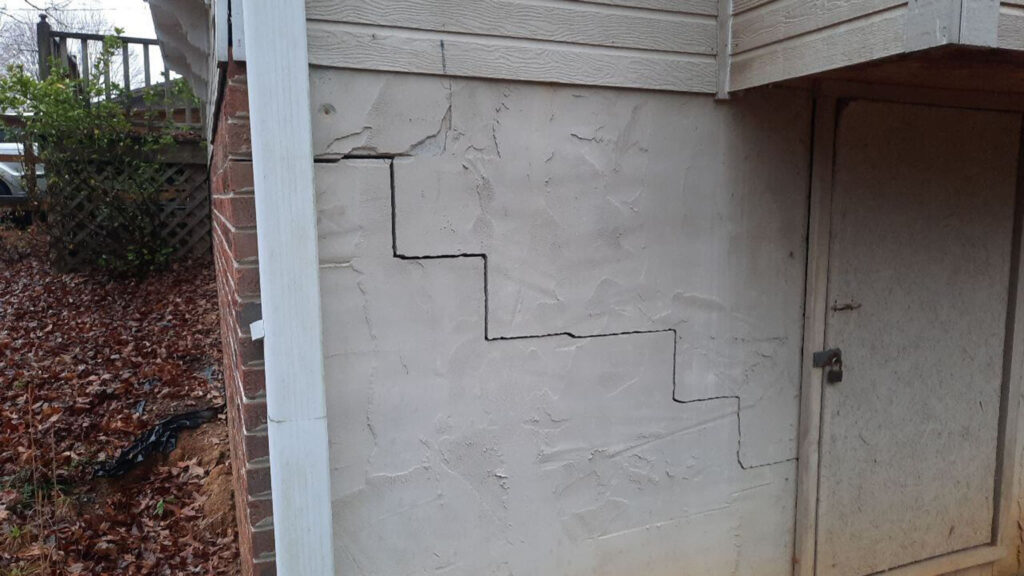
Horizontal cracks in concrete block walls are a direct indicator of lateral soil pressure from outside. Stair-step cracking follows mortar joints as the wall responds to that force. In poured concrete walls, vertical cracks can indicate shrinkage or settlement, depending on where they appear. None of these signs is routine aging. They are the foundation responding to the load.
Diagonal cracks at the corners of door and window frames, or nail heads that have started backing through drywall, usually mean the framing above is twisting as the foundation shifts below it. These interior signs sometimes appear before any crack shows up in the foundation itself, and homeowners often spend months blaming the drywall before tracing the source.
A floor that dips toward the center of a room or rolls noticeably from one wall toward another usually points to settling footings or failing crawl space supports. In older Leesburg homes with wood framing and block piers, this kind of movement tends to worsen with each winter-summer cycle as the clay beneath the piers keeps shifting.
A foundation settling unevenly pulls the frame above it out of square. Doors that latched fine in winter but drag on the floor by August, or windows with a visible gap along one side of the frame, are often tracking subtle seasonal movement below. The framing is not the problem. It is showing you where the problem is.
Walls that lean inward, particularly in the middle section where lateral pressure concentrates, are under active load from saturated soil outside. This type of movement is most common after a wet spring and can progress faster than homeowners expect. Waiting is not a neutral decision when a wall is actively moving.
Stair-step cracking in exterior brick or visible separation between the foundation and a porch slab often points to differential settlement where one section of the structure is sinking faster than the rest. Homes on sloped lots near the Catoctin Creek area see this pattern regularly, typically on the downhill side.
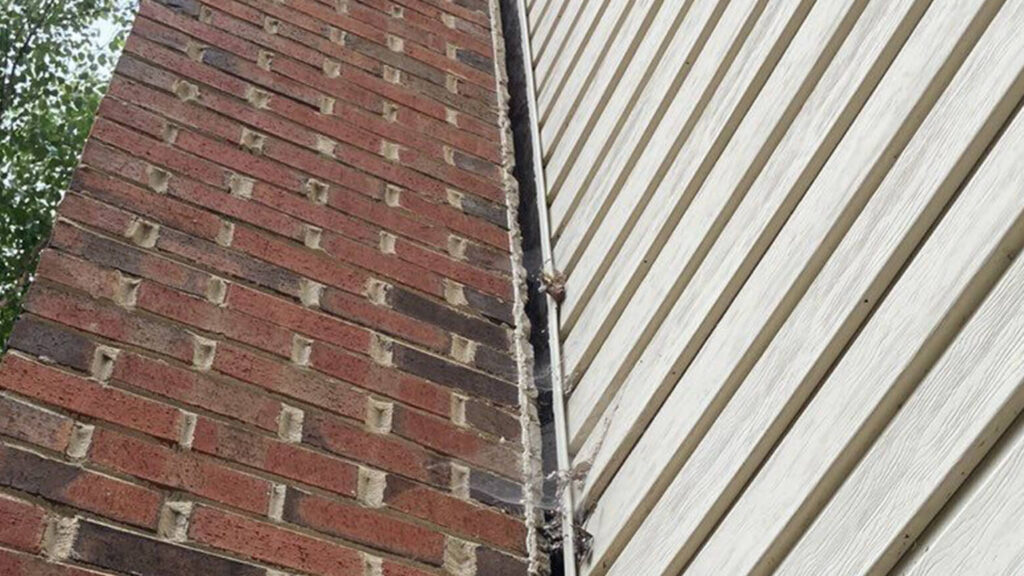
Chimneys sit on their own footings, independent of the main foundation, and in Loudoun County's clay soil, they often settle at a different rate than the rest of the house. A chimney leaning away from the siding, or with a visible gap where it meets the roofline, is not just a cosmetic issue. It is a foundation problem that happens to be visible from the outside. Catching it before the footing has moved far keeps the repair significantly simpler.
What we recommend depends on what the soil is doing, what the foundation is made of, and how far the movement has already progressed. Our team works with all the foundation types common to this area, from poured concrete in newer suburban homes to the older block, brick, and stone foundations throughout the historic district.
For walls bowing under lateral soil pressure, the right approach depends on how far the movement has gone. Carbon fiber reinforcement or steel I-beam supports work well in the early stages of deflection, locking the wall before movement can advance. For walls with more significant inward lean, wall anchor systems connect the foundation to stable soil further from the house and can be adjusted over time to gradually relieve the pressure. The choice between them is determined by what we find at inspection.
When a home is settling, we install pier systems beneath the footing to transfer the structural load past the shifting clay to stable soil or bedrock below. This is often the most durable long-term solution for settlement in Leesburg, where the clay layer responsible for movement can run several feet deep. In many cases, the pier system also allows us to partially lift settled sections back toward their original position, which closes gaps that have opened in the framing above.
Crawl space homes, common in older Leesburg neighborhoods, depend on wood beams and support posts to hold up the floor system. Moisture, age, and shifting soil can cause those components to rot, compress, or move out of position. We reinforce the damaged material with durable supports that restore the floor structure and address whatever was driving the deterioration.
For cracks that have stabilized and are no longer showing active movement, we seal the foundation cracks using materials that flex with the structure through seasonal changes. This closes the path for water intrusion and protects the joint from further deterioration. It is the right fix for cracks that are done moving, not a substitute for addressing movement that is still ongoing.
Learn more about our Foundation Repair Services.»
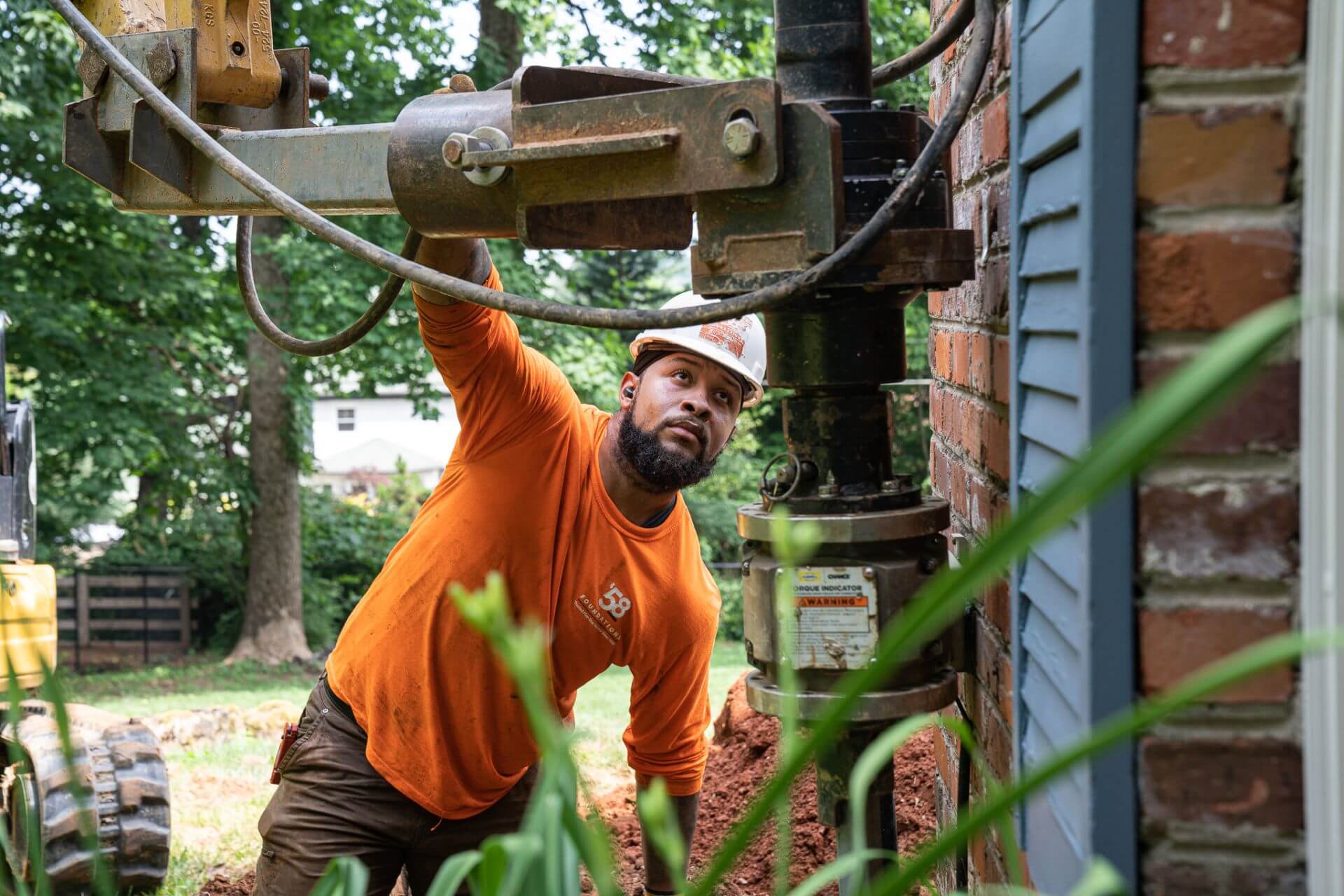
Settlement is one of the most consistent foundation problems we see across Loudoun County, and it rarely travels alone. A home that has settled even a small amount starts showing it in other ways: doors that no longer hang straight, floors that slope toward an outside wall, cracks that open a little wider each year. The structure above is reacting to what the ground below is doing.
Foundation piers address the source of that movement rather than the symptoms. They pass through the clay layer that is expanding, contracting, and shifting with every wet season and every freeze, and transfer the weight of the home to stable ground beneath it. Once in place, they stop the ongoing settlement that is stressing everything above.
Helical Piers are screwed into the ground using a hydraulic drive head and are well-suited to lighter structures or situations where access is limited. They work in tight crawl spaces, can be installed year-round, and do not require the weight of the home to advance them into the ground.
Push Piers are hydraulically driven using the weight of the structure itself as resistance. They advance until they reach load-bearing material, at which point the structural weight transfers from the footing to the pier. For heavier homes or more significant settlement, push piers tend to provide the most robust result.
In favorable conditions, both systems can be used to partially lift settled sections of the foundation back toward their original elevation. Not every home is a candidate for lifting, but when it is possible, it can close gaps, relieve stress on door frames, and reduce the floor slope that has accumulated over the years of movement.
Loudoun County's clay-heavy soil and the seasonal extremes this area sees make piers one of the most reliable long-term investments a Leesburg homeowner can make in their foundation.

Foundation repair costs vary significantly depending on what is actually happening beneath the home. A single bowing wall caught early requires a very different scope than a home with settlement across multiple corners and an active drainage problem feeding it. There is no honest way to quote a number without seeing the foundation first.
Factors that most often affect cost include:
What You Can Expect
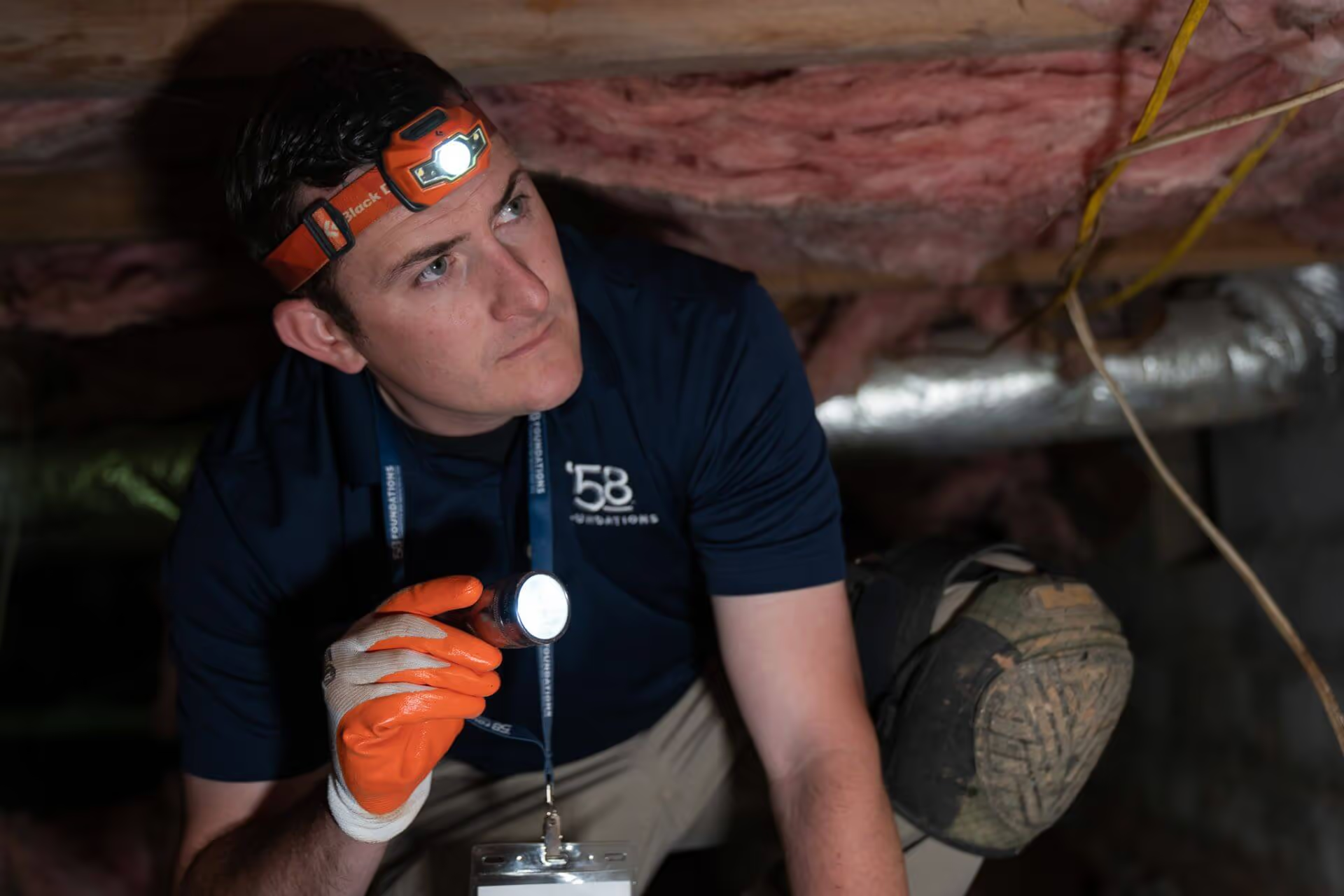
After every inspection, we provide a detailed written proposal. You will receive a clear explanation of what is happening beneath your home, specific repair recommendations based on your foundation type and soil conditions, transparent pricing with no hidden costs, and a timeline for completion with full warranty coverage. No high-pressure sales pitch, just honest answers from a Certified Foundation Specialist who understands what Leesburg homes are up against.
Foundation work is not a category where the cheapest option tends to hold up. A repair that lasts one season before the clay shifts again is not a repair at all, and Leesburg homeowners who have done their research know the difference between a company that understands local soil conditions and one running the same playbook in every market.
We have been doing this work for over 60 years. Our inspectors look at the specific conditions in your home and explain what they find in plain terms, without manufactured urgency or a script designed to move you toward the most expensive option. What consistently matters to homeowners across Loudoun County:
From historic homes in Old Town to newer builds on the suburban edge of Loudoun County, we are proud to be the foundation repair company Leesburg homeowners trust when the stakes are real.
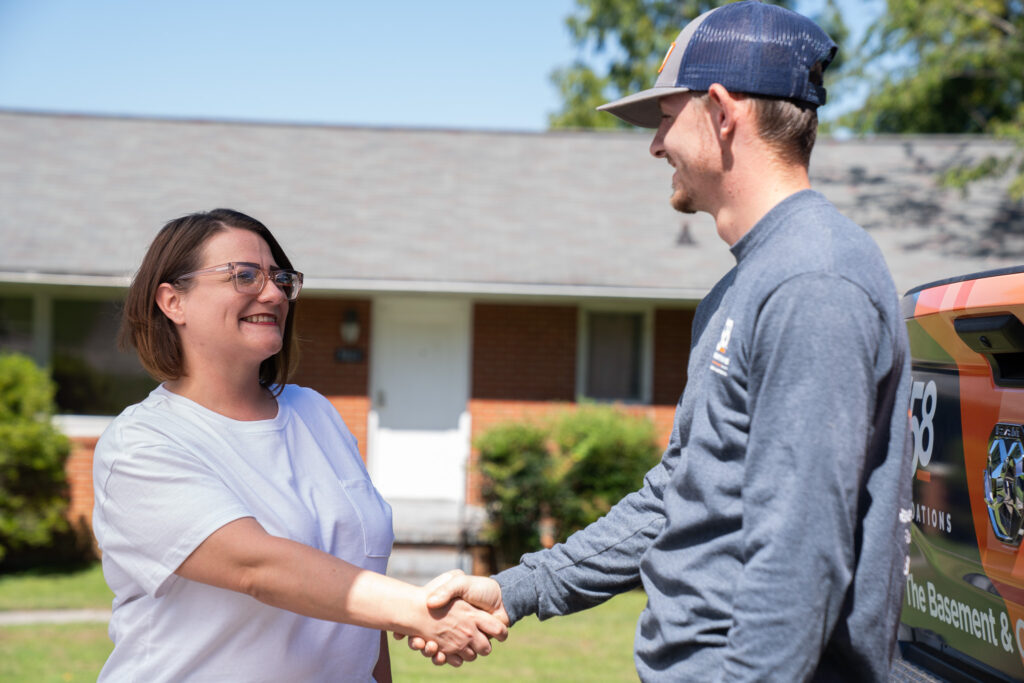
If you have noticed cracks forming, floors that feel off, or doors that stopped behaving the way they used to, it is worth having someone look before the next wet season adds more pressure to the situation. Foundation problems in Leesburg move slowly until conditions change, and the repair options are better the earlier the movement is caught.

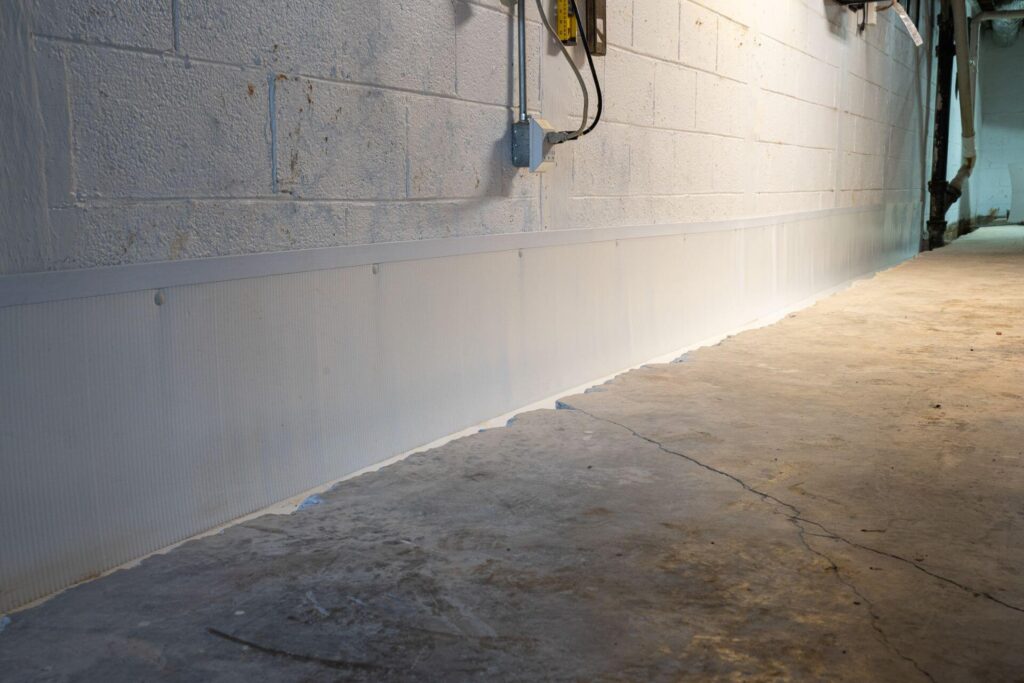
Leesburg Basement Waterproofing
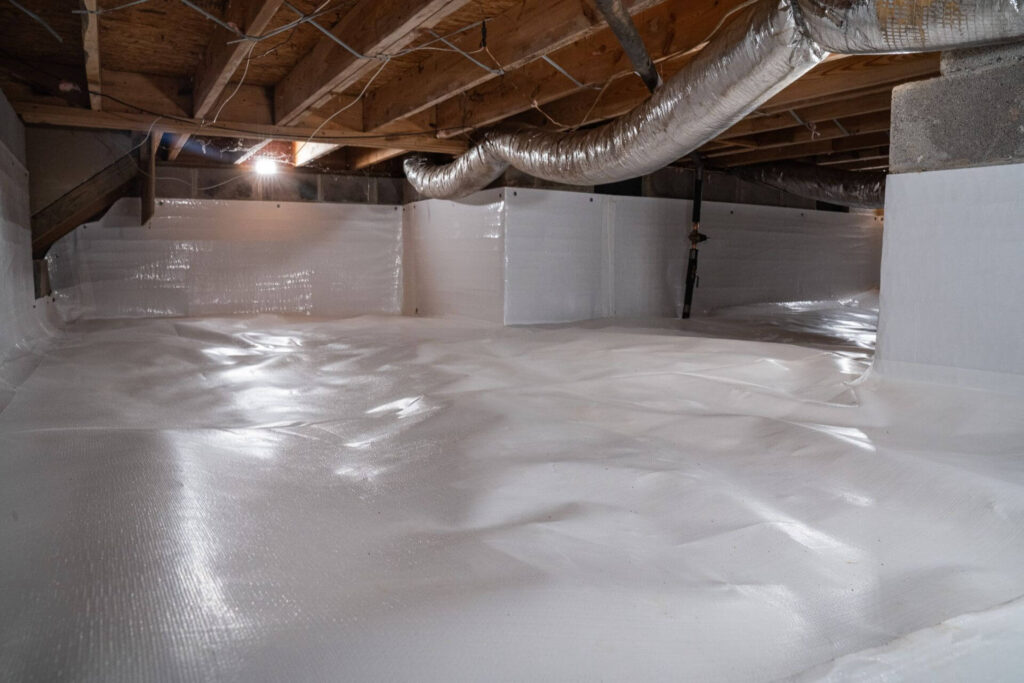
Leesburg Crawl Space Encapsulation
We respect your privacy. By submitting, you authorize '58 Foundations and Waterproofing to reach you via call, email or text for information about your project needs. We will never share your personal information with third parties for marketing purposes. You can opt out at any time. Message/data rates may apply. Consent is not a condition of purchase. Privacy Policy