
Free Estimate
888-698-1958
Call for Priority Scheduling
888-698-1958
Call for Priority Scheduling
Book Online
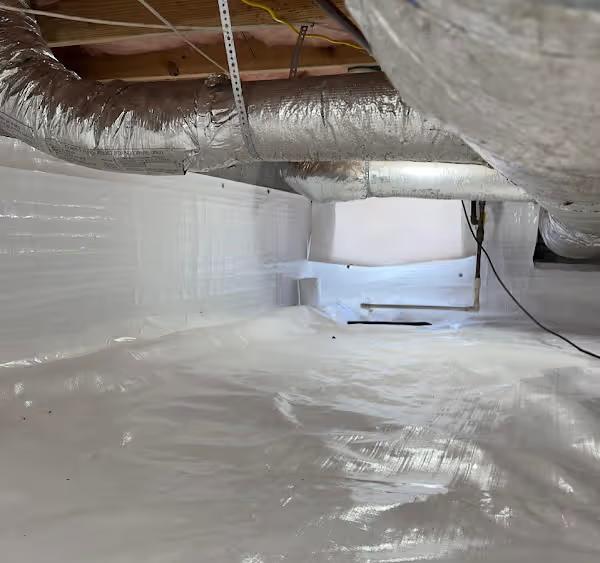
Winterizing your basement and crawl space comes down to two jobs before the first hard freeze, giving the water around your foundation somewhere to go and keeping cold air away from the plumbing beneath your floors. The soil against your basement walls holds whatever water the fall rain and early snow leave behind. When the ground freezes, that water expands and moves the soil around your foundation, then lets it settle back as it thaws. In a crawl space, outside air can reach the pipes and floor framing that run beneath your living space, and pipes exposed to that cold can freeze.
‘58 Foundations has worked on basements and crawl spaces since 1958. Some winter prep is work you can do yourself this fall, like clearing gutters, extending downspouts, and testing your sump pump with a bucket of water. A foundation crack that has widened since spring, or water showing up somewhere it never has before, calls for a closer look from a Certified Foundation Specialist before the ground freezes.
A gutter packed with fall leaves can’t carry water to the downspout, so rain and snowmelt spill over the edge and land in the soil right beside your foundation. That soil is the same ground pressing against your basement walls, and water collected there can seep through cracks and gaps into your basement or crawl space. Once the trees are bare, scoop out the leaves, seed pods, and shingle grit, then run a hose into each gutter to make sure the water reaches the downspout and drains.
Next, look at where each downspout lets out. One that ends at the corner of the house drops everything that section of roof collects into a single spot against your foundation, and in winter that runoff can freeze into a slick patch on the walk beside it. A downspout extension carries the water farther into the yard, where it can soak in away from your basement walls.
Some yards hold water no matter how clean the gutters are, with low spots that stay soggy for days after a storm or ground that slopes back toward the house. ‘58 Foundations installs yard drainage systems built around how water moves across your property, including French drains, channel and trench drains, dry wells, and drainage for your sump pump discharge. A free inspection covers your basement or crawl space inside and out, so our team can show you where water is collecting around your home.
Pour a bucket of water into your sump pit and watch the float rise until the pump switches on and empties the basin. If the pump hums without moving water, cycles on and off in quick bursts, or won’t start at all, it needs attention before snowmelt raises the water table around your home. While you’re at the pit, clear out any silt or debris, since anything resting near the float can keep it from moving freely.
Then follow the discharge line outside. The pipe that carries water from your sump pit ends outdoors, and in freezing weather the water left in that line can turn to ice and block it. Your pump then keeps running with nowhere to send the water, and a motor that runs without stopping can burn out. A pump that never seems to shut off in cold weather can mean the line outside is frozen, though a sump pump that keeps running can have other causes too. Make sure the outlet isn’t buried under leaves or banked snow, and that it empties far enough from your house to keep the water from cycling back into the soil around your basement.
Winter storms that bring down power lines also shut off any sump pump running on household current. The Workhorse OT Battery Backup Sump Pump System keeps pumping through power outages and pump failures, and the Workhorse Sump Pump System is built to pump twice the water of standard systems, with a liner that won’t crush, rust, or rot. If your current pump is struggling or has no backup, a Certified Foundation Specialist from ‘58 can size a system to your home’s needs.
Take a flashlight to your basement and work your way along every wall and across the floor. Note what kind of cracks you find. A thin vertical crack in poured concrete can come from shrinkage as the concrete cured, a horizontal crack can point to soil or water pressure pushing on the wall, and a stair-step crack running through the mortar joints of block or brick may mean a corner of the house is settling.
Mark each end of a crack with a pencil and write the date beside it. Water that works into an open crack can freeze and push it wider, and frost heave can open it further as the ground freezes and thaws. After a few hard freezes, check your marks again. Have the crack looked at if it has grown past the line, leaks when snow melts, or shows up alongside a sticking door or a sloping floor upstairs.
‘58 Foundations seals leaking wall cracks with polyurethane injection and reinforces bowing or buckling walls with carbon fiber straps, wall anchors, or steel I-beams. When a crack traces back to a sinking foundation, helical or push piers stabilize it. A free inspection tells you which kind of crack you have, and our team walks you through the foundation crack repair options that fit it before winter sets in.
Check your crawl space for open vents, gaps around pipes and wiring, and bare dirt on the floor. Open vents let outside air move straight under your house, and in winter that air cools the floor framing along with every water line running through the space. If the floors upstairs feel cold underfoot all season, cold floors can trace back to an uninsulated crawl space.
Exposed water lines need protection before the first freeze. Foam pipe insulation, plus sealing the gaps where pipes pass through the foundation, cuts down on the cold air reaching them. Where insulation alone falls short, professionally installed heat tape adds another layer, and our guide to insulating pipes in a crawl space covers each step.
Crawl space encapsulation closes off those vents. ‘58 Foundations seals every vent and gap to keep outside air out of the crawl space, then lines the walls and floor with a heavy-duty vapor barrier that blocks moisture coming through the foundation and the ground. Adding crawl space insulation, such as 2-inch rigid foam board fastened around the foundation walls, helps hold a consistent temperature beneath your floors and can lower your heating bills.
A sealed crawl space still needs its humidity managed. The HumidiGuard™ Dehumidifier and Air Filtration System removes up to 130 pints of water a day and drains straight to your sump pump or an exterior discharge line, so there’s no tray to empty. Its weather-aware controls are built to prevent freeze-ups in colder seasons, and the unit carries Energy Star Most Efficient certification.
Once your windows stay shut for the season, set up a radon test on the lowest level of your home. The EPA recommends testing all homes and taking action when levels reach 4 pCi/L or higher, and it ranks radon as the second leading cause of lung cancer in the United States after tobacco use. A short-term test kit takes a few minutes to set up, and results come back in a few days.
Testing in winter gives you a reading during the months when radon levels rise. If your result comes back at or above the EPA’s action level, ‘58 Foundations installs radon mitigation systems built for your home. The system creates negative pressure beneath your foundation or crawl space and vents the gas outside.
If any of these checks turned up something you’d rather not handle on your own, schedule a free inspection with ‘58 Foundations. One of our specialists will look over your basement or crawl space and the outside of your home, explain what they find, and give you a price for any work it needs. Set aside about an hour for the visit, and choose a weekday, evening, or weekend appointment that fits your schedule.





We respect your privacy. By submitting, you authorize '58 Foundations and Waterproofing to reach you via call, email or text for information about your project needs. We will never share your personal information with third parties for marketing purposes. You can opt out at any time. Message/data rates may apply. Consent is not a condition of purchase. Privacy Policy