
Free Estimate
888-698-1958
Call for Priority Scheduling
888-698-1958
Call for Priority Scheduling
Book Online
Basement water problems in Linthicum Heights often start with small, musty smells, wall stains, or damp floors, but they rarely stay that way. At '58 Foundations & Waterproofing, we design custom waterproofing systems that stop water at the source.
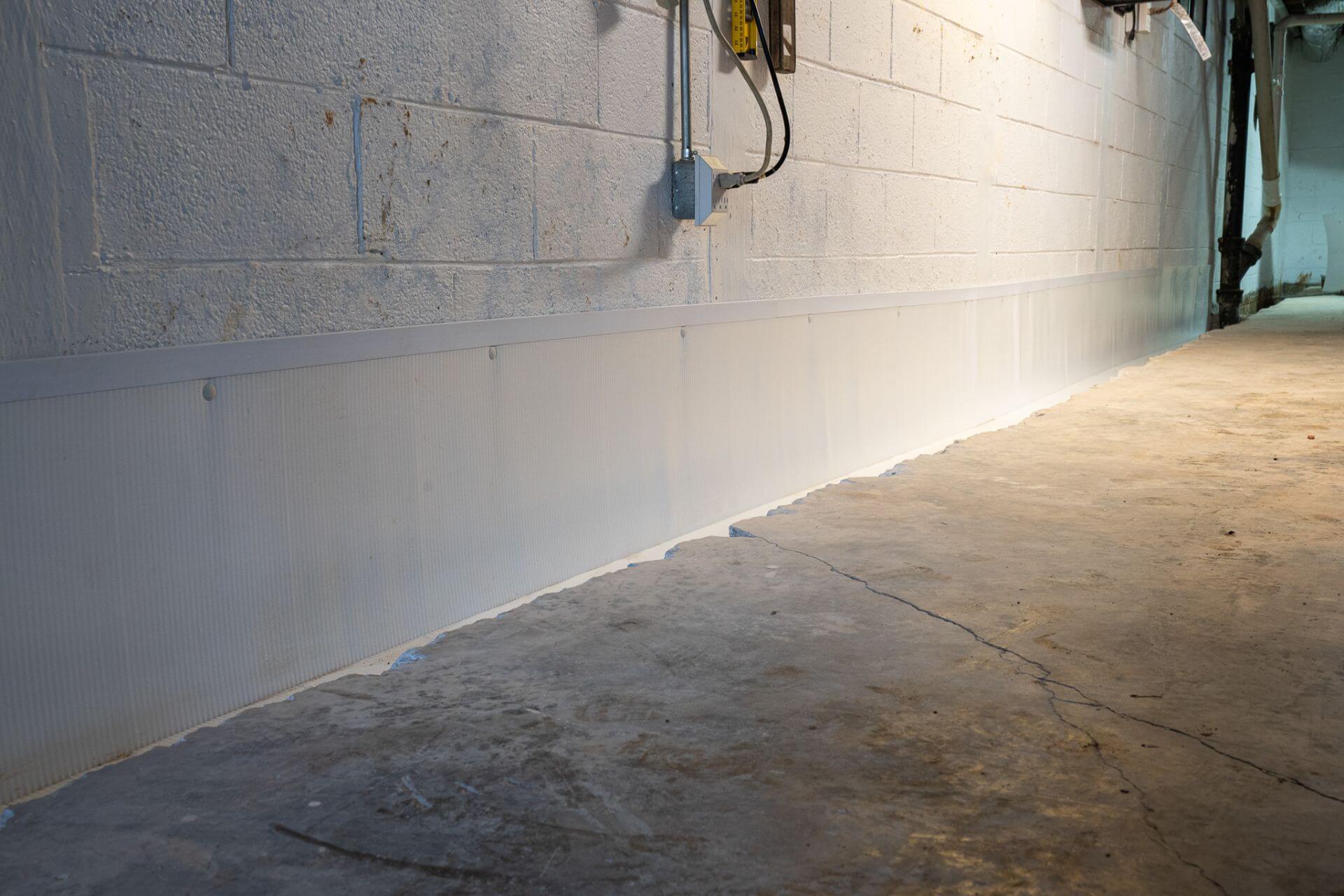




Linthicum Heights sits in northern Anne Arundel County, with the Patapsco River forming its northern boundary. The terrain here is more varied than that of communities closer to the bay, but that doesn't insulate basements from water problems. Clay soil, stormwater runoff, and proximity to the river corridor all contribute to moisture conditions that affect homes throughout the area.
'58 Foundations & Waterproofing has been working in the Baltimore area since 1958. Every inspection is handled by a Certified Foundation Specialist who provides a written estimate before any work is scheduled. We don't use subcontracted crews, and every job is backed by a Life-of-the-Structure Warranty. Call us to schedule your free inspection.
Unlike communities that sit at or near sea level, Linthicum Heights has enough elevation variation that water problems here tend to be driven more by how water moves across the terrain than by a persistently high water table. On sloped lots, rainwater runs toward the foundation rather than away from it. On flatter sections, it pools against basement walls until the soil absorbs it or it finds another path.
The clay soil throughout Anne Arundel County is the constant. It takes on water quickly and releases it slowly, which means the ground around a foundation can stay saturated for days after a significant storm. As that clay swells, it presses against basement walls and forces water through any available opening, a crack, a joint, a porous section of concrete.
The Patapsco River corridor along the northern edge of the community adds another factor. Properties near the river sit in lower terrain, and the river has a documented history of flooding this area during heavy rain events. Even homes that don't front the river can be affected when the water table rises after a significant storm pushes the river up.
Water problems in Linthicum Heights basements don't always start with something obvious. Here is what to look for.
Rust stains show up as orange or brown streaks on basement floors and walls, usually near metal fixtures, support posts, or along the base of concrete walls. They form when moisture stays in contact with metal long enough to cause corrosion. If you are seeing rust, water has been present consistently, not just once. Learn more about rust stains in the basement.
Drywall that has taken on moisture feels soft to the touch and often shows bubbling, sagging, or crumbling along the bottom edge. In finished basements, it can be easy to miss until the damage has already spread. By the time the surface shows visible deterioration, the material behind it has usually been wet for a while. Learn more about water-damaged drywall.
Staining on basement walls or floors marks where water has traveled and dried, leaving mineral deposits behind. Dark patches, white outlines, or horizontal streaking along the wall are all common forms. If the same stain returns after rain or expands over time, water is following a consistent path into the space. Learn more about water stains in the basement.
Soft or hollow-sounding wood, mud tubes along walls or floor joists, and small piles of fine debris near wood framing are signs of termite activity. Termites are drawn to moisture, so their presence in a basement often points to a water problem as much as a pest problem. Learn more about termite damage.
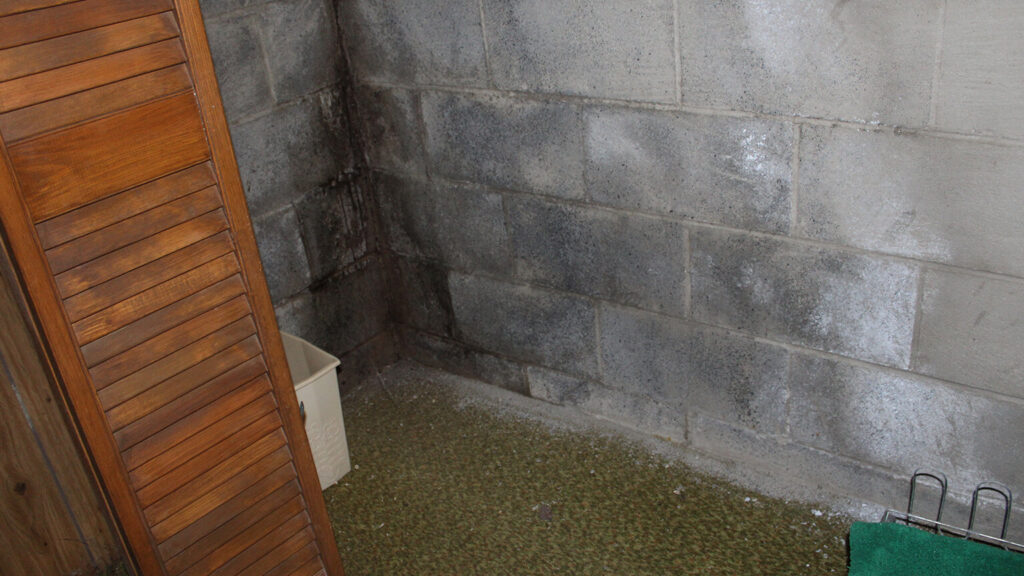
Mold can look like dark spotting, fuzzy growth, or discoloration on walls, floors, stored boxes, or wood framing. It tends to show up first in corners, behind stored items, or on the underside of joists where air doesn't circulate well. If you find it in one spot, check the surrounding area carefully. Learn more about mold in basements.
Efflorescence appears as a white or grayish powdery coating on concrete or masonry surfaces. It brushes off easily but comes back because it forms when water moves through the material and deposits minerals on the surface as it evaporates. It is a sign that water is passing through your walls on a regular basis. Learn more about efflorescence.
A musty smell that lingers in the basement, particularly after rain or when the weather is humid, usually means mold or mildew is present somewhere, even if it isn't visible yet. The odor tends to be strongest near the source, so pay attention to where it is most noticeable. Learn more about musty odors in the basement.
A crack that shows water seeping through it, whether as a trickle, a damp streak, or active dripping, is under pressure from outside the wall. The water will continue finding its way through the same opening until the condition driving it is addressed. Learn more about leaking basement cracks.
Cracks that are dry today can become entry points for moisture vapor or active seepage as conditions change. Horizontal cracks in block walls, diagonal cracks from corners, and cracks that have visibly widened over time are all worth having evaluated. Learn more about floor and wall cracks.
Linthicum Heights lots aren't all the same. Elevation changes from one street to the next, and how water moves on a property here depends on where the house sits. We look at that before anything else.
On sloped lots, surface water follows the grade. If that grade runs toward the house, rain events concentrate runoff against the foundation rather than away from it. Exterior drainage reshapes how water behaves on the property before it ever reaches the basement wall.
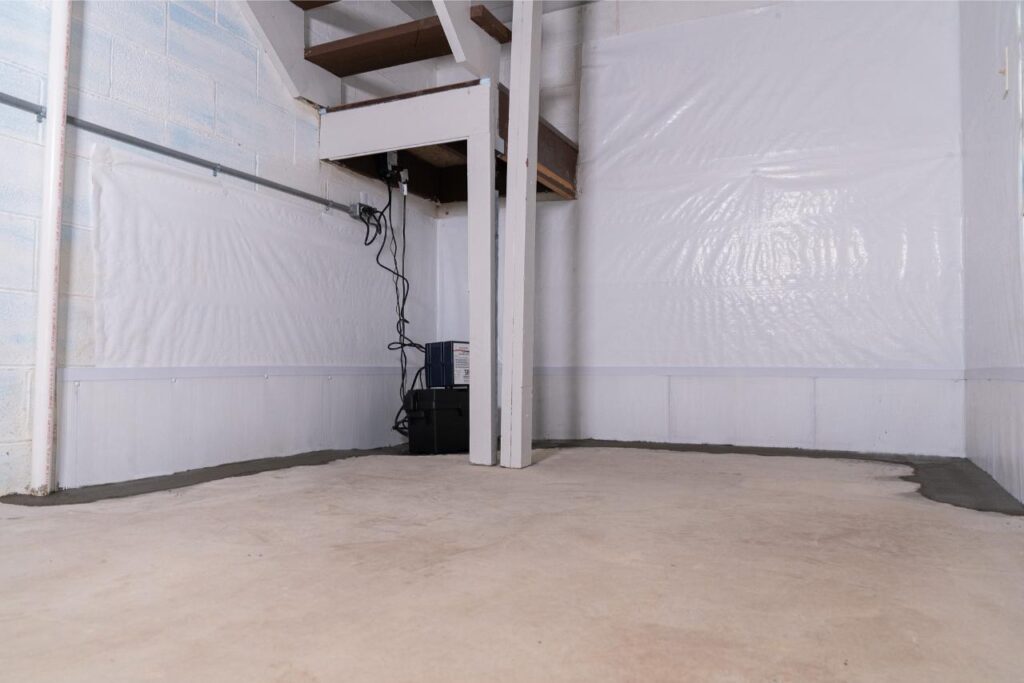
Basement walls in homes built decades ago weren't designed with vapor transmission in mind. Moisture moves through older concrete and block readily, showing up as humidity, condensation on pipes, or damp stored belongings without any visible crack or seepage point. Vapor barriers and wall membranes address that directly.
Clay soil that has been saturated for days after a storm doesn't release pressure quickly. Channel 58 interior drainage is installed along the base of the foundation perimeter, where it catches water coming through the wall before it reaches the floor. It gives that pressure a controlled outlet rather than letting it find its own.
Water collected by the drainage system needs somewhere to go. The sump pump moves it out of the pit and away from the house. When Patapsco River storms knock the power out, the Workhorse OT battery backup keeps that process running without interruption.
Homes near the river corridor deal with ambient moisture even outside of storm events. A basement that feels damp in July without any visible water source often carries more airborne moisture than a standard household unit can manage. Our HumidiGuard dehumidifier is built for the sustained humidity load that Maryland basements carry through warm months.
Mold that has established in a basement needs to be cleared before waterproofing work begins. Sealing a space around existing mold does not eliminate it. We provide professional mold remediation when the inspection finds it.
Our Life-of-the-Structure Warranty backs every system we install. Learn more about our Basement Waterproofing services.»
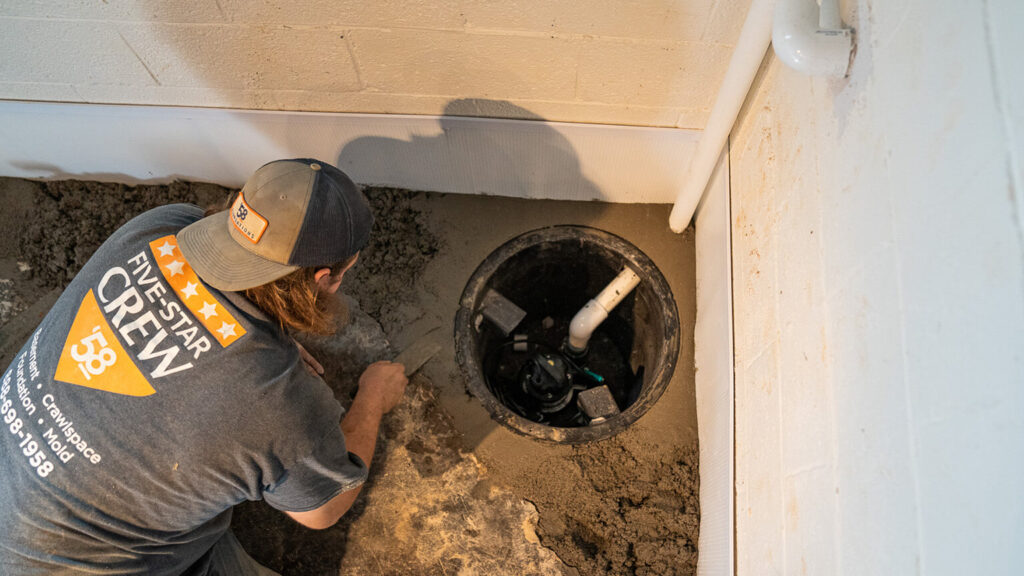
The sump pump is what stands between a functioning drainage system and a flooded floor. It sits in a pit at the lowest point of the basement and activates when water reaches a set level, pushing it out through a discharge line routed away from the house. Where that line terminates matters. Too close to the foundation, and the discharged water works its way back into the same soil the system just pulled it from.
Channel 58 interior drainage feeds the pit continuously, collecting water at the base of the foundation perimeter as it comes through the wall and directing it to the sump before it has a chance to spread. In Linthicum Heights, where clay soil can stay saturated for days after a storm along the Patapsco corridor, that continuous collection keeps the system working between pump cycles rather than letting water accumulate on the floor.
The Workhorse OT battery backup runs on a marine-grade battery and activates the moment the primary pump loses power or fails mechanically. Heavy storms in this area, particularly those that push the Patapsco River up, are the same events most likely to cause outages. A system that goes offline during the worst conditions of the year isn't adequate protection.
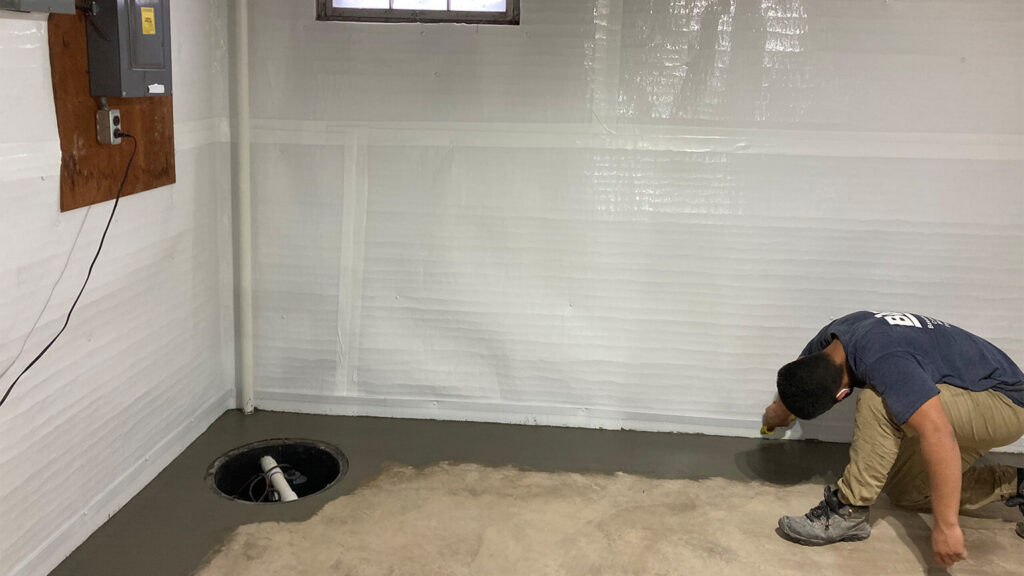
Basement waterproofing costs vary because the conditions that cause water problems vary. Two homes on the same street can have completely different diagnoses depending on how their lots drain, where their foundations crack, and how long moisture has been working against them.
A home on a sloped lot where surface runoff is feeding water against one foundation wall is a different scope of work than a home on a flat lot where a rising water table after a Patapsco storm is pushing moisture up through the floor. A basement that has been taking on vapor through aging block walls for years without visible seepage requires a different intervention than one with an active crack that opened last spring. The work follows what the inspection finds, not what the damage looks like from the surface.
These are the factors that shape what a waterproofing project involves:
What You Can Expect
'58 Foundations & Waterproofing provides free inspections with written estimates. Your Certified Foundation Specialist will assess the property, identify what is driving the moisture, and give you a clear picture of what the work involves before anything is scheduled.
The Baltimore area has no shortage of waterproofing companies. What separates them is whether the person walking through your basement is there to sell you something or to figure out what is actually wrong.
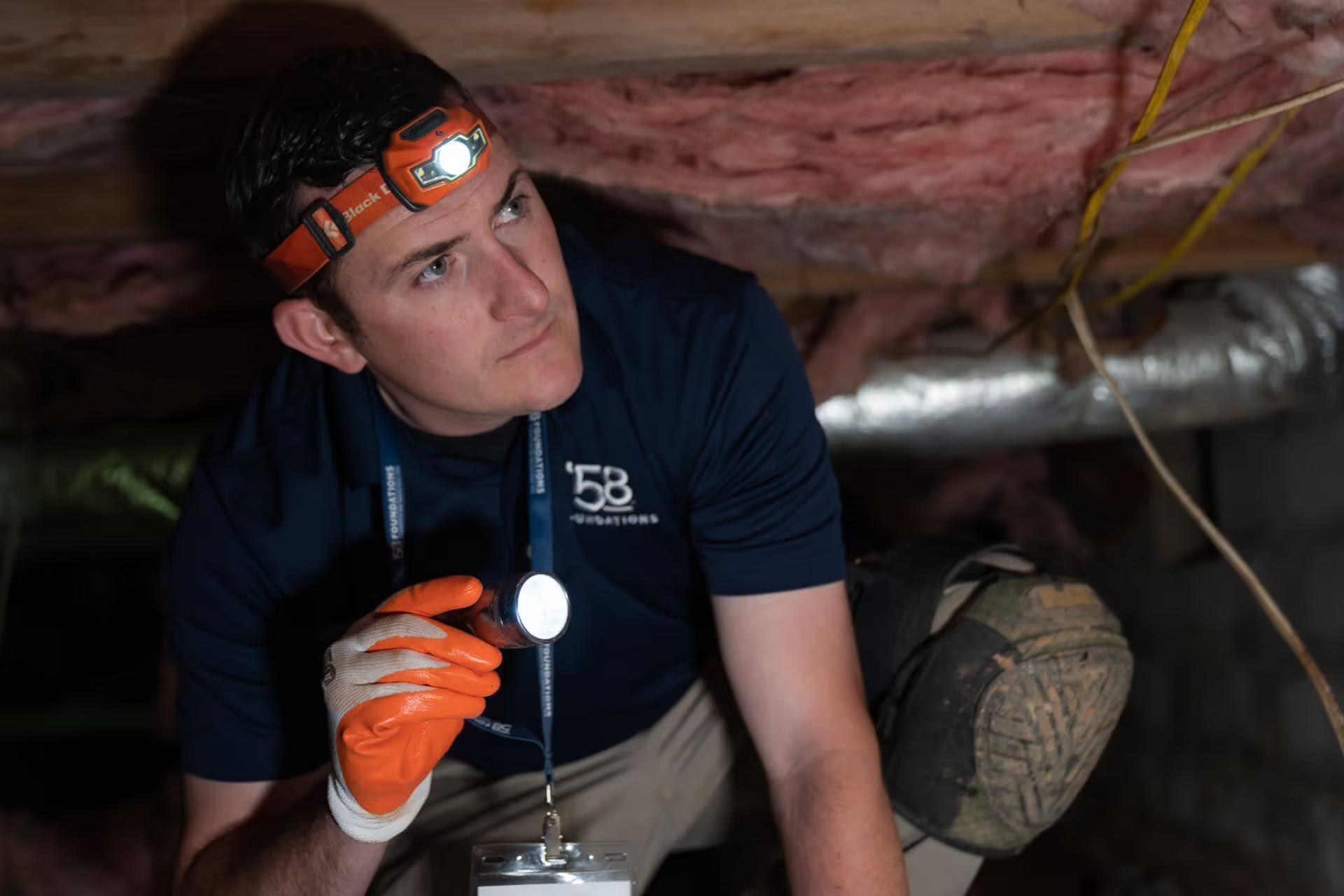
Every inspection at '58 Foundations & Waterproofing is handled by a Certified Foundation Specialist who assesses the home and provides a written estimate before any work is scheduled. We have been doing this since 1958. We don't use subcontracted crews. The people who show up are our employees, trained to our standards and accountable for the work they do.
We have earned the BBB Torch Award for Ethics four times across three regions in three years, and This Old House has recognized us as the most experienced company in our field. Every system we install is backed by a Life-of-the-Structure Warranty.
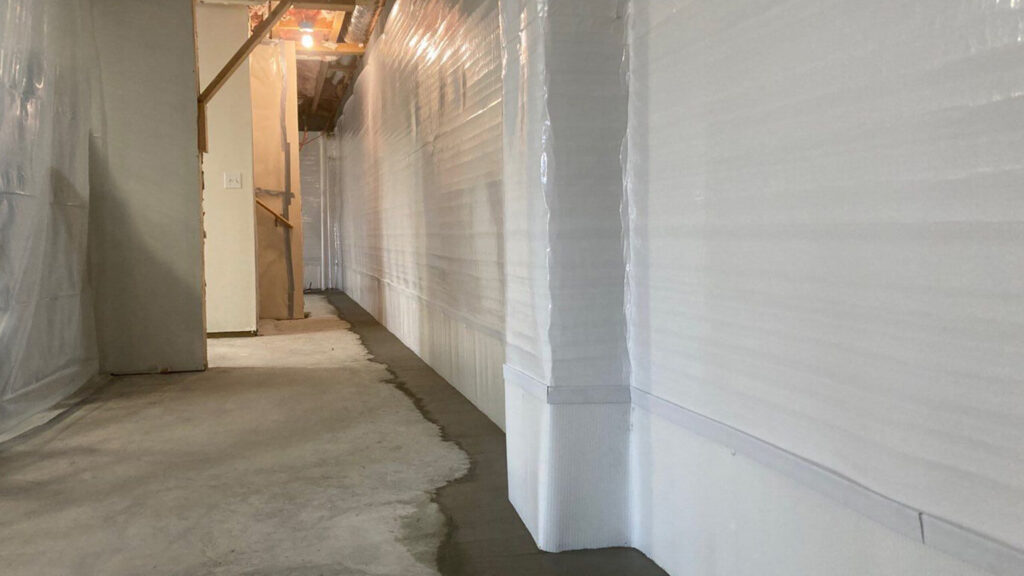
If you have noticed staining, a smell that won't clear, or water showing up after heavy rain near the Patapsco corridor, the cause is worth knowing before the damage goes any further.
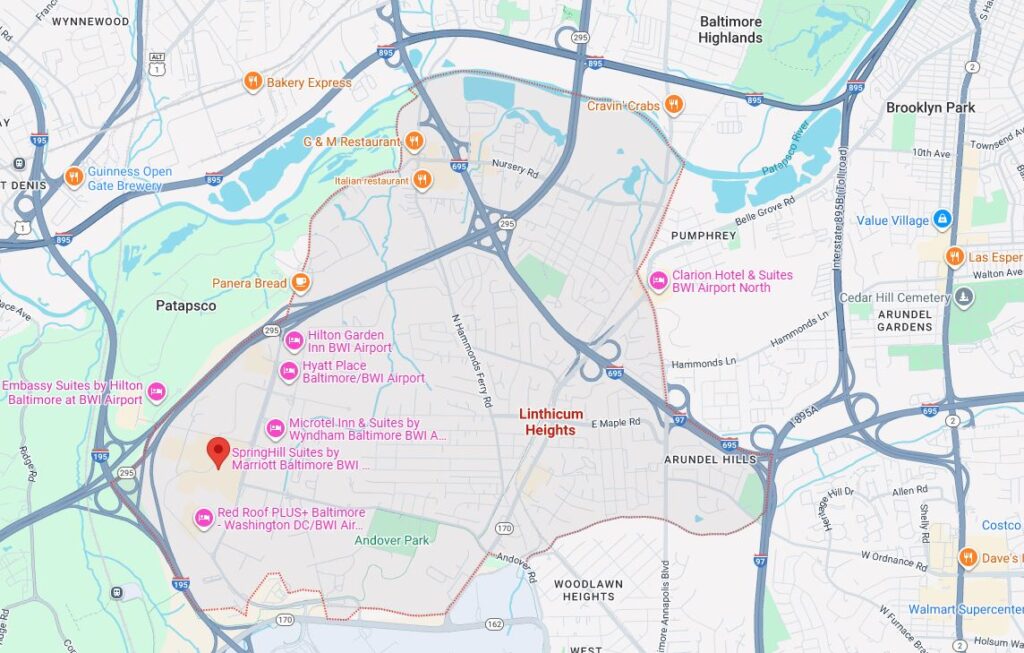
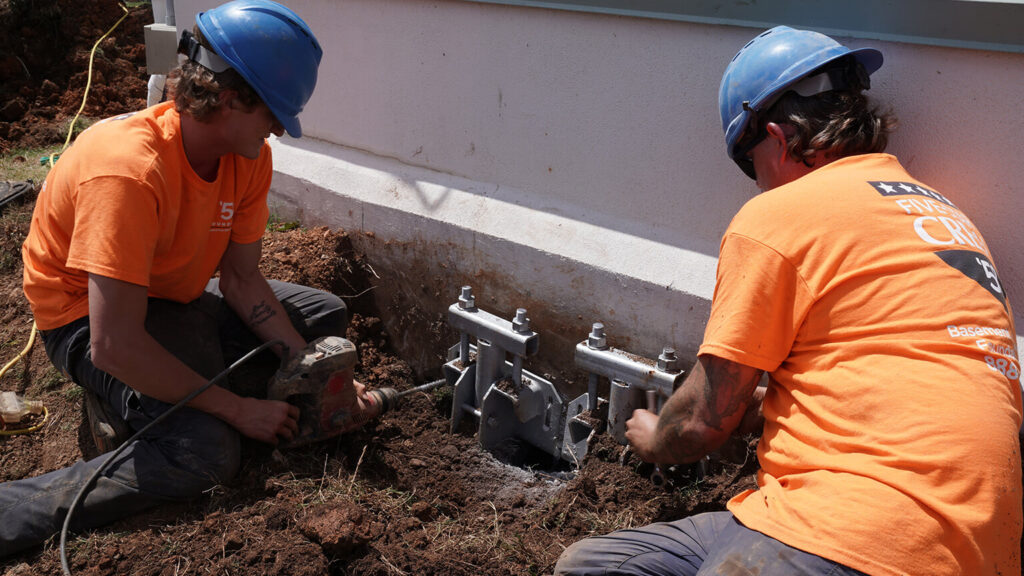
Linthicum Heights, MD Foundation Repair
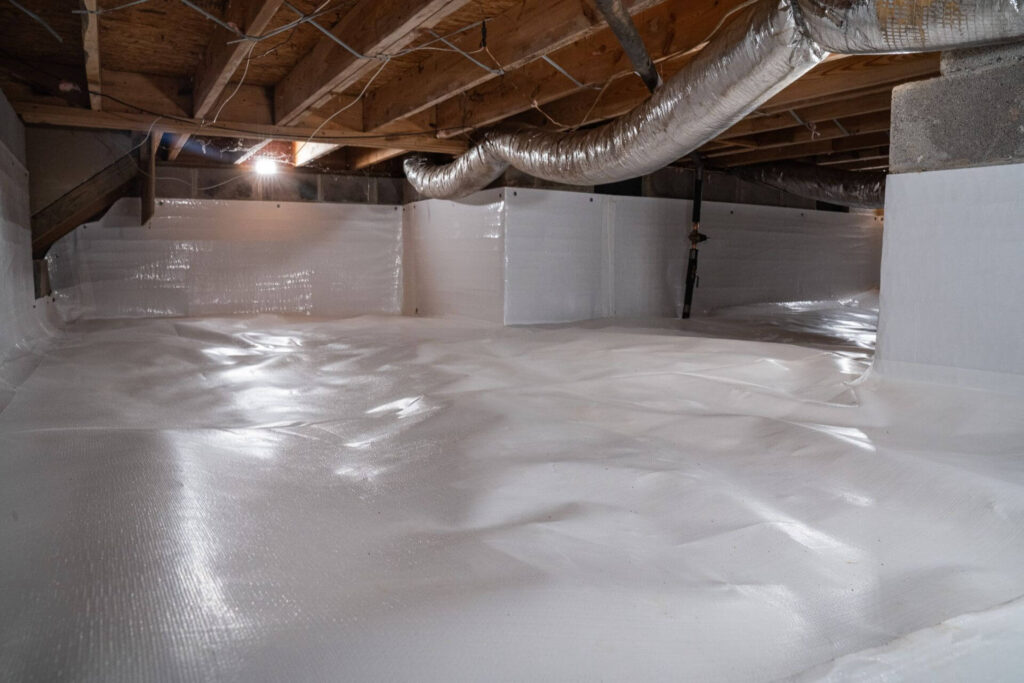
Linthicum Heights Crawl Space Encapsulation
We respect your privacy. By submitting, you authorize '58 Foundations and Waterproofing to reach you via call, email or text for information about your project needs. We will never share your personal information with third parties for marketing purposes. You can opt out at any time. Message/data rates may apply. Consent is not a condition of purchase. Privacy Policy