
Free Estimate
888-698-1958
Call for Priority Scheduling
888-698-1958
Call for Priority Scheduling
Book Online
'58 Foundations & Waterproofing provides trusted foundation repair services for homeowners in Elizabethton, TN. If you’re seeing wall cracks, sloping floors, or signs of foundation settling, our team delivers proven solutions to help restore your home’s stability and protect its value.




Elizabethton sits at the point where the Doe River meets the Watauga, and the city has lived with serious flooding for as long as anyone can remember. Hurricane Helene pushed the Watauga five feet above flood stage in 2024. The Doe came within inches of its 1998 record. That kind of recurring saturation doesn't just damage what's above ground. It works on foundations over time, softening soil, eroding support, and accelerating the kind of movement that shows up as cracks, sloping floors, and walls that are no longer plumb.
'58 Foundations & Waterproofing has been repairing foundations across Tennessee since 1958. If you're seeing signs of foundation trouble in your Elizabethton home, our Certified Foundation Specialists will give you a clear assessment of what's happening and what it will take to fix it.
Elizabethton's location in the Appalachian mountain terrain creates foundation conditions that are different from most of Tennessee. The city sits in the valley where the Doe and Watauga Rivers converge, and the slopes surrounding it funnel rainfall down quickly. When storms move through, that runoff reaches the valley floor fast, saturating the soil around foundations before it has anywhere to go.
The soil in the valley bottoms where most homes are built tends to be deep and loamy, which holds moisture well after heavy rain. On hillside and sloped lots, the soil is shallower with more rock underneath, and water moves across the surface rather than absorbing into the ground. Both conditions create problems. Deep, saturated valley soil shifts and softens under a foundation's weight. Hillside lots deal with erosion, slope movement, and water that concentrates along the uphill side of a structure.
Elizabethton also has a large stock of older homes, many of them built during the city's textile mill era in the early to mid-twentieth century, before modern drainage and grading standards were in place. Those foundations have been dealing with Carter County's rainfall and river behavior for decades, and the wear shows up differently than it does in newer construction.
Elizabethton's mix of river valley homes, hillside lots, and older housing stock means foundation problems show up in a variety of ways. These are the signs homeowners here most commonly notice first.
Your doors and windows worked fine for years. Now a door drags along the floor, won't latch, or has to be shouldered open. A window that used to slide up easily now jams or won't stay open. When windows and doors jam in more than one room, the frames themselves have shifted, which happens when the foundation beneath them is moving unevenly.
You notice a crack running diagonally from the corner of a door frame, or a long horizontal crack across a section of drywall. You patch it, and it comes back. Maybe there's a gap forming along the top of a wall where it meets the ceiling. These are signs that the framing above is responding to movement happening below the floor.
You walk across a room and notice the floor doesn't feel level anymore. There's a soft spot near the center, or the floor bounces when you step in a certain area. Furniture that used to sit flat now wobbles. These points to support failing beneath the subfloor, often deteriorating crawl space posts or beams that are no longer carrying the load they were built to handle.
You see a crack running horizontally across your basement wall, or a stair-step pattern forming along the mortar joints of a block wall. Horizontal cracks in particular indicate soil pressing against the wall from outside, and in Elizabethton, where ground saturation after heavy rain can be prolonged, that pressure builds faster than most homeowners expect.
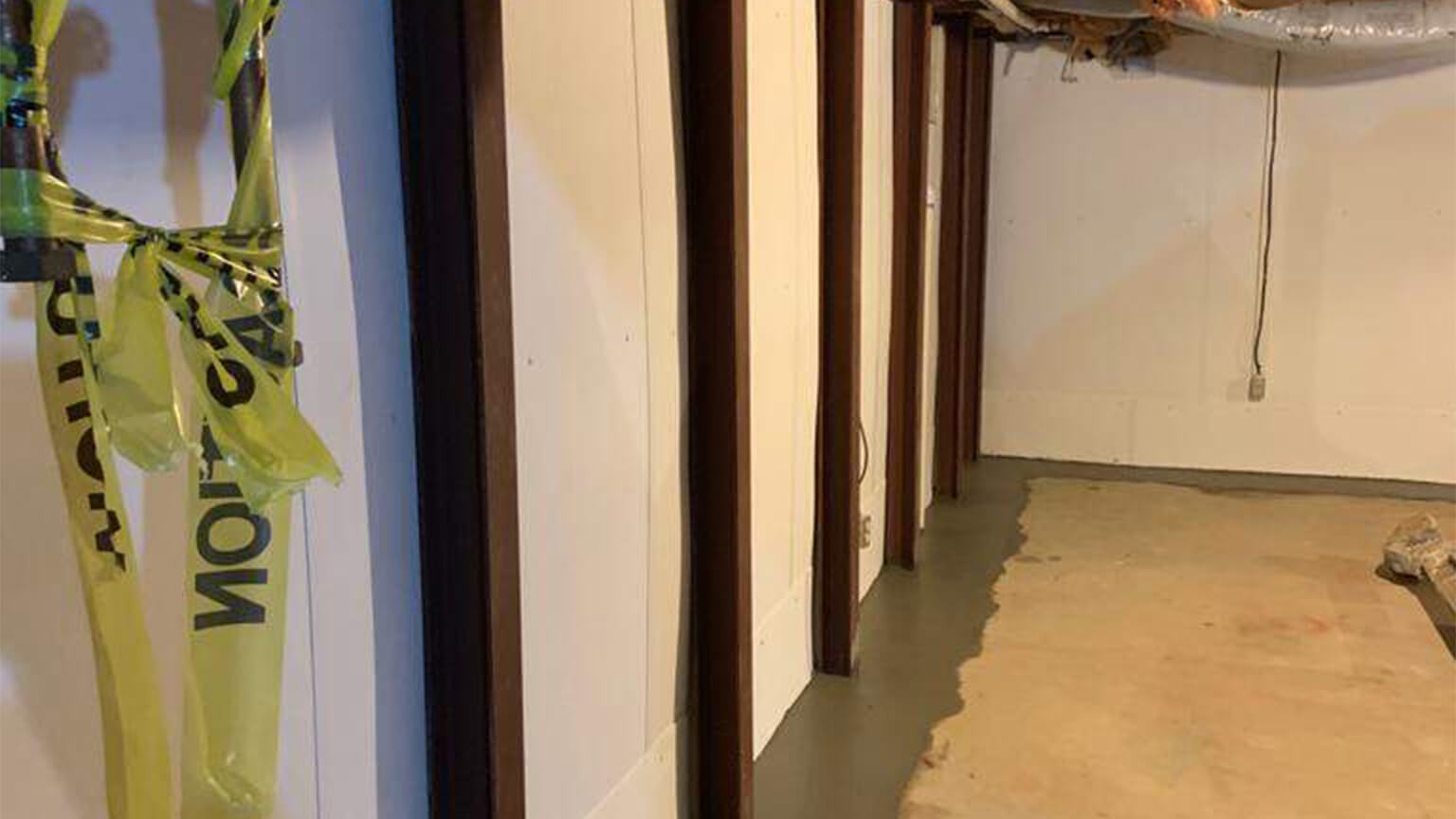
Your basement wall looks like it's leaning inward, or there's a noticeable curve or bulge midway up the wall. That curve means the wall is actively moving under lateral soil pressure. The longer it goes without being addressed, the more it tends to progress.
You notice a gap between your chimney and the exterior wall of the house, or the chimney looks like it's pulling away from the roofline. Chimneys sit on their own footings and can settle at a different rate than the rest of the foundation, particularly on Elizabethton's hillside properties, where soil movement is more pronounced.

At '58 Foundations & Waterproofing, what we recommend depends entirely on what we find. A hillside home that has been dealing with slope drainage for thirty years presents differently from a valley home that flooded twice in the last decade. We inspect first and build the repair plan around the actual cause.
Bowing or leaning basement walls need different repairs depending on the degree of movement and the conditions driving it. We install carbon fiber straps for walls in the earlier stages of deflection, steel I-beams where more rigid reinforcement is needed, and helical tieback anchors where the wall has moved significantly and needs to be pulled back toward its original position. What goes in your home is based on what your foundation actually needs.
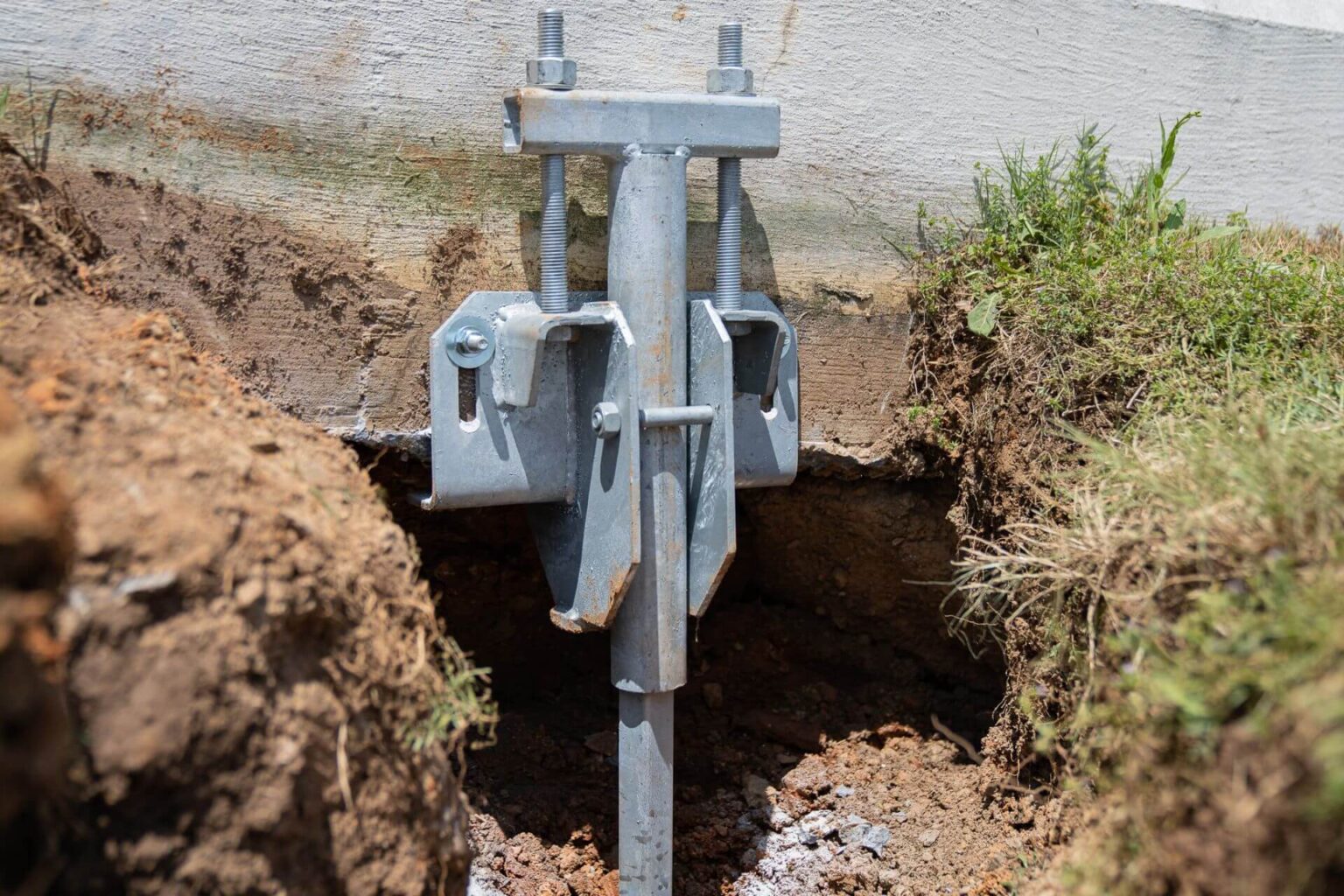
Settling foundations require piers driven beneath the footing to transfer the structural load past the unstable soil to a bearing layer below. The type of pier we use depends on your home's soil conditions, the nature of the settlement, and site access. Both helical and push piers stop further movement and, in many cases, allow us to recover elevation that has been lost.
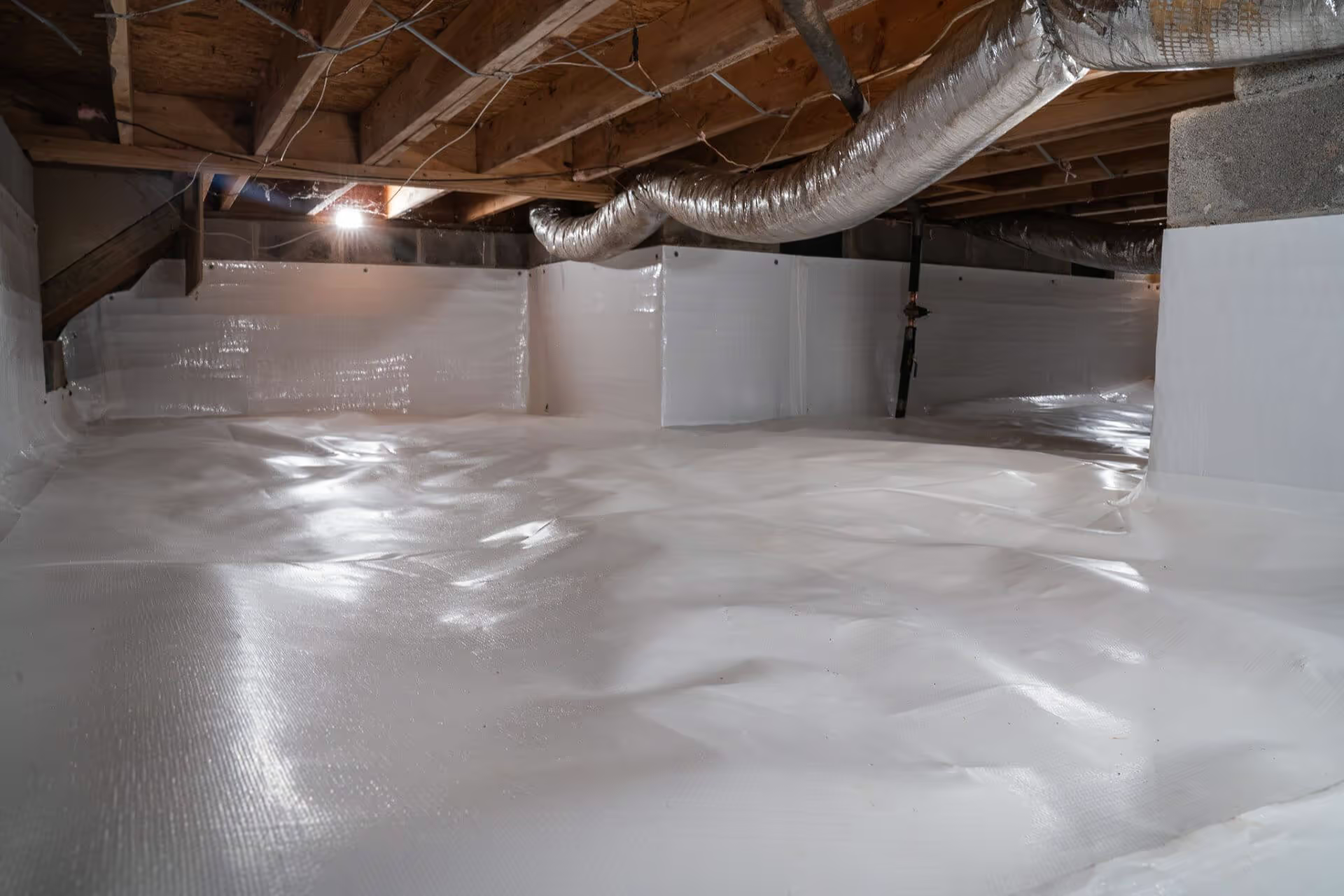
Elizabethton has a large number of older homes built on crawl spaces with original wood framing that has been dealing with East Tennessee's wet seasons for decades. When those support systems deteriorate, floors above them start to show it. We install adjustable steel jacks to restore load-bearing support beneath the floor.
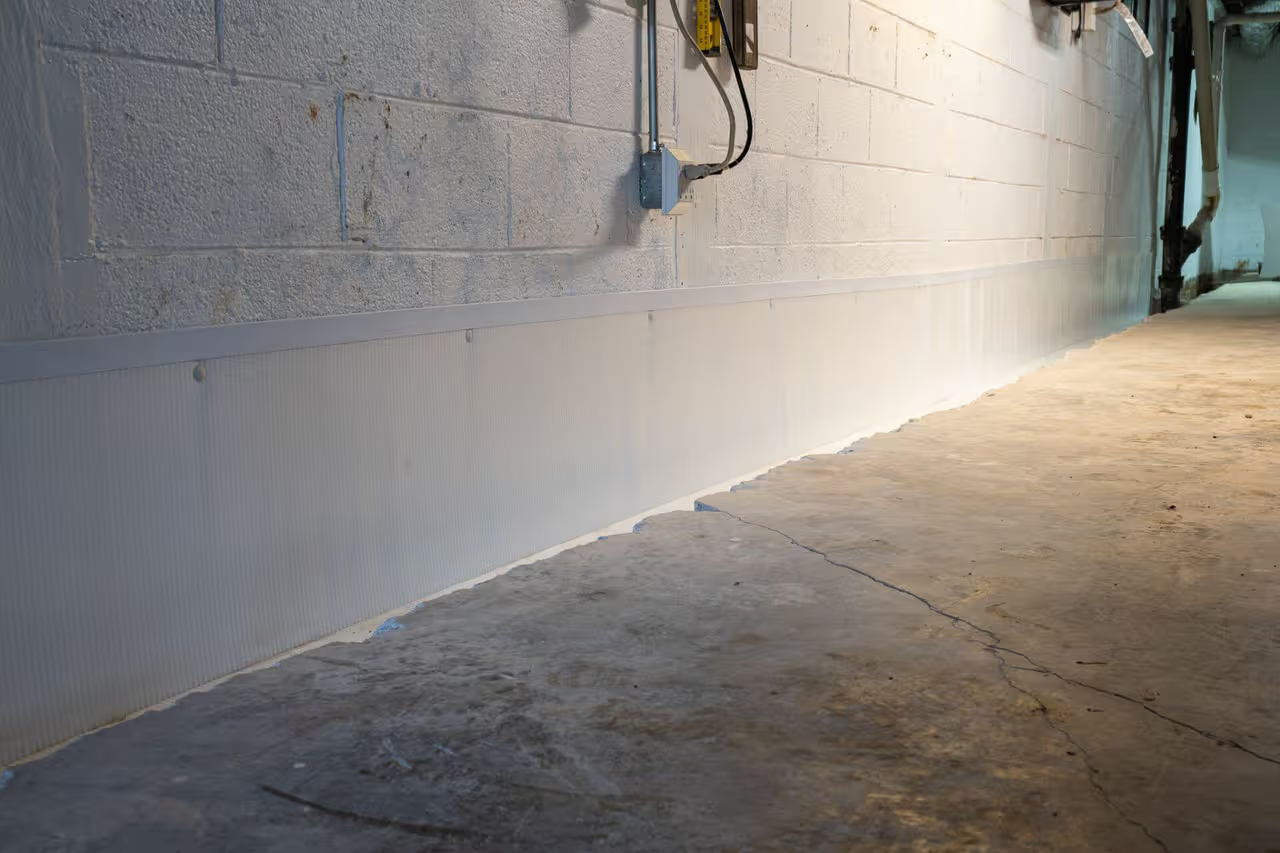
Basement wall cracks that are allowing water into the structure are sealed with flexible materials designed to move with the home through seasonal changes. The goal is to close the crack against moisture and prevent it from widening further along the wall.
A basement floor crack that is widening or letting in moisture needs structural reinforcement, not just a filler. We install carbon fiber floor stitches across the crack and finish with epoxy, closing it against water and preventing further movement.
Learn more about our Foundation Repair Solutions.»
When a foundation is settling, the visible damage inside the home is a symptom. The cause is in the ground, and no repair above the footing changes what's happening below it. Piers are installed beneath the footing to transfer the structural load past the soil that has been shifting to a stable bearing layer below. Once that transfer happens, the movement stops.
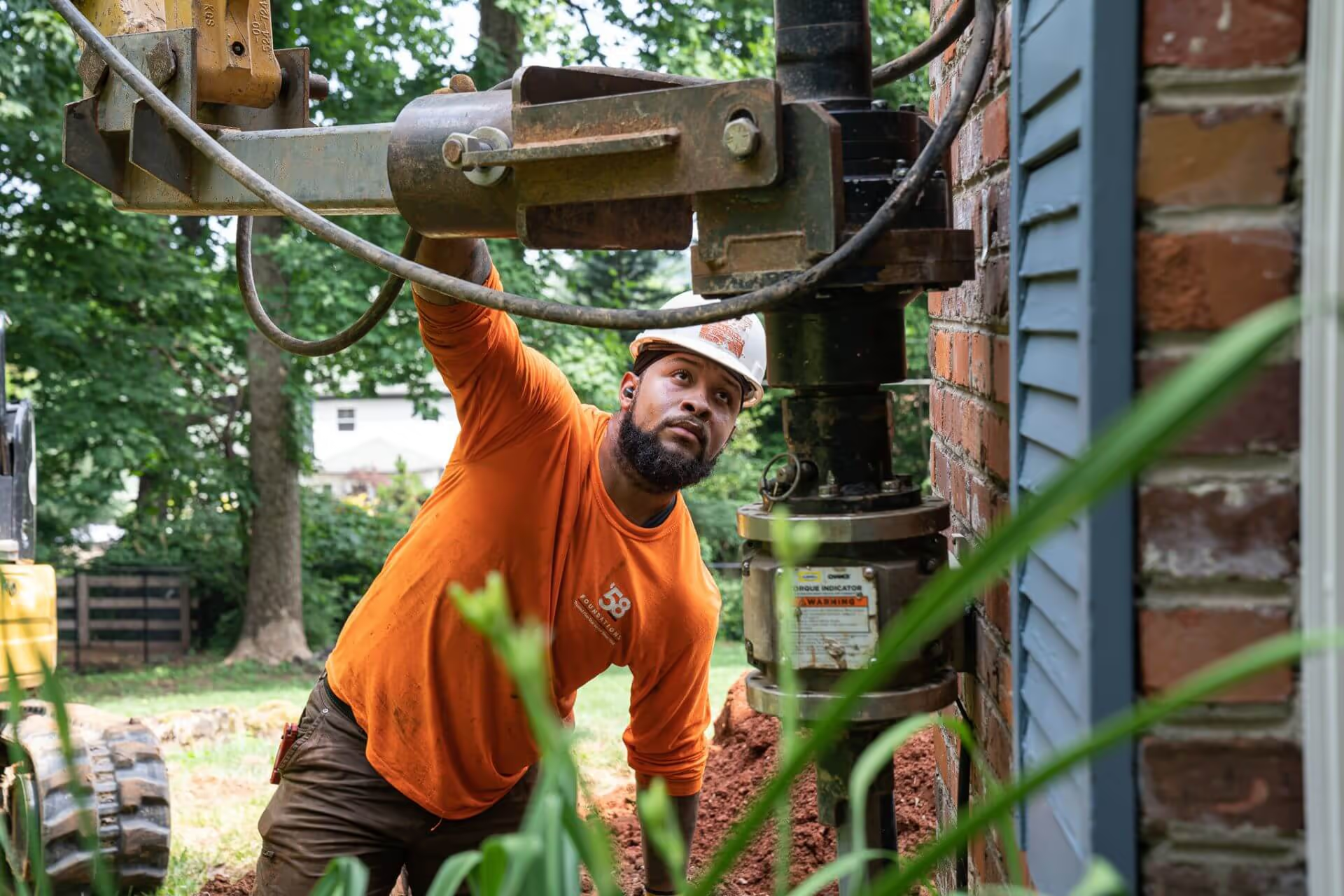
Helical piers are steel shafts with plates welded along them in a helix pattern. They are rotated into the ground in sections, and the torque required at each depth tells us in real time when the pier has found soil capable of bearing the load. That measurement is what confirms depth, not an estimate. Because installation uses rotation rather than impact, helical piers can go in with compact equipment, which matters on properties where access around the foundation is limited.
Push piers are steel shafts driven hydraulically into the ground in sections until they reach refusal, the depth at which the soil resists further penetration. Each pier's depth and resistance are recorded, giving homeowners and engineers a written record of exactly where stable bearing was achieved. Whether helical or push piers are right for a given home depends on the soil conditions, the site, and how the foundation has moved, all of which our Certified Foundation Specialist evaluates during the inspection.
Both systems are permanent fixes that address the cause of settlement rather than the symptoms. The repair is backed by '58 Foundations & Waterproofing's Life-of-the-Structure Warranty, and that coverage transfers to the buyer if you sell the home.
There's no honest way to quote foundation repair without seeing the home first. The type of damage, what's driving it, and what it will take to correct it all vary too much from one property to the next. A hillside home with a bowing wall after a wet season is a different job than a valley home with a settling footing that has been moving for years.
What you see on the surface isn't always a reliable guide to the scope of the repair, either. A crack in a basement wall might need to be sealed. It might also be pointing to settlement that requires piers. The same visible symptom can come from very different causes, and the cost follows the cause, not the crack.
'58 Foundations & Waterproofing provides free inspections and written estimates before any work begins. Your Certified Foundation Specialist will explain what was found, what caused it, and what it will take to correct it. Everything is in writing before any work starts, with transparent pricing and no pressure to decide on the spot.
Elizabethton is a small city, and word travels fast when a contractor does good work or doesn't. Homeowners here tend to ask neighbors before they call anyone, and what they hear matters.
'58 Foundations & Waterproofing has been repairing foundations since 1958. This Old House recognized us as the most experienced foundation repair company in the country. The Better Business Bureau has awarded us its Torch Award for Business Ethics four times across three separate regions in three years. Those aren't participation awards. They reflect what happens on job sites and in the conversations that follow.
Our Certified Foundation Specialists are trained to find the source of the problem, not just quote the most obvious repair. Every estimate is written and explained before any work begins. And if you ever want to speak directly with the president of the company, Todd Prosan gives every customer his direct phone number.
The Life-of-the-Structure Warranty covers most of our foundation repairs and transfers to a new owner if you sell. In a city where homes change hands within the same community, that's a detail buyers and their inspectors notice.

If you've noticed cracks, sticking doors, sagging floors, or anything else that has you questioning what's happening beneath your home, our Certified Foundation Specialists serve Elizabethton and the surrounding areas of East Tennessee. Call '58 Foundations & Waterproofing today or fill out our online form to schedule your free inspection. No obligation, no pressure, just a straight answer about what's going on and what it will take to fix it.
Basement Waterproofing in Elizabethton, TN
Crawl Space Repair in Elizabethton, TN
We respect your privacy. By submitting, you authorize '58 Foundations and Waterproofing to reach you via call, email or text for information about your project needs. We will never share your personal information with third parties for marketing purposes. You can opt out at any time. Message/data rates may apply. Consent is not a condition of purchase. Privacy Policy