
Free Estimate
888-698-1958
Call for Priority Scheduling
888-698-1958
Call for Priority Scheduling
Book Online
Protect your Knoxville home with trusted foundation repair from ’58 Foundations & Waterproofing. We fix settling, cracks, and structural issues with proven, long-lasting solutions.
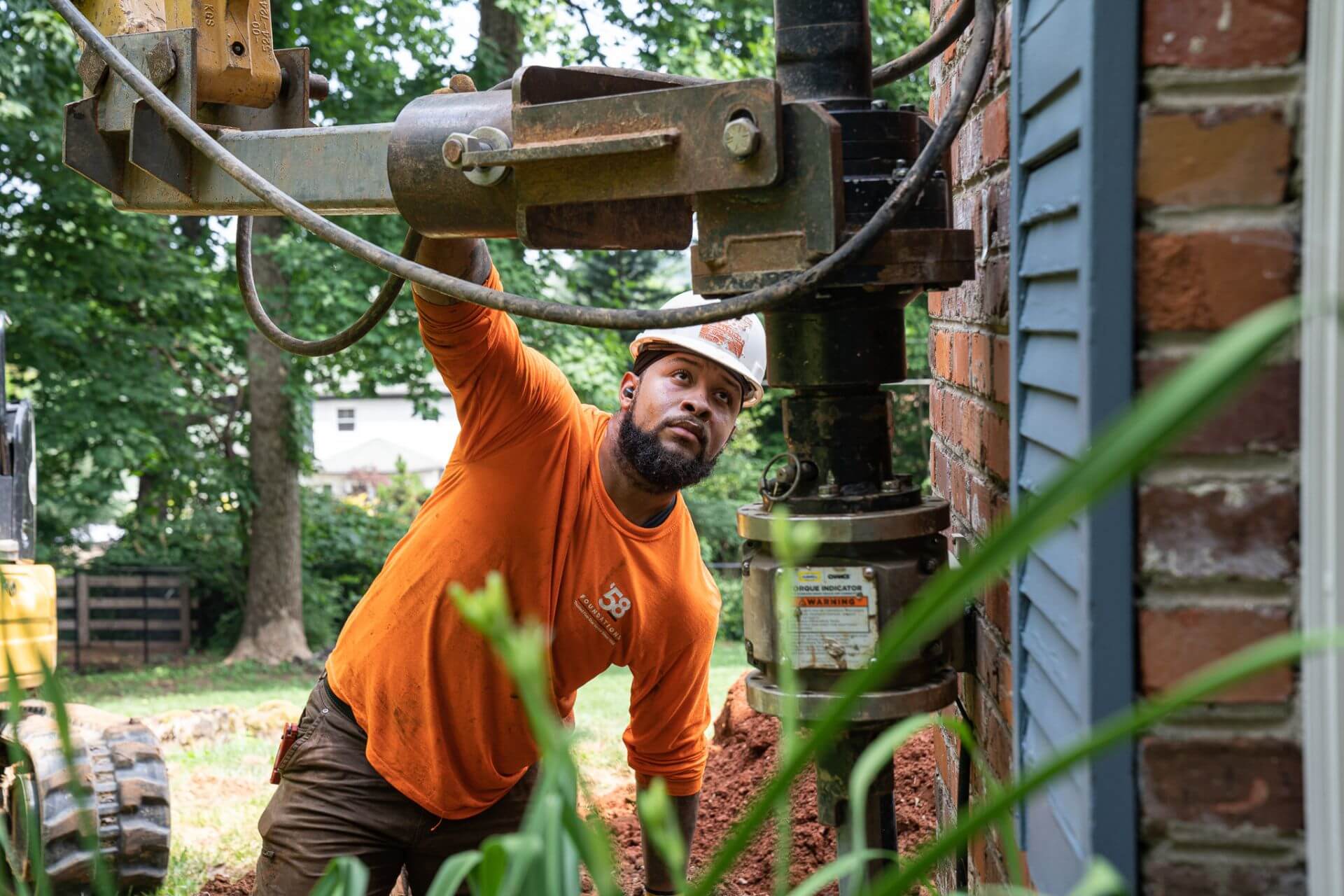




A crack on a basement wall or a foundation corner that wasn't there last year is a sign the ground underneath a Knoxville home has shifted. That kind of settling is common across Knox County's karst terrain, and it puts steady pressure on a foundation until something gives. Left long enough, that pressure can pull a wall out of alignment or widen the crack further.
'58 Foundations & Waterproofing has repaired foundations across Knoxville since 1958, using systems matched to your home's specific soil and settlement conditions. Every project starts with a free, in-person inspection and a written repair plan, so you know what's happening and what it costs before any work begins. Our Certified Foundation Specialists are '58 employees, and most repairs carry our Life-of-the-Structure Warranty, transferable if you sell your home.
Knox County sits within a karst region, where the limestone and dolomite bedrock beneath the ground slowly dissolves as slightly acidic rainwater moves through it. Over years, that dissolving process hollows out cavities and fractures underground, and when the rock above one of those cavities can no longer support the weight over it, the ground above settles. Tennessee's clay-rich soil means this kind of settling often shows up as a slow, gradual sinking called cover subsidence. Homeowners sometimes notice it first as a shallow depression forming in the yard, separate from anything visible inside the house.
South Knoxville sits directly in one of the karst areas geotechnical engineers have mapped in the county, with documented caves and sinkholes in the terrain. The same limestone and dolomite run under much of Knox County, and researchers have used aerial elevation mapping to study sinkhole risk in other parts of the county as well, including the Dutchtown area. A foundation built on ground like this doesn't need a full collapse to feel the effect: gradual settlement beneath one corner of a house can be enough to crack a foundation wall or throw a floor out of level.
Drainage adds another layer. Water that collects near a foundation, whether from a downspout aimed the wrong way, a yard sloping toward the house, or a drainage system that was never installed in the first place, works into the same cracks and voids that karst settlement creates. That extra moisture speeds up erosion around the foundation and adds to the pressure already building from below.
A settling foundation in Knoxville can show up in more than one place at once, inside the house and out. A crack in the basement wall and a door that won't latch on the second floor can trace back to the same shift in the ground below.
In a block or brick foundation wall, cracking often follows the mortar joints instead of running in a straight line, stepping diagonally from block to block like a staircase. Run a hand along the wall and you may feel the edge of the crack before it's visible in the light. These cracks tend to widen at one end more than the other, which points to uneven settling rather than a single impact or shrinkage crack.
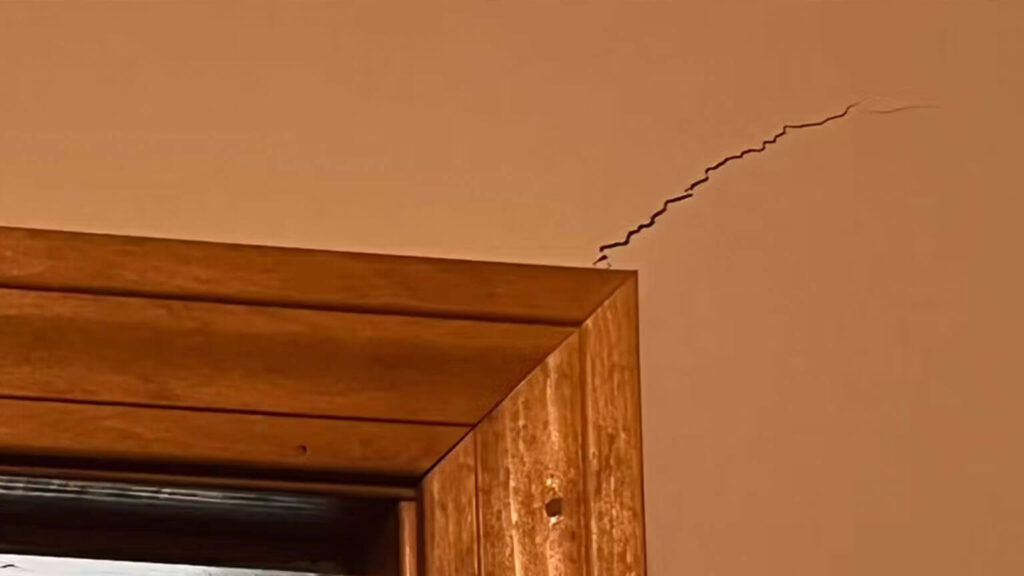
A diagonal crack running from the corner of a door or window frame, or a nail head that's started to push through the drywall, shows up when the framing behind the wall shifts. You might notice it while dusting a doorframe or repainting a room. These cracks reopen after patching if the movement causing them hasn't stopped.
Set a ball or a marble down in one corner of a room and watch whether it rolls toward another corner on its own. A floor that feels soft or bounces slightly underfoot, especially near an exterior wall, points to support beneath the floor that isn't carrying weight evenly anymore.
A door that used to close with a light push and now needs a shove, or a window that binds partway up the frame, is responding to the same shift affecting the foundation underneath it. The gap where a door meets its frame can widen unevenly, tighter at the top than the bottom or the other way around, depending on which direction the house is settling.
Outside the house, look along the brick veneer or the exposed foundation wall for cracks running through the mortar or the block itself. A gap opening up where the foundation meets the siding, wide enough to fit a finger, shows the two surfaces are no longer moving together.
Because a chimney usually sits on its own footing, separate from the rest of the foundation, it can settle at a different rate than the house around it. Look for a visible gap forming where the chimney meets the siding or roofline, or a lean that's noticeable when you sight up the chimney from the ground.
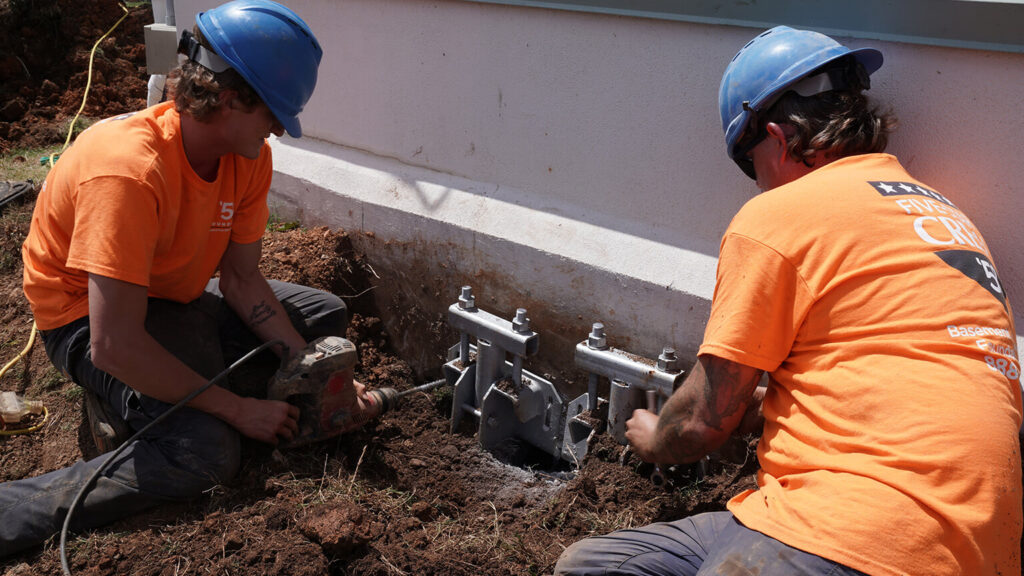
Every foundation repair starts with identifying which part of the structure is under pressure and how much it has already moved. '58 Foundations & Waterproofing installs several systems, chosen based on what an inspection finds beneath and around your home.
For a basement wall showing early cracking or slight bowing, carbon fiber straps reinforce the wall along its length without taking up basement space. They're installed directly against the wall and don't require excavation outside the home.
For walls under more advanced pressure, steel I-beams brace the wall from floor to ceiling. They can be tightened over time as the wall needs further support.
For walls that have bowed significantly, wall anchors reach past the foundation into stable soil beyond it. Tightening the anchors over time can help straighten a wall that's already moved.
Twisted into the ground like a large screw, helical piers work well for lighter structures. They install with minimal excavation and can be used in most weather conditions.
Driven hydraulically to load-bearing soil or rock, push piers transfer a home's weight off ground that's no longer supporting it. In many cases, they can also help lift a settled section of foundation back toward level.
For cracks not accompanied by significant wall movement, flexible sealing materials close the crack from the inside. The material moves with the foundation through seasonal shifts instead of cracking again in the same spot.
An inspection determines which of these systems your home needs, and most repairs carry our Life-of-the-Structure Warranty.
Learn more about our Foundation Repair Services.»
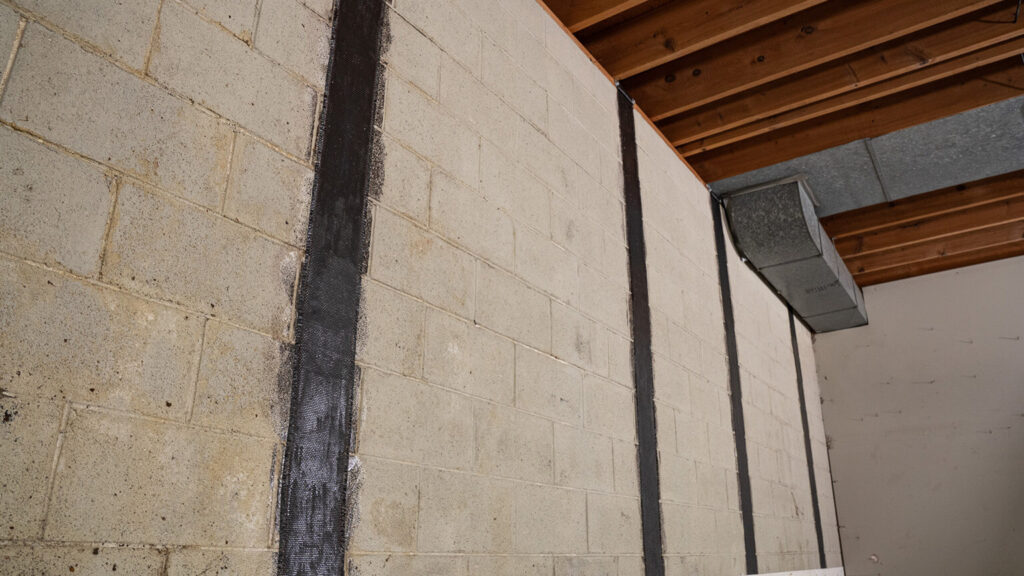
Every foundation problem has a different underlying cause. The fix depends on what's actually happening beneath the home. A crack or a sloped floor tells you something has moved. It doesn't tell you how much work is needed to correct it.
'58 Foundations & Waterproofing provides a free, in-person inspection for every Knoxville home. A Certified Foundation Specialist identifies the cause before recommending anything and explains what they find in plain language. There's no obligation to move forward after the inspection, and no high-pressure pitch waiting at the end of it.
Foundation work happens below ground, where it's hard to check on the quality of a repair once the ground is filled back in. '58 Foundations & Waterproofing has built its reputation in Knoxville around a few specific commitments.
Those standards don't change from one Knoxville neighborhood to the next, whether the job is a small crack repair or a full pier system.

Call '58 Foundations & Waterproofing to schedule a free, in-person inspection of your Knoxville home. A Certified Foundation Specialist will look at your foundation, explain what they find in plain language, and put together a written repair plan with a clear quote. There's no obligation to move forward after the inspection, and no cost for the visit itself. Scheduling takes a few minutes, whether you call or request your free inspection online.
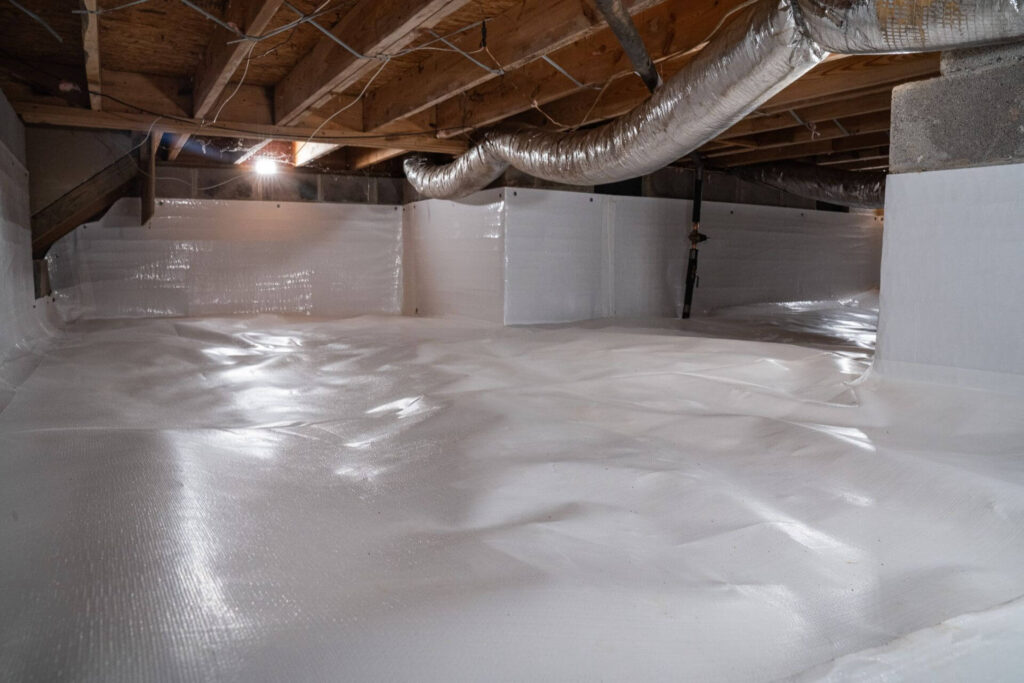
Knoxville Crawl Space Encapsulation
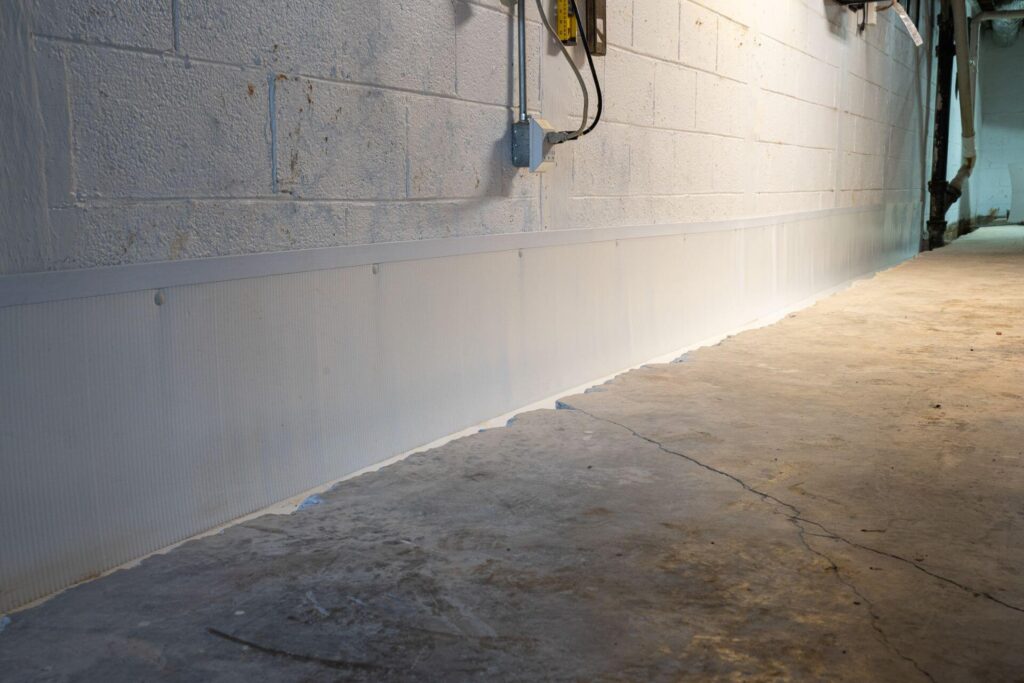
Knoxville Basement Waterproofing,
We respect your privacy. By submitting, you authorize '58 Foundations and Waterproofing to reach you via call, email or text for information about your project needs. We will never share your personal information with third parties for marketing purposes. You can opt out at any time. Message/data rates may apply. Consent is not a condition of purchase. Privacy Policy