
Free Estimate
888-698-1958
Call for Priority Scheduling
888-698-1958
Call for Priority Scheduling
Book Online
Foundation problems in Red Lion homes can lead to bowing walls, sinking floors, and costly damage if left untreated. At ’58 Foundations, we provide expert solutions like foundation piers, wall anchors, and crawl space supports to restore your home’s stability and value.




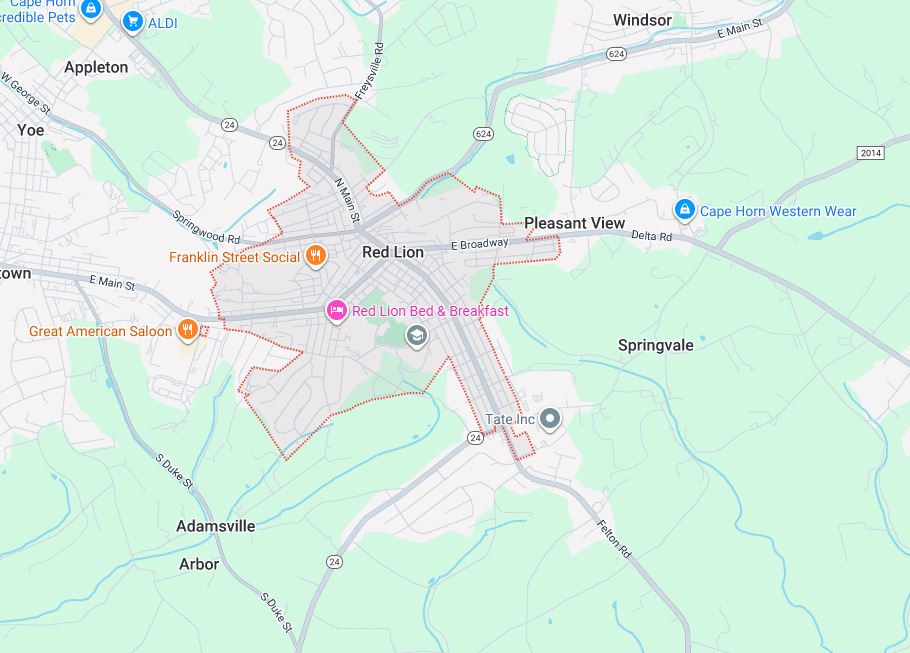
Red Lion sits in York County, where clay-heavy soil and Pennsylvania winters create foundation conditions that show up in predictable ways: stair-step cracks in block walls, doors that stopped latching sometime last year, and basement walls that have developed a lean that was not there a decade ago. If your home is showing any of those signs, '58 Foundations & Waterproofing can help. We have been repairing foundations across southeastern Pennsylvania for over 60 years, and our Certified Foundation Specialists know what drives structural damage in York County homes and what it takes to stop it.
Red Lion sits in the southern Piedmont region of York County, where the underlying bedrock is predominantly schist and gneiss rather than the limestone found further west in Pennsylvania. As that bedrock weathers over time, it produces a red-brown clay-rich residual soil that is among the more expansive in the state. When those soils absorb moisture, they swell significantly, and when dry conditions follow, they contract and pull away from footings, leaving voids beneath the structure. That cycle does not stabilize between seasons. It compounds year over year, and foundations that have been absorbing it for decades show it.
Red Lion's relatively flat terrain in the lower part of York County means surface water moves slowly. Lots that do not drain efficiently concentrate moisture against the foundation rather than directing it away, and in a borough with the density of older construction that Red Lion has, lot grading and drainage were rarely engineered with the foundation in mind.
The borough's housing stock reflects its history as a manufacturing center. Brick and block foundations from the late 1800s and early 1900s are common throughout the older sections of town, and those materials respond differently to soil movement and freeze-thaw stress than modern poured concrete. Block foundations in particular can show dramatic stair-step cracking as individual blocks shift under lateral pressure, and older brick foundations absorb moisture through the mortar joints in ways that accelerate deterioration from the inside out.
Pennsylvania winters add a consistent seasonal stressor on top of that. Ground freezing in York County is sustained enough that frost heave is a real annual event, pushing upward against footings and slabs and widening cracks that soil movement alone created. Homes where water pools near the foundation before temperatures drop tend to see the most pronounced winter damage.
York County's Piedmont clay and Red Lion's older block and brick construction tend to produce foundation problems that are visible long before most homeowners think to call someone. These are the signs worth paying attention to.
Cracks that follow a stair-step pattern through the mortar joints of a block or brick foundation wall are one of the most common things we see in Red Lion's older homes. They typically start small and widen over time. You might notice them in the basement, on an exterior wall, or in the brick above the foundation line. The pattern itself tells us the wall has shifted rather than simply shrunk or settled uniformly.
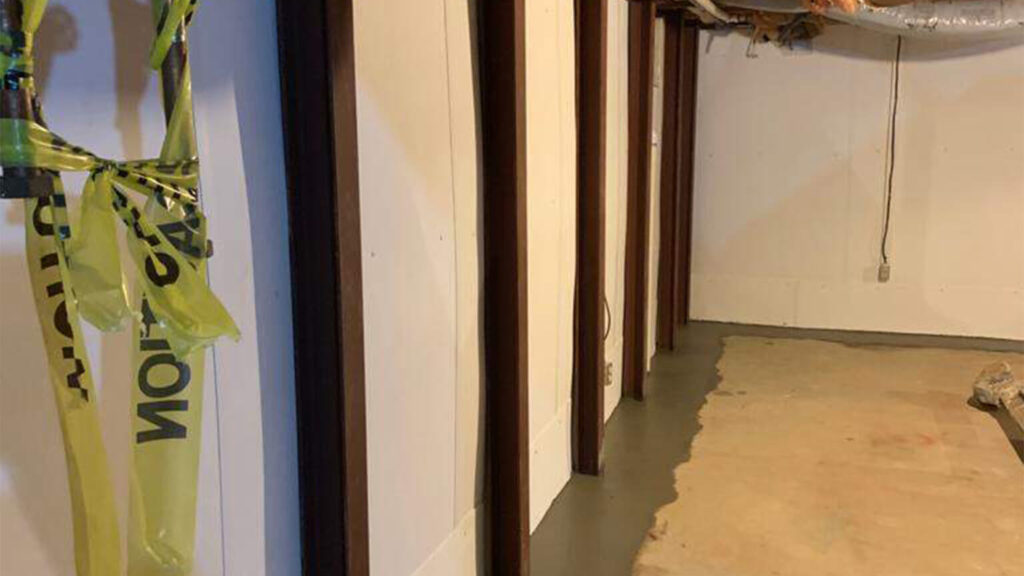
Check the long walls of your basement. If one appears to curve inward, particularly in the middle section, or if you can see a horizontal crack running across it at roughly the same height, the wall is under pressure from the soil outside and has begun to move. Block foundations in Red Lion's older housing stock reach a tipping point faster than poured concrete once this kind of movement starts.
Place something round on your floor and watch where it rolls. A consistent slope toward one wall, soft spots that flex underfoot in the same location every time, or floors that feel noticeably lower at one end of a room all point to support issues beneath the floor system. In York County homes with crawl spaces, this kind of movement tends to develop slowly and worsen with each passing winter.
Doors that are suddenly hard to open or hard to close, windows that jam in their frames or won't budge at all, or gaps that have opened along one side of a window frame are all worth paying attention to. In Red Lion's row homes and older worker housing, these problems often show up on the ground floor first and are easy to write off as humidity or an aging house before the foundation connection is made.
Look at the corners above your door and window frames. Diagonal drywall cracks spreading outward from those points, or fasteners that have started pushing back through the drywall surface, mean the framing is moving. In Red Lion's row homes where units share walls, these signs sometimes appear in the same location across multiple homes.
Stand back and look at your chimney from the street. If it appears to lean away from the house, or if you can see daylight between the chimney and the siding or roofline, the footing beneath it has shifted. Because chimneys in Red Lion's older homes sit on their own independent footings, they often move at a different rate than the main foundation and show separation before anything else becomes visible.

Red Lion's mix of older block and brick foundations, Piedmont clay soil, and Pennsylvania winters means the repair needs here tend to be specific. Our foundation repair contractors assess the conditions at each home before recommending anything.
Block and brick foundation walls in Red Lion's older housing stock are more brittle than poured concrete and less forgiving when soil pressure builds against them. A wall showing a horizontal crack or inward lean needs to be evaluated for how far it has moved and what is driving it before any repair is chosen. Carbon fiber straps, wall anchors, and steel I-beams each address different stages and conditions. Getting that choice right matters more in older masonry than it does in modern construction.
York County's freeze-thaw cycles and Piedmont clay create crawl space conditions that wear down original wood support posts over decades. By the time a homeowner notices the floor flexing or sloping, the posts beneath it are usually in worse shape than the floor suggests. Steel support jacks replace what the original posts can no longer do, and unlike wood, they are not vulnerable to the moisture and soil movement that caused the problem in the first place.
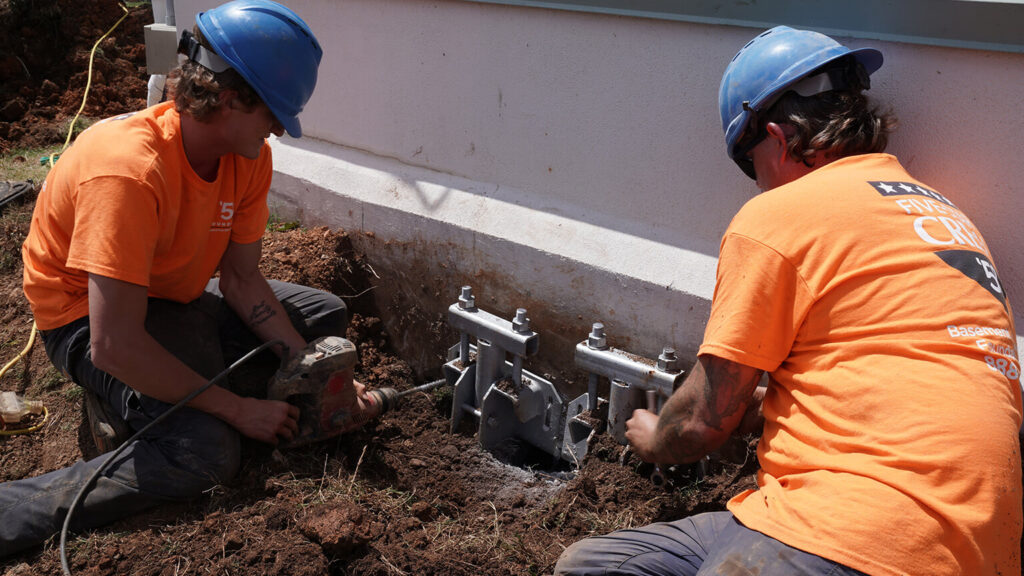
Settlement in Red Lion's older homes on shallow Piedmont footings often develops gradually over many winters before it becomes obvious. When we see it, we evaluate the soil conditions, how the home is constructed, and how far the movement has progressed before recommending a pier system. Helical piers advance based on resistance and are well suited to York County's variable soil depths. Push piers work better for heavier structures where the load transfer needs to be more direct.
Block and brick foundations absorb moisture through deteriorating mortar joints, and cracks in those walls create additional pathways for water and further weakening. When the foundation has stopped moving, we seal the leaking wall cracks with materials that bond to the masonry and stay flexible through Pennsylvania's seasonal temperature swings, keeping water out without creating a rigid patch that the wall will crack around again.
Our Life-of-the-Structure Warranty backs every repair we install. Learn more about our Foundation Repair Solutions.»
Foundation piers are steel structural supports installed beneath your home's footing. They are driven or screwed into the ground until they reach load-bearing soil or bedrock well below the zone where seasonal movement occurs. Once in place, the weight of the home transfers from the footing to the piers, which is what stops the settlement.
The depth is what makes them effective. Surface soils shift with the seasons. Piers bypass that zone entirely by reaching ground that does not move. That is what makes them a permanent solution rather than a surface repair.
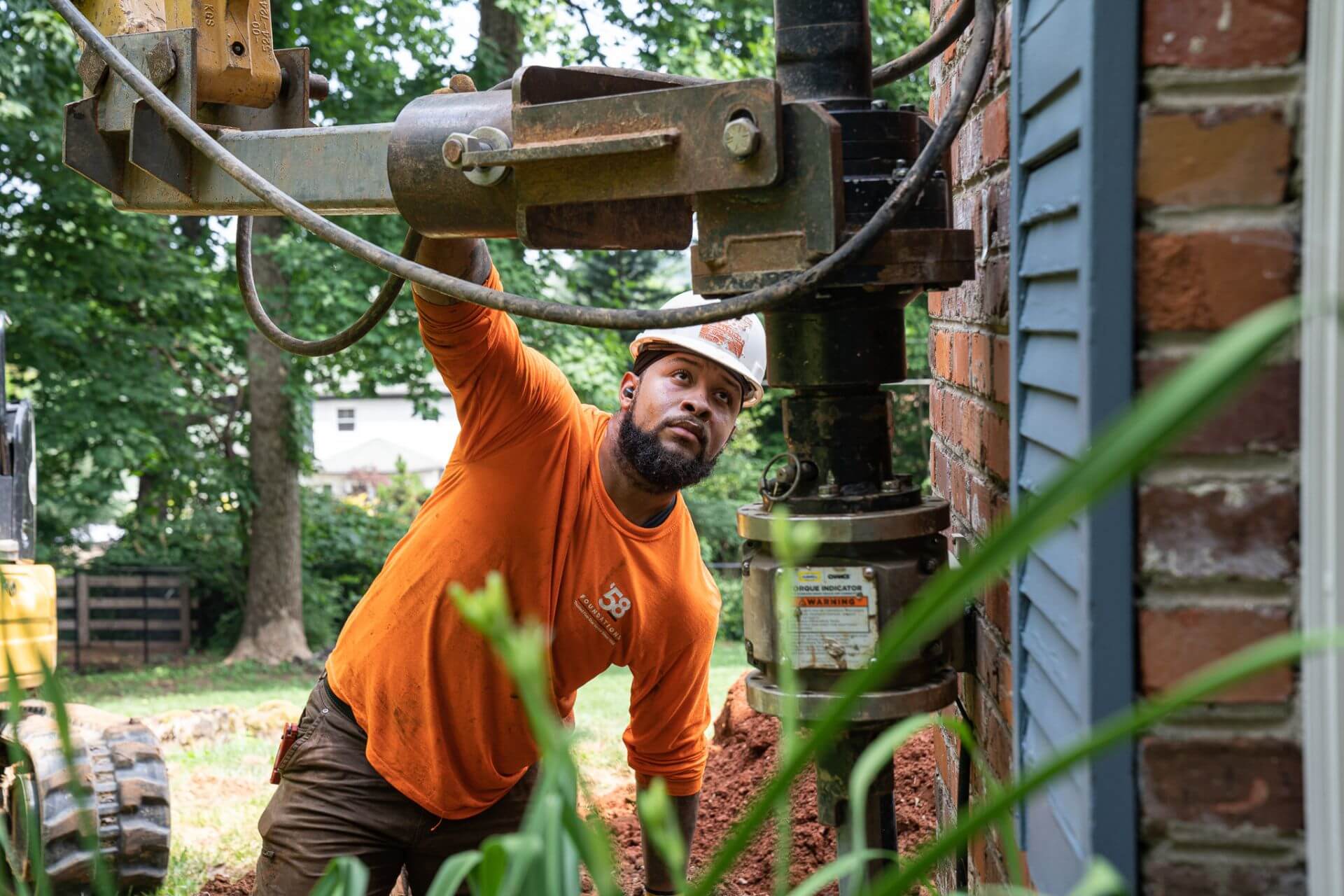
Helical Piers work like large structural screws. A hydraulic drive head rotates them into the ground, advancing until the torque reading confirms they have reached material with enough resistance to carry the load. Because they advance based on resistance rather than a preset depth, they work well on sites where stable bearing is at an inconsistent depth across the footprint of the foundation. They can be installed in crawl spaces, require no heavy excavation, and can be used year-round.
Push Piers are driven straight down using hydraulic pressure, with the weight of the structure itself providing the resistance needed to advance them. They continue until they reach load-bearing material, at which point the load transfers from the footing to the pier. Push piers are typically the right choice for heavier structures or more extensive settlement where a direct load transfer is needed.
In favorable conditions, both systems allow the foundation to be partially lifted back toward its original elevation, closing gaps that have opened in the framing, bringing floors back up, and relieving stress on door and window openings that have been racking out of square.

Foundation repair cost in Red Lion depends on what the inspection finds. A single bowing wall in an older block foundation is a different scope than a home with settlement across multiple corners and a crawl space full of deteriorated supports. There is no honest way to estimate a number before seeing the foundation.
Factors that most commonly affect cost include the type of repair needed, how many areas of the foundation are involved, the age and construction of the home, how accessible the work areas are, and how long the damage has been developing. Red Lion's older row homes and worker housing sometimes present access challenges that affect how certain repairs are approached.
After every inspection, we provide a written proposal with a clear breakdown of what we found, what we recommend, and exactly what it costs. No hidden fees, no pressure to decide before you are ready, and no estimates that change once the work starts.
Repairing a 100-year-old block or brick foundation is not the same job as repairing a modern poured concrete basement. The materials behave differently under load, respond differently to repair systems, and require a different level of care during installation. Not every contractor working in York County has that experience.
'58 Foundations & Waterproofing has been repairing foundations across southeastern Pennsylvania for over 65 years. Our Certified Foundation Specialists evaluate each home on its own conditions and explain what they find without pressure or manufactured urgency. When we recommend a repair, it is because the inspection showed it was necessary, not because it fits a standard package.
Red Lion homeowners dealing with foundation problems deserve a contractor who takes the time to understand what their specific home is up against. That is what we show up to do.
If your home is showing cracks in the foundation walls, floors that have shifted, doors or windows that jam and stick, or a chimney that does not look straight, contact '58 Foundations & Waterproofing today to schedule your free inspection. A Certified Foundation Specialist will evaluate your foundation, explain what they find, and give you a clear plan for making it right.
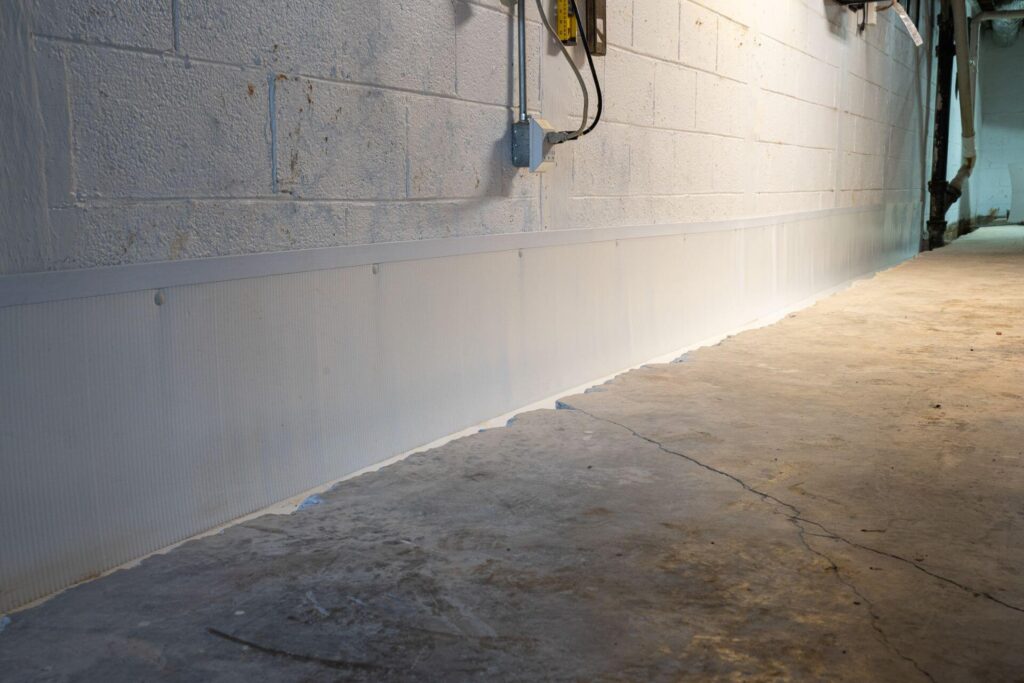
Red Lion, PA Basement Waterproofing
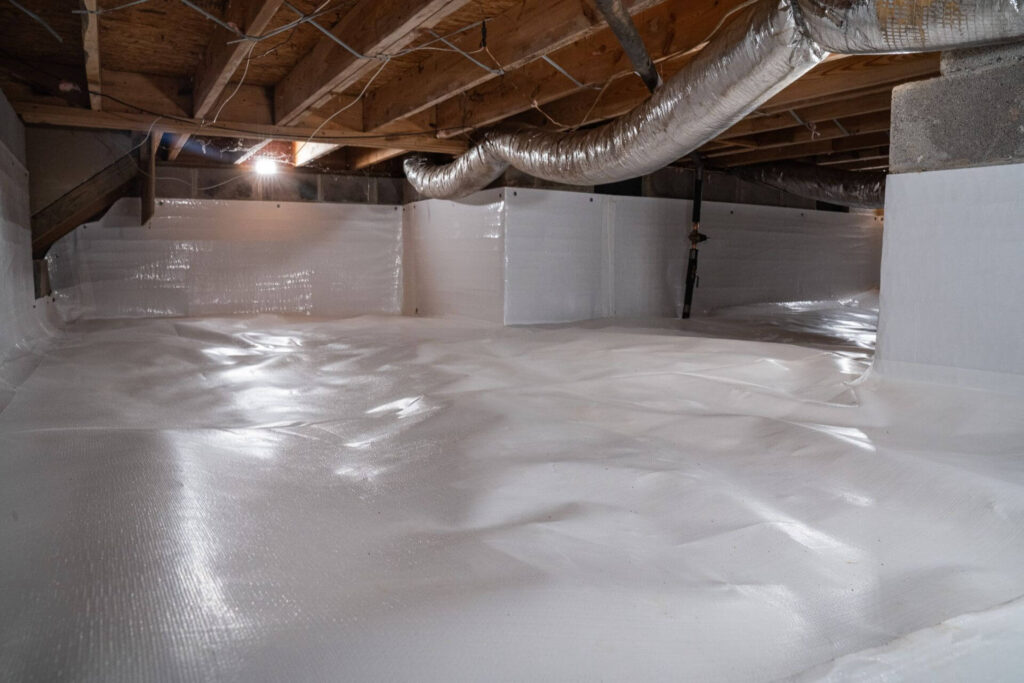
Red Lion, PA Crawl Space Encapsulation
We respect your privacy. By submitting, you authorize '58 Foundations and Waterproofing to reach you via call, email or text for information about your project needs. We will never share your personal information with third parties for marketing purposes. You can opt out at any time. Message/data rates may apply. Consent is not a condition of purchase. Privacy Policy