
Free Estimate
888-698-1958
Call for Priority Scheduling
888-698-1958
Call for Priority Scheduling
Book Online
Foundation cracks, sinking floors, and shifting walls are common in Collegedale due to unstable clay soil and moisture changes. Learn how '58 Foundations & Waterproofing restores stability with piers, wall reinforcement, and long-term structural solutions.





Collegedale sits where the ridges and valley floors of Hamilton County meet, and that geography shapes almost every foundation problem we see here. A home on a ridge-edge lot deals with thin, rocky soil that drains fast but shifts under load. A home a quarter mile away on the valley floor sits on deep clay residual from weathered limestone that holds moisture for weeks after a rain. Two neighbors, two completely different foundation problems, and two different repair conversations.
Add to that the residential growth that has pushed development up hillsides and onto terrain that required significant grading, and you have a community where foundation issues tend to be misread before they are diagnosed correctly. At '58 Foundations & Waterproofing, we have worked across Hamilton County long enough to know what the ground here actually does, and what it takes to fix what it causes.
The Ridge and Valley physiographic province that defines this part of Tennessee is not a uniform geological environment. The soil beneath a Collegedale home reflects where that home sits within the landscape, and that location matters more here than it does in flatter, more geologically consistent areas.
On the valley floor, homes sit on clay-rich residual soils that developed from the weathering of the underlying limestone. These soils absorb water readily and swell during wet seasons, then contract and pull away from footings as conditions dry. South Chickamauga Creek drains a wide area of eastern Hamilton County, and the lower-lying sections of Collegedale stay saturated longer after heavy rain than the topography might suggest. That prolonged moisture exposure keeps the clay in a near-constant state of movement.
Ridge-edge and hillside lots tell a different story. The soil there tends to be shallower and less cohesive, sitting directly over fractured sandstone or shale. These soils drain quickly but do not offer the stable bearing that deeper profiles can. Homes on these lots are more sensitive to erosion and surface water runoff than homeowners typically expect.
The most significant driver of foundation problems in Collegedale's newer neighborhoods is cut-and-fill construction. When a hillside lot is developed, soil is cut from the high side and pushed to the low side to create a level building pad. The undisturbed soil on the cut side and the compacted fill on the other side behave differently under load and across seasons. Over time, that difference produces uneven settlement beneath the foundation, where one corner or side of the home sinks while the rest stays relatively stable. This pattern is one of the most common things we find during inspections in Collegedale, and it is frequently misattributed to something else before the actual cause is identified.
Given Collegedale's mix of valley clay, ridge-edge soils, and hillside construction, the signs worth paying the most attention to are those that point to uneven movement rather than uniform settlement. The ground here rarely sinks all at once. It moves in parts, and the structure above it responds accordingly.
This is the most telling early sign on a cut-and-fill lot. When the fill side of a foundation settles faster than the cut side, the floor above it begins to slope toward the lower corner. It can start as something barely perceptible and progress steadily over the years. In Collegedale's hillside neighborhoods that developed through the 1990s and 2000s, homeowners who notice a floor rolling toward one wall or feeling noticeably lower at one end of a room are often looking at the first visible consequence of differential settlement that has been building since the home was constructed.
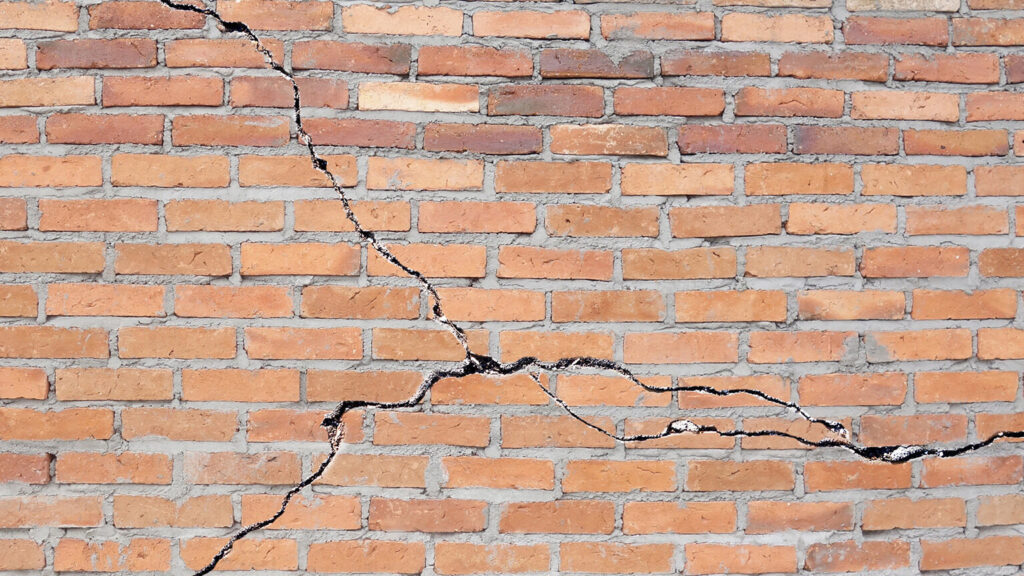
When one part of a foundation drops relative to another, the frame above it twists out of square. Doors that have gradually started jamming or that drag along the floor on one side, are tracking that movement directly. Diagonal cracks running from the corners of the door and window frames are in the drywall, showing the same thing. These signs are particularly common in rooms above the lower side of the foundation and often appear years before any crack shows up in the foundation wall itself. Homeowners in hillside subdivisions who attribute sticking doors to humidity or age are frequently surprised to learn the source is below the floor.
For homes on Collegedale's valley floor, where clay soil stays saturated well into late spring from South Chickamauga Creek drainage, lateral wall pressure is the dominant concern. Horizontal cracks in block or poured walls, or walls that have begun to lean inward at the center, reflect the sustained pressure that waterlogged clay exerts against the exterior of the foundation. Unlike the slow, uneven settlement common on hillside lots, clay pressure against a wall can escalate more quickly once the soil reaches full saturation, particularly after a wet winter or a heavy spring rain season.
Stair-step cracking in exterior masonry, or separation between the foundation and a porch or garage slab, often marks the visible boundary between the stable and settled zones on a graded lot. One section of the home sinks while the adjacent section stays put, and that difference shows up as a crack at the point where they meet. This pattern is one of the cleaner diagnostic clues that uneven settlement is driving the damage rather than uniform soil movement across the whole foundation.
Diagnosing a foundation problem in Collegedale correctly is the first step, because the repair that works for a valley floor home dealing with clay pressure is not the same repair that works for a hillside home dealing with differential settlement on graded terrain. Our foundation repair contractors assess the specific conditions at each home before recommending anything, because getting that distinction right is what determines whether a repair holds.
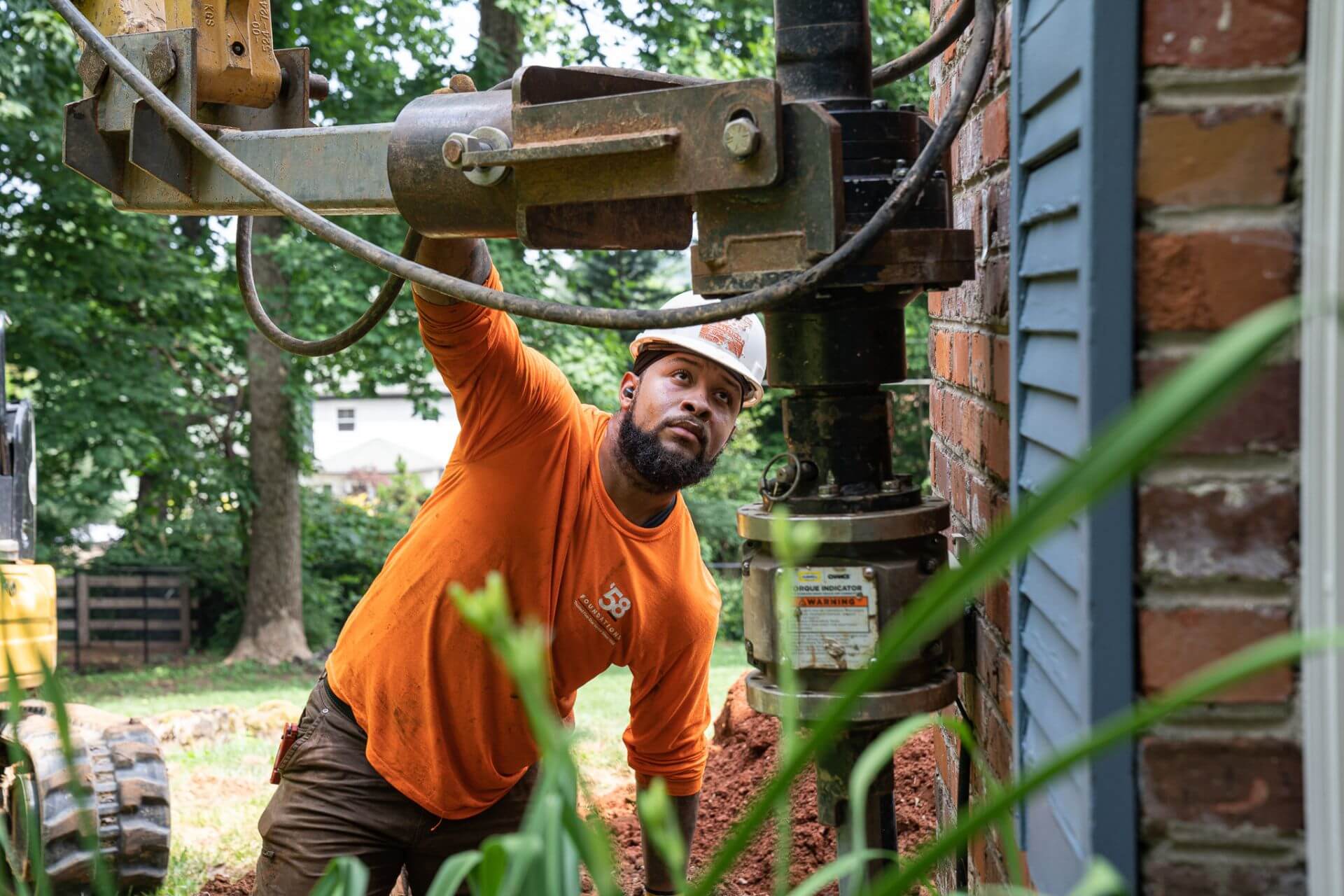
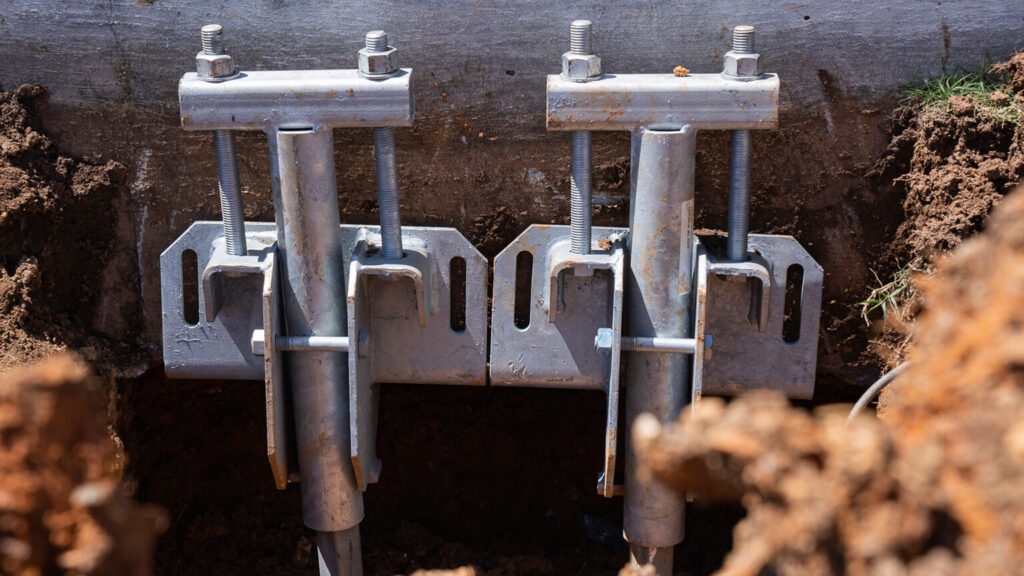
For homes experiencing settlement on cut-and-fill lots, helical piers are particularly well-suited to the variable soil conditions that graded terrain produces. They are screwed into the ground based on resistance rather than a preset depth, which allows them to find stable bearing wherever it occurs beneath the fill material. Once installed, they transfer the structural load off the compromised zone to stable soil or rock beneath it, stopping further settlement and, in favorable conditions, allowing the settled section to be partially lifted back toward its original position.
Push piers, driven hydraulically using the weight of the structure, are a strong option for heavier homes or situations where the settlement is more advanced, and the load transfer needs to be more robust.
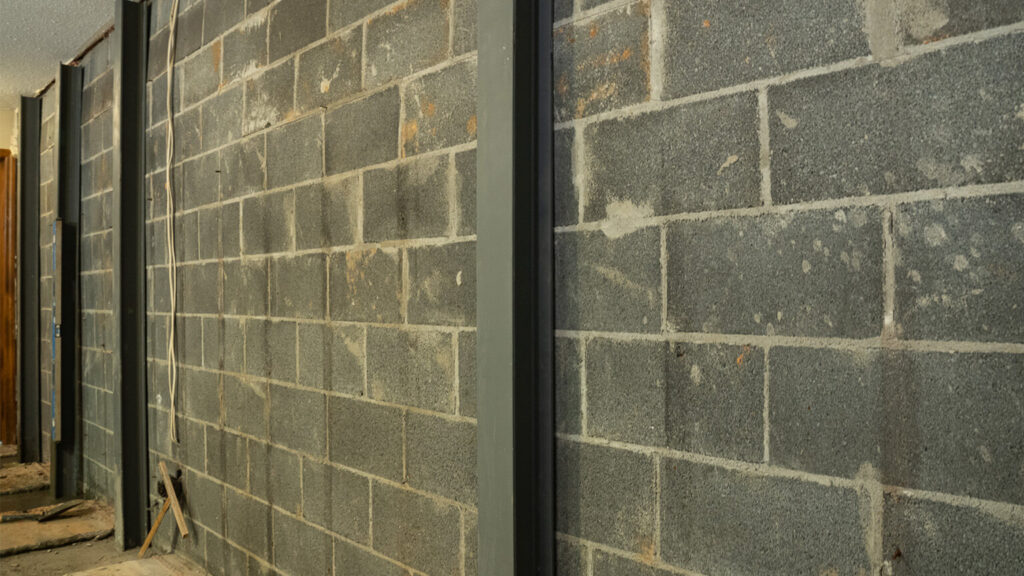
For valley floor homes where sustained clay saturation from the South Chickamauga Creek watershed has put consistent lateral pressure on foundation walls, the repair depends on how far the movement has progressed. Carbon fiber reinforcement stops early-stage wall deflection by locking the wall in place before the movement can advance. Steel I-beams can be installed on moving walls to keep them in place. For walls with more significant inward lean, wall anchor systems connect the foundation to stable soil further from the home, relieving the pressure that has built up over seasons of saturated clay pushing from outside.
Crawl space homes across Collegedale's older neighborhoods deal with the humidity and moisture exposure that the Tennessee Valley climate produces year-round. Wood beams and support posts that have spent decades in that environment are frequently in worse condition than the floor above them suggests. When those components have deteriorated to the point where they can no longer carry the load, the floor begins to sag and flex. We reinforce the floor system with support jacks and address the moisture conditions contributing to the ongoing deterioration.
For cracks that have stabilized and are no longer showing active movement, we seal them using flexible materials that move with the structure through seasonal changes. This closes the path for water intrusion and protects the joint from further deterioration. It is the appropriate fix for cracks that are done moving, not a substitute for addressing movement that is still ongoing.
Every repair we install is backed by our Life-of-the-Structure Warranty. Learn more about our Foundation Repair Solutions.»

Settlement on a graded hillside lot does not stabilize on its own. The fill material beneath the low side of the foundation keeps compressing under the weight of the home, and each wet season softens it a little further. The floor slope that seems minor today tends to be more noticeable in two years, and the door that sticks now may not close at all in five. By the time most homeowners call a foundation repair company, the movement has been building since construction.
Foundation piers stop that process by transferring the load off the compromised fill entirely. Once the weight of the home is carried by stable soil or bedrock beneath the problem zone, the settlement stops. In many cases, the settled section can be partially lifted, which closes gaps that have opened in the frame, reduces floor slope, and relieves the stress on door and window openings that have been racking out of square for years.
Helical Piers advance by rotation into the ground until they reach adequate resistance. On cut-and-fill terrain, where the depth to stable bearing varies across the footprint of the home, their ability to find that resistance at whatever depth it occurs makes them the preferred choice. They work in crawl spaces, cause minimal disturbance to the yard, and can be installed regardless of season.
Push Piers are driven hydraulically using the weight of the structure and are well-suited to heavier homes or situations where the load transfer needs to be more direct. They advance until they reach load-bearing material, at which point the home's weight shifts from the footing to the pier.
For Collegedale homeowners dealing with the kind of slow differential settlement that cut-and-fill construction produces, piers are not just a repair option. They are the only approach that addresses what is actually happening beneath the home.
Foundation repair cost in Collegedale depends heavily on what is driving the movement and how far it has progressed. A single wall showing early-stage deflection from clay pressure requires a very different scope than a home with differential settlement across two corners of the foundation and a crawl space full of deteriorated structural supports. The inspection is what determines the actual picture.
Factors that most commonly affect cost include:
What You Can Expect
After every inspection, we provide a detailed written proposal. You will receive a clear explanation of what is happening beneath your home, specific repair recommendations based on your foundation type and soil conditions, transparent pricing with no hidden costs, and a complete timeline with full warranty coverage. No pressure to decide on the spot, and no estimates that change once the work begins.
Hamilton County homeowners dealing with foundation problems deserve a foundation repair contractor who understands what the ground here actually does, not one applying a standard approach to a community where the soil conditions change from one street to the next.
'58 Foundations & Waterproofing has been repairing foundations across the Chattanooga region for decades. Our team understands the difference between what a valley floor clay problem looks like and what differential settlement on graded terrain looks like, and we design repairs around that distinction. When we recommend a solution, it is because the conditions at your specific home call for it.
Foundation problems in Collegedale tend to have specific, identifiable causes. Finding those causes accurately is what makes the difference between a repair that holds and one that has to be revisited. That is the work we show up to do.

If your floors have developed a slope, your doors have stopped behaving the way they used to, or you have noticed cracks that were not there a few years ago, the right move is to find out what is happening before another wet season adds to the load. Settlement on cut-and-fill terrain does not pause, and clay pressure does not relieve itself.

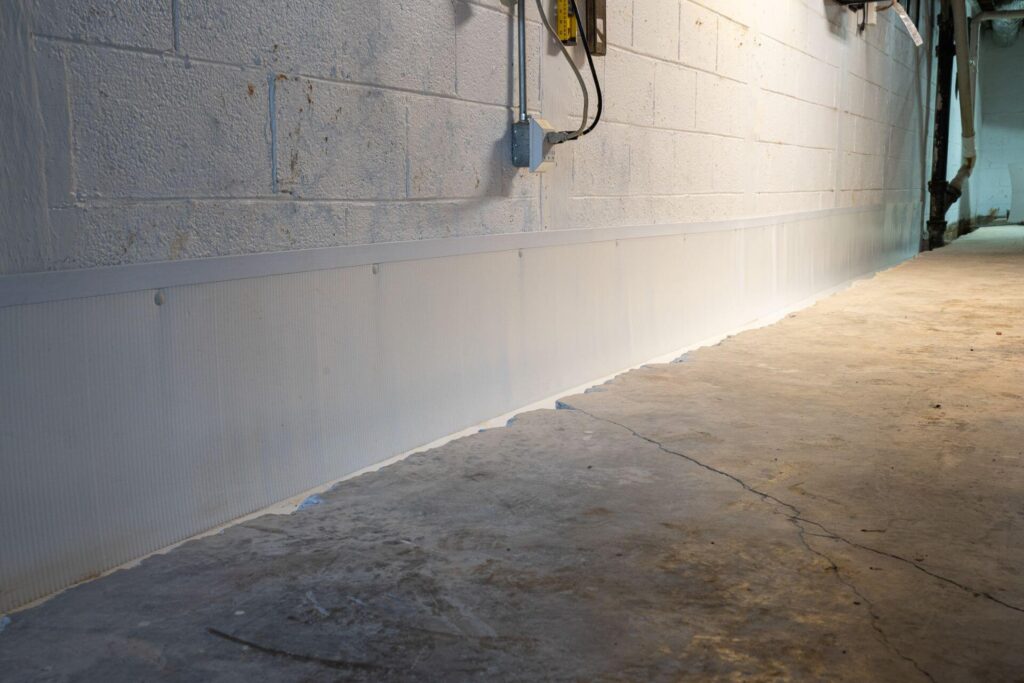
Collegedale, TN Basement Waterproofing
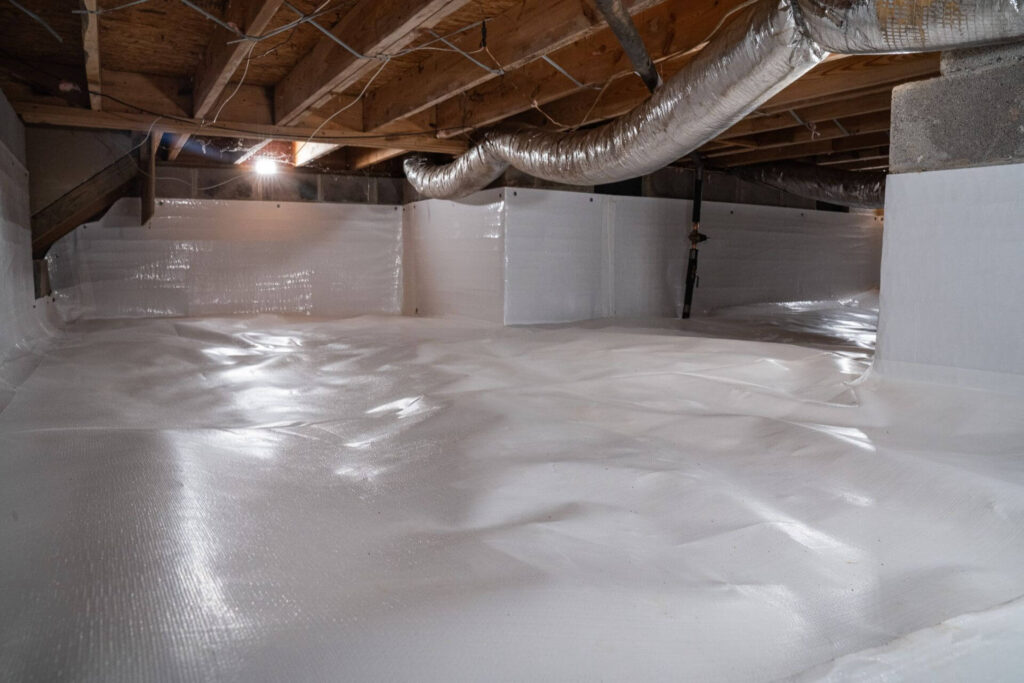
Collegedale, TN Crawl Space Encapsulation
We respect your privacy. By submitting, you authorize '58 Foundations and Waterproofing to reach you via call, email or text for information about your project needs. We will never share your personal information with third parties for marketing purposes. You can opt out at any time. Message/data rates may apply. Consent is not a condition of purchase. Privacy Policy