
Free Estimate
888-698-1958
Call for Priority Scheduling
888-698-1958
Call for Priority Scheduling
Book Online
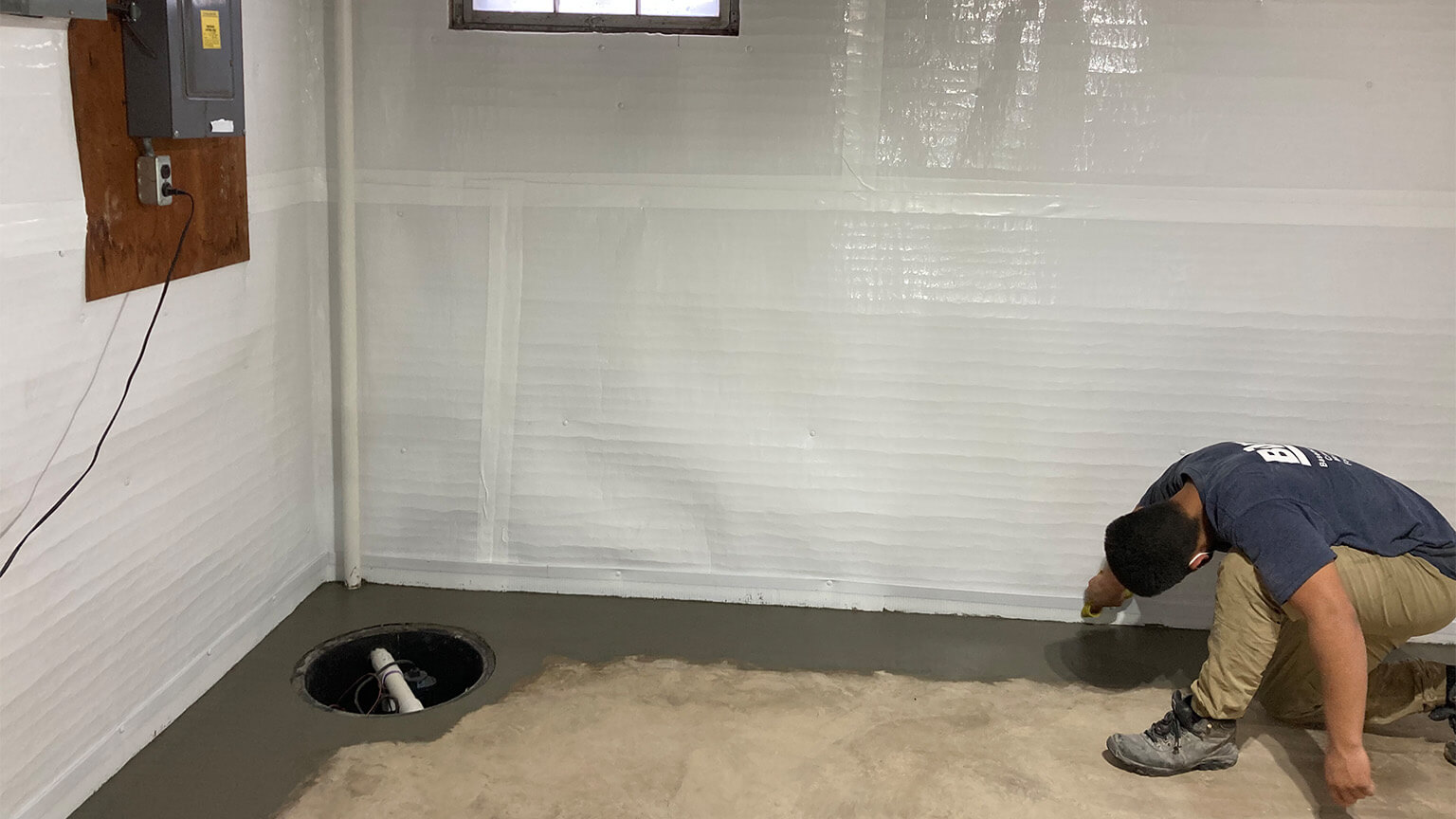
Basement water can show up in a dozen different ways, like musty smells, damp walls, or standing water after it rains. And once it’s there, it’s only a matter of time before it affects your foundation, indoor air quality, and comfort.
When homeowners look for a solution, most end up choosing between two main options: interior waterproofing, which is installed from inside the basement, and exterior waterproofing, which requires digging around the outside of the foundation. Both systems are designed to manage water, but they do it in very different ways.
At ’58 Foundations & Waterproofing, we’ve installed thousands of systems across the Mid-Atlantic and Southeast. We know what works and what holds up, through humid summers, clay-rich soils, and frequent storms. Below, we’ll break down the differences, show where each method fits, and explain why interior systems are often the smarter choice for existing homes.
Exterior waterproofing keeps water away from the foundation by sealing and draining it before it ever reaches your basement walls. It’s a full-scale approach that typically involves digging down to the footings and rebuilding a barrier from the outside in.
Here’s what that usually includes:
This method can be effective when installed correctly, especially on new construction. But it’s one of the most labor-intensive and expensive options for existing homes. If you have landscaping, driveways, or patios, those will likely be disturbed, and if any part of the system needs repair later, re-excavation may be required.
Interior waterproofing manages water after it enters through the foundation, but before it becomes a problem. Instead of fighting pressure from the outside, it creates a controlled path to collect and redirect water away from your basement and out of your home.
This is the solution we recommend most often at ’58 Foundations & Waterproofing. It works reliably across a wide range of homes and soil conditions, and it doesn’t require any digging or disruption to your yard.
A typical interior system includes:
Interior waterproofing is ideal for finished basements, older homes, and properties with ongoing seepage or damp walls. It’s installed entirely from inside the home, can be completed in a day or two, and is easier to maintain over time.
Not sure which waterproofing system makes more sense for your home? Here’s how interior and exterior methods stack up across key factors:
| Category | Exterior Waterproofing | Interior Waterproofing |
| Installation | Excavation to expose the foundation, followed by sealing and an external drainage system | Installed inside the basement along the perimeter with drains, a sump pump, and moisture control |
| Disruption | Major disruption to landscaping, patios, walkways, and access | Work stays inside with no excavation or impact to exterior features |
| Cost | Higher due to labor, equipment, and site restoration | Lower overall cost with minimal labor and no digging |
| Water Control | Stops water at the exterior foundation wall | Collects and redirects water safely once it enters |
| Timeline | Can take several days to complete | Most systems are installed in 1–2 days |
| Maintenance | Repairs may require re-excavation | Easy to inspect and service from inside the home |
| Best Use Case | New construction or open foundation access | Existing homes with seepage, dampness, or drainage issues |
Every home is different, and the right waterproofing system depends on the structure, soil conditions, water intrusion patterns, and long-term goals. But in most cases, especially for existing homes, interior waterproofing is the more practical solution.
It’s less invasive, more affordable, and easier to maintain. You won’t need to tear up your landscaping or worry about future repairs requiring excavation. For common basement issues like seepage, musty odors, or pooling water near the walls, an interior system is typically the best fit.
Exterior waterproofing still has its place. It can be a smart option during major renovations or new construction when the foundation is already exposed. In those situations, applying an exterior membrane and drain system can add another layer of protection from the outside in.
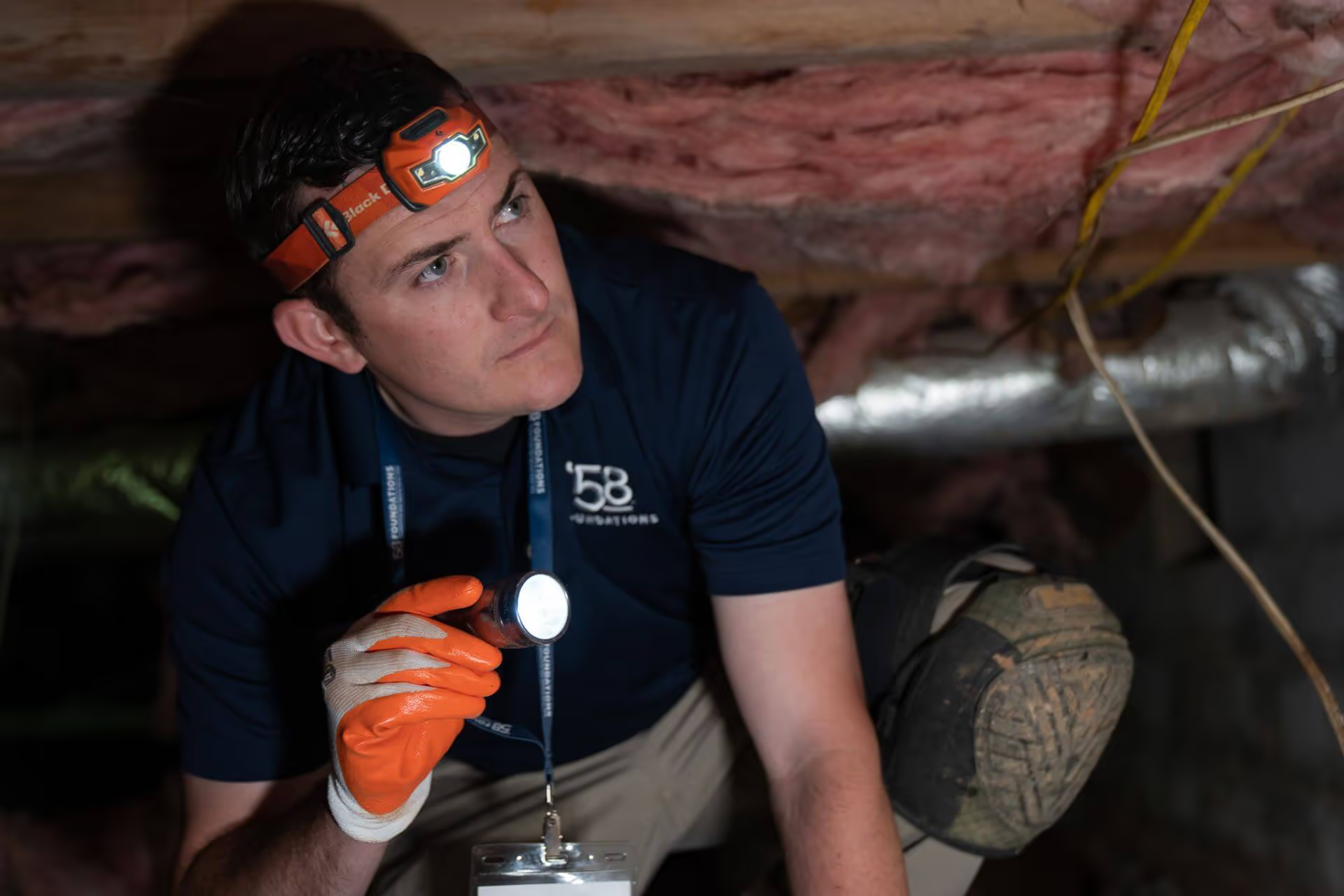
At ’58 Foundations & Waterproofing, we never push one-size-fits-all answers. We start with a thorough inspection, explain what’s happening under your home, and walk you through the options with no pressure. Whether you need interior drainage, exterior sealing, or a custom hybrid approach, we’ll help you choose based on what works and not what costs more.
If your basement feels damp, smells musty, or shows signs of water seepage, it’s time to take a closer look. At ’58 Foundations & Waterproofing, we’ve helped thousands of homeowners protect their basements with solutions that last.
We’ll inspect your basement for free, explain what’s really going on, and give you clear options that fit your home and budget. Whether you’re dealing with water after every storm or just want peace of mind before finishing a basement, we’re here to help.
Schedule your free inspection today and let our team help you take back your basement for good.





We respect your privacy. By submitting, you authorize '58 Foundations and Waterproofing to reach you via call, email or text for information about your project needs. We will never share your personal information with third parties for marketing purposes. You can opt out at any time. Message/data rates may apply. Consent is not a condition of purchase. Privacy Policy