
Free Estimate
888-698-1958
Call for Priority Scheduling
888-698-1958
Call for Priority Scheduling
Book Online
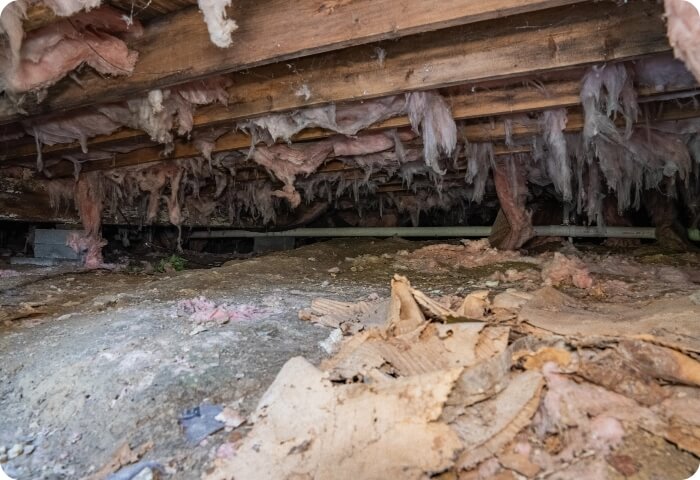
A crawl space goes through a lot between November and March. The ground around your foundation freezes and thaws repeatedly, saturating the soil and pushing moisture upward. Vented crawl spaces pull in cold outside air that condenses on floor joists and sits against the wood for weeks at a time. Wood that has absorbed that much moisture over a winter shows it. Left unaddressed, that moisture leads to mold growth, wood rot, and eventually structural damage to the framing that holds up your floor. Spring is the right time to look.
Crawl spaces sit at the intersection of two competing environments: the conditioned air inside your home above, and the ground below. In winter, the ground freezes and thaws repeatedly. Every freeze-thaw cycle shifts the soil, which puts lateral pressure on your foundation walls and forces ground moisture upward. If your crawl space has a dirt floor with no vapor barrier, or a barrier that's torn, bunched, or poorly sealed, that moisture has nowhere to go except into the wood framing above it.
At the same time, vented crawl spaces pull in outside air all winter long. The logic behind crawl space vents was that airflow would keep moisture out. What actually happens is the opposite: cold, humid air enters the space, meets the warmer surfaces of your floor joists and subfloor, and condenses. That condensation sits against the wood. Over months, it creates exactly the conditions that mold and rot need to get started.
By the time April arrives, a crawl space that looked fine in October may have spent five months getting worse with no visible sign from inside your home.
One of the first signs homeowners notice in spring is a musty smell coming from the ground floor, especially if it was not there in the fall. That odor often points to mold in the crawl space. Mold spores are light enough to travel upward through gaps in the subfloor and into the living space. If a room smells damp or stale and there is no visible source, the crawl space is one of the first areas to inspect.
Visible moisture is another early warning sign. Common red flags include:
These signs usually mean the crawl space is taking on more water than it can manage. In many cases, that moisture has been sitting there for days or even weeks before anyone notices.
Floor joists and support beams in a crawl space are dimensional lumber, meaning standard-cut wood boards like the 2x8s and 2x10s that make up most residential framing. Unlike the sill plates sitting directly on your foundation, which are required to be pressure-treated, the joists and beams above them often are not. That wood absorbs moisture from the air around it, and a crawl space that spent winter pulling in cold humid air gives that framing sustained exposure. Over time, that leads to swelling, shrinking, and the loosening of connections between structural members.
Wood rot is a separate but related problem. The fungi responsible for rot are present in virtually every soil environment. What keeps them inactive is the absence of sustained moisture. Once crawl space humidity stays elevated long enough, those fungi activate and begin breaking down wood fiber. A joist in early-stage rot doesn't look alarming. It looks worse every season it goes unaddressed.
Pest activity follows the same conditions. Termites require moisture to survive and tend to establish themselves in wood that humidity has already weakened. Rodents are drawn to damp spaces with available nesting material, and degraded crawl space insulation provides both.
The right repair depends on what the inspection finds, but most crawl space work addresses the same core problem: moisture getting in and staying in.
Crawl space encapsulation is typically the foundation of a durable fix. '58 Foundations & Waterproofing installs a heavy-duty liner across the floor and up the walls, sealing off the dirt and the ground moisture beneath it. The liner alone doesn't control humidity inside the space, but it eliminates the primary moisture source.
Humidity control comes from a dedicated dehumidifier. The HumidiGuard dehumidifier and air filtration system is built specifically for below-grade environments. It runs continuously, pulls moisture out of the air before it reaches the wood, and includes MERV 8 filtration to handle airborne particulates including mold spores. Unlike a portable unit from a hardware store, it's sized for the space and designed to run without manual intervention.
If water intrusion is the issue rather than ambient humidity, a crawl space sump pump system handles active water removal. It collects groundwater before it spreads across the floor and discharges it away from the foundation.
Where joists or supports have already been compromised, '58 Strong Floor Stabilizers restore structural integrity to the crawl space frame. They're engineered supports that get installed against weakened beams to stop movement and restore a level floor above.
Insulation replacement completes the picture. Saturated insulation is worse than no insulation in some respects because it holds moisture against the wood it's supposed to protect. New crawl space insulation, installed after the moisture source is addressed, actually performs.
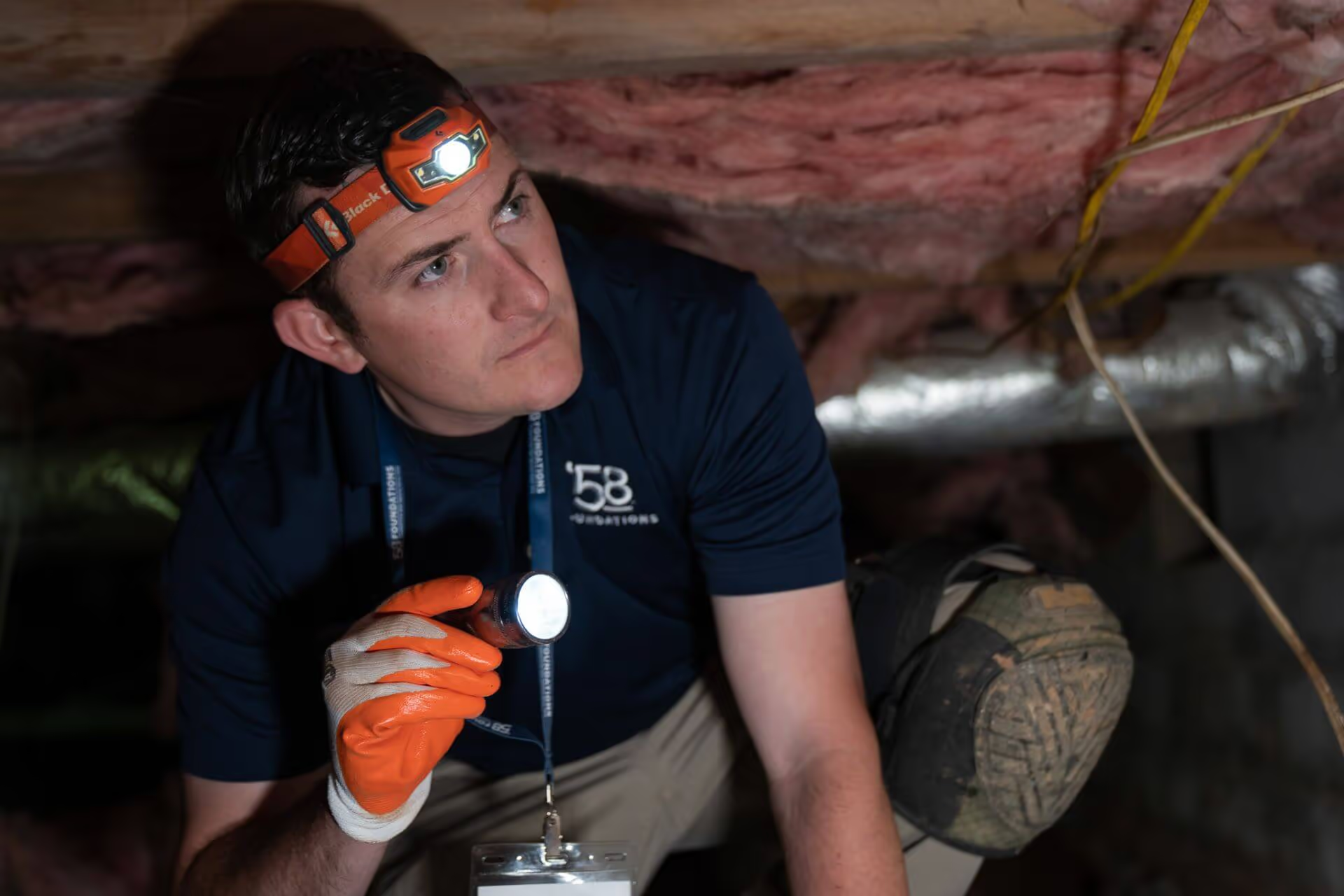
Mold spreads. Wood that has been weakened by moisture continues to degrade. The sooner a problem is identified, the less damage there is to repair. A free inspection from '58 Foundations & Waterproofing takes about an hour and gives you an accurate picture of what the crawl space looks like right now, before another season passes.





We respect your privacy. By submitting, you authorize '58 Foundations and Waterproofing to reach you via call, email or text for information about your project needs. We will never share your personal information with third parties for marketing purposes. You can opt out at any time. Message/data rates may apply. Consent is not a condition of purchase. Privacy Policy