
Free Estimate
888-698-1958
Call for Priority Scheduling
888-698-1958
Call for Priority Scheduling
Book Online
Count on '58 Foundations & Waterproofing for reliable foundation repair in Davidson County, NC. Our team inspects your home for cracks or settling, discusses solutions, and delivers repairs that restore strength and protect your property’s value.




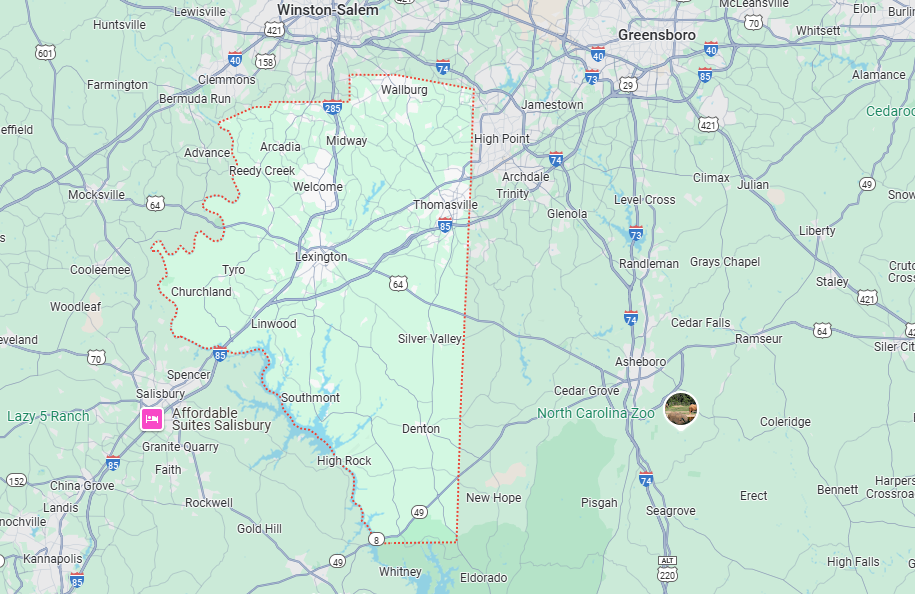
If you're seeing cracks in your walls, floors that have started to slope, or doors that no longer close properly, your foundation may be shifting. The heavy clay soil throughout the Piedmont is hard on foundations, and Davidson County has plenty of it.
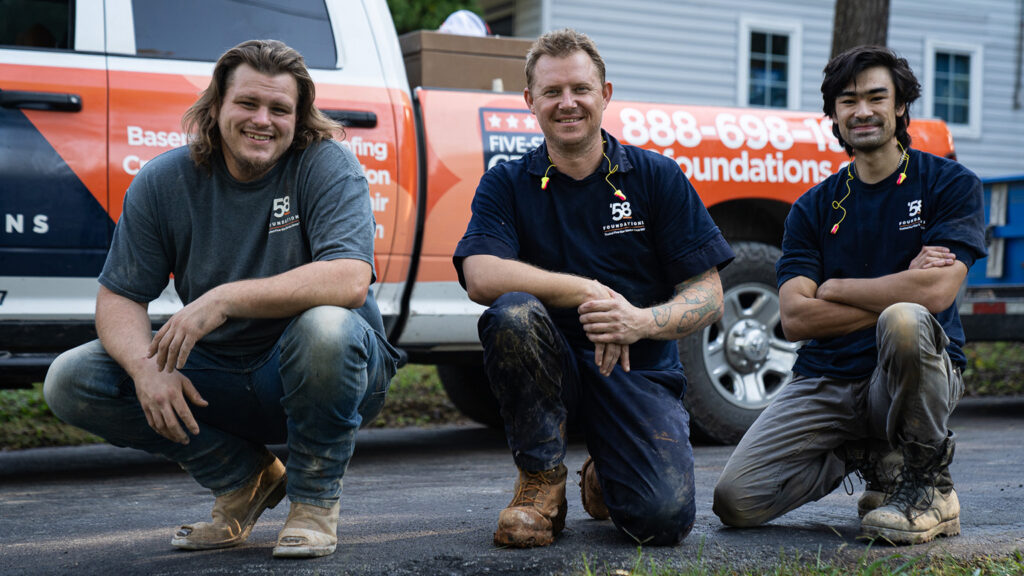
'58 Foundations & Waterproofing has repaired foundations across North Carolina since 1958. Our Certified Foundation Specialists know what this soil does to homes in this county, and they'll give you a clear, honest assessment of what's happening beneath yours and what it will take to fix it.
Davidson County sits in the NC Piedmont, where the soil is dense with clay. That clay absorbs water readily, swelling during wet seasons and contracting as things dry out. For a foundation, that means the ground underneath is never completely still. It shifts a little every year, and over time, that movement adds up.
Spring is typically when the stress is highest. Rainfall saturates the clay around and beneath foundations, adding both weight and lateral pressure against walls. Abbotts Creek and the tributaries that run through the county can raise the local water table, keeping soil wet longer than homeowners expect. When summer arrives, and the ground dries, that same soil pulls away, leaving gaps beneath footings where there used to be solid support.
Many homes in Lexington and Thomasville were built during the county's furniture and textile era, when grading and drainage standards were less rigorous than they are today. Downspouts that discharge too close to the foundation, yards that slope toward the house rather than away from it, and aging drainage systems can all funnel water directly to the base of the structure. On its own, any one of these factors is manageable. Together, they accelerate the kind of foundation movement that eventually shows up as cracks, settling, or shifting walls.
Most homeowners don't call a foundation repair contractor until something obvious forces the issue, but the earlier the damage gets assessed, the more options you have. These are the signs Davidson County homeowners most commonly notice first.
Diagonal cracks running from the corners of door and window frames are one of the more telling signs. They follow the path of least resistance as the framing above shifts. Horizontal cracks in drywall, cracks that reappear after being patched, or visible gaps where a wall meets the ceiling all point to movement happening beneath the structure.
A door that drags along the floor or a window that used to slide freely but now binds is often the first place homeowners notice something has changed. If multiple doors or windows are affected, the cause is more likely below the floor than in the frames themselves.
A floor that feels soft underfoot, dips in the middle of a room, or rolls noticeably from one side to the other points to something shifting beneath it. In homes with crawl spaces, this often means support posts or beams are no longer carrying the load they were designed to handle.
Horizontal cracks along a block or poured concrete wall are a sign of soil pressure pushing in from outside. Stair-step cracks along mortar joints in block walls follow the same pattern. Either type warrants an inspection, particularly if the crack is wider than a quarter inch or appears to be growing.
A basement wall that curves inward or leans at the top is under active lateral pressure from the soil outside. This is one of the more urgent signs, as walls in this bowing condition can worsen quickly after heavy rain.
A chimney that appears to tilt away from the house, or has a visible gap forming where it meets the siding, is often settling independently from the main foundation. Left alone, that separation widens.

At '58 Foundations & Waterproofing, the repair we recommend depends on what's actually happening beneath your home. Davidson County's clay soil creates specific conditions, and the solutions we install are chosen to hold up against them long term.
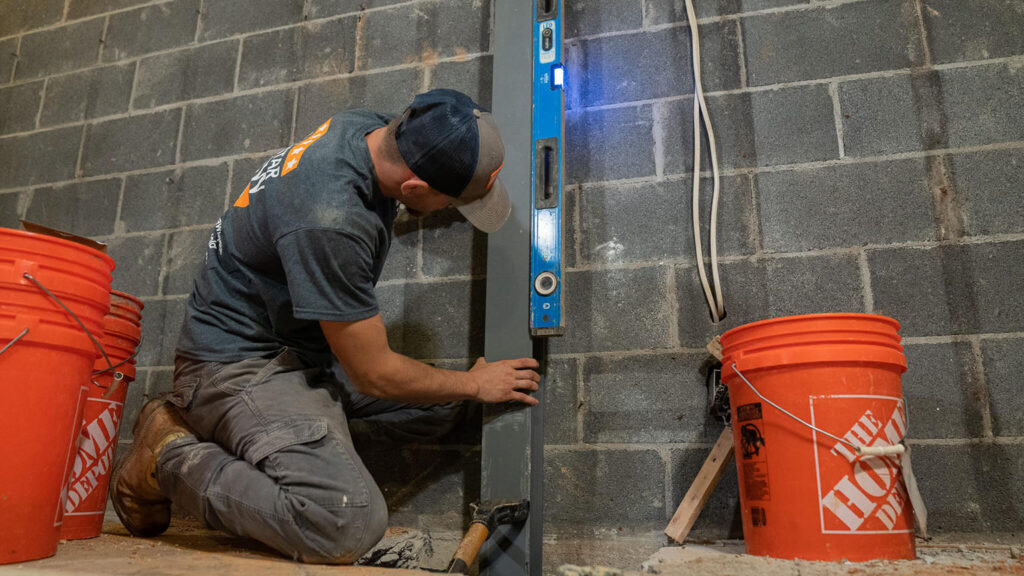
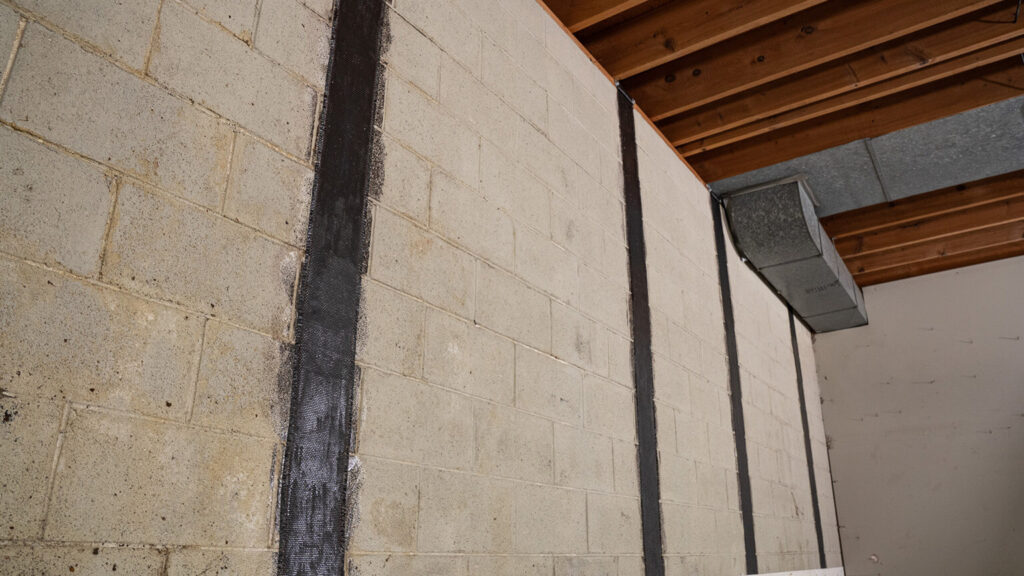
For basement walls that are bowing or leaning under soil pressure, we install carbon fiber straps or steel I-beams, depending on the degree of movement. Carbon fiber straps works well for walls in the earlier stages of deflection. Steel I-beams handle more advanced cases where the wall needs rigid reinforcement. For walls that have moved significantly, helical tieback anchors are driven through the wall into stable soil outside, pulling the wall back toward its original position over time.
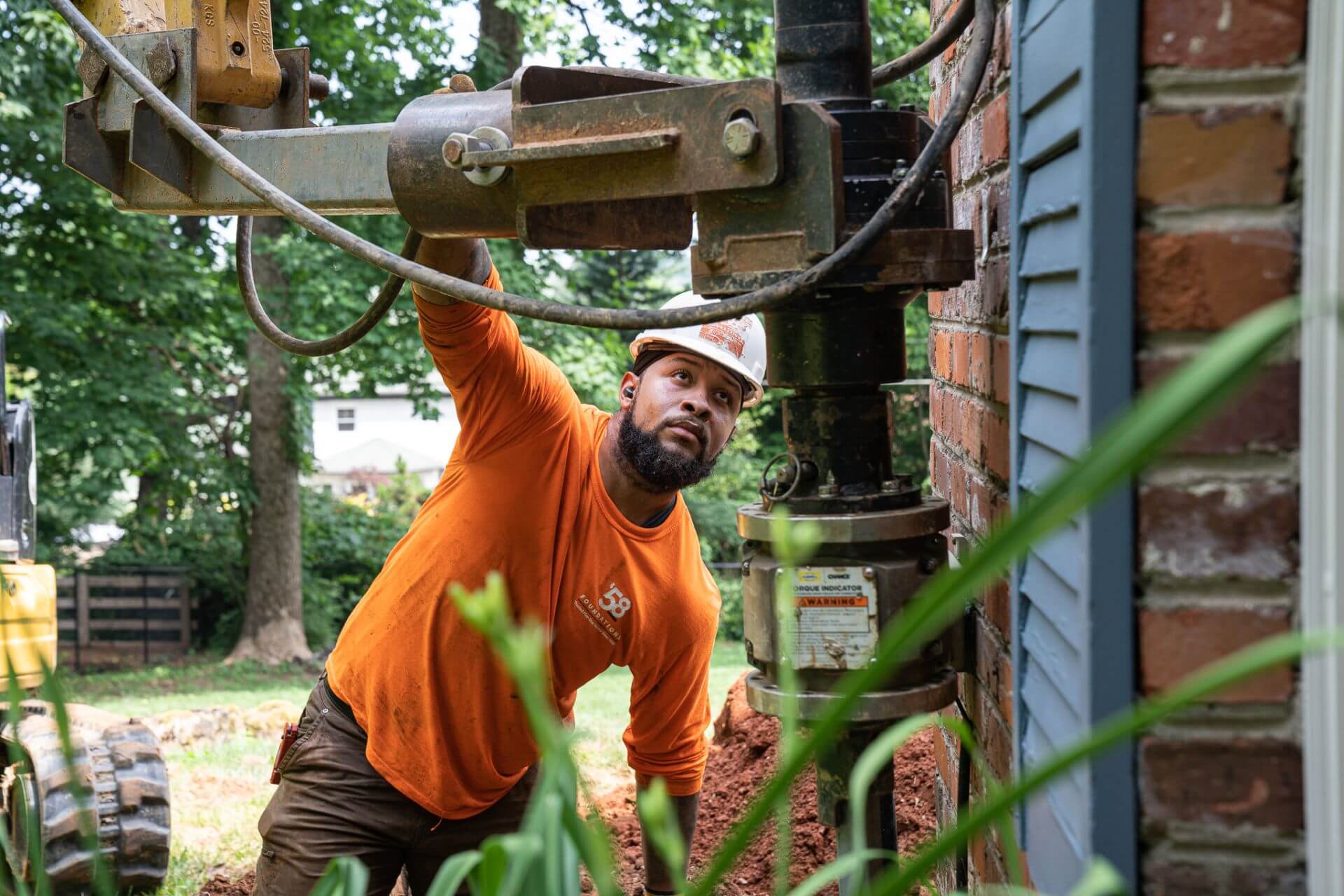
When a foundation is settling or sinking, piers are driven beneath the footing to transfer the weight of the home to stable load-bearing soil below the active clay layer. We install helical piers, which are screwed into the ground and work well for lighter structures, and push piers, which are hydraulically driven until they reach solid resistance. Both systems can stabilize a settling foundation and, in many cases, allow us to recover some of the lost elevation.
Many older homes in Lexington and Thomasville were built on crawl spaces with wood beams and block piers that have deteriorated over the decades. When those supports fail, the floors above them soften and slope. We reinforce failing posts and beams with adjustable steel supports that restore the load-bearing capacity beneath the floor.
For leaking cracks in poured concrete or block walls, we use flexible sealants designed to move with the structure through seasonal changes. This prevents water intrusion through compromised joints and slows further deterioration along the crack line.
Concrete basement floors can crack when the soil beneath them heaves or settles, both of which happen regularly in Davidson County's clay-heavy ground. When a crack is uneven, meaning one side sits higher than the other, or when a crack is visibly widening, it needs more than a filler. We install carbon fiber floor stitches across the crack to bridge and reinforce the concrete, then finish with an epoxy filler. The repair holds up under finished flooring and prevents the crack from continuing to spread.
[Learn more about our Foundation Repair Solutions]
When a foundation is settling, the problem isn't the concrete itself. It's the soil beneath it. Davidson County's clay shrinks during dry stretches, leaving voids under footings that the foundation slowly sinks into. Patching the visible damage above doesn't address what's happening below. Piers do.
A foundation pier is a steel shaft driven through the unstable clay layer down to soil or bedrock that can actually bear the weight of the home. Once installed, the load transfers off the compromised footing and onto the pier. In many cases, we can use that same system to recover some of the elevation the foundation has lost.
Helical piers have steel plates welded along the shaft in a helix pattern, allowing them to be rotated into the ground like a large screw. They don't rely on the weight of the structure to install, which makes them the right choice for lighter loads, additions, porches, or areas where access is limited. They can also be installed in wet conditions, which matters in a county where spring soil saturation is common.
Push piers are hydraulically driven straight down using the weight of the home itself as resistance. Installation continues until the pier meets the refusal point, the depth at which the soil or rock below can no longer be penetrated. That resistance is what tells us the pier has reached a stable bearing layer. Push piers are typically used for heavier structures or more advanced settlement where a larger load transfer is needed.
Both systems are permanent. Neither requires excavation around the foundation, which keeps disruption to landscaping and the surrounding yard minimal.

Foundation repair costs in Davidson County vary widely, and the visible damage isn't always a reliable guide to what's actually needed. A crack in the basement floor might be a surface issue that a few carbon fiber stitches will handle. It might also be the first sign of a foundation that has been settling for years and needs piers. The same crack, two very different repairs, and two very different costs.
That distinction matters because treating the symptom without understanding the cause is how homeowners end up paying twice. A Certified Foundation Specialist looks at the full picture: the crack, yes, but also the surrounding walls, the floor slope, the soil conditions outside, and the history of the home. The repair we recommend is based on what's actually driving the problem, not just what's visible on the surface.
'58 Foundations & Waterproofing provides free inspections and written estimates before any work begins. You'll receive a clear explanation of what was found, what caused it, and what it will take to correct it, with transparent pricing and no pressure to decide on the spot.
Foundation repair isn't a category where you want to gamble on experience. The work happens beneath your home, most of it out of sight, and the consequences of getting it wrong compound over time.
'58 Foundations & Waterproofing has been repairing foundations across North Carolina since 1958. Our Certified Foundation Specialists are trained to diagnose what's driving the damage, not just describe what they see. Every inspection is honest, every estimate is written, and there's no high-pressure sales process attached to either.
A few things that set us apart:
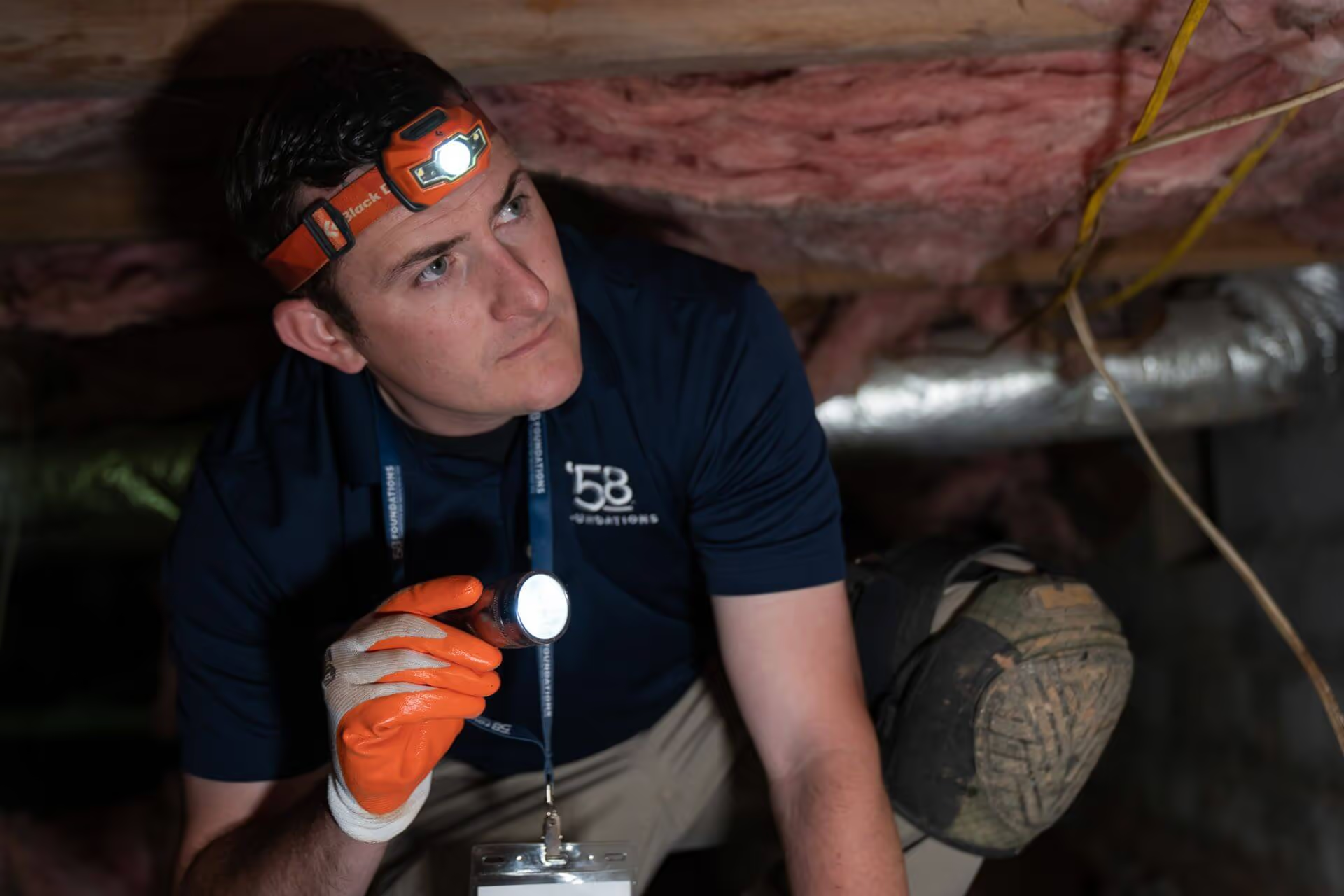
Certified Foundation Specialists. Our inspectors are trained specifically in foundation diagnostics. They know what Davidson County's clay soil does to homes over time and they'll give you a straight answer about what yours needs.
Life-of-the-Structure Warranty. Most of our foundation repairs are backed by one of the strongest warranties in the industry. That coverage transfers to a new owner if you sell the home, which matters when buyers ask questions during inspection.
No subcontracted crews. The team that shows up is our team. We don't hand jobs off to third parties, which means consistent workmanship and a single point of accountability from inspection through completion.
Transparent pricing. Your written estimate covers everything. No surprises when the job is done.
When Davidson County homeowners are looking for a foundation repair contractor they can trust with a significant investment, those details matter. We've built our reputation on getting the diagnosis right and standing behind the work long after the job is finished.
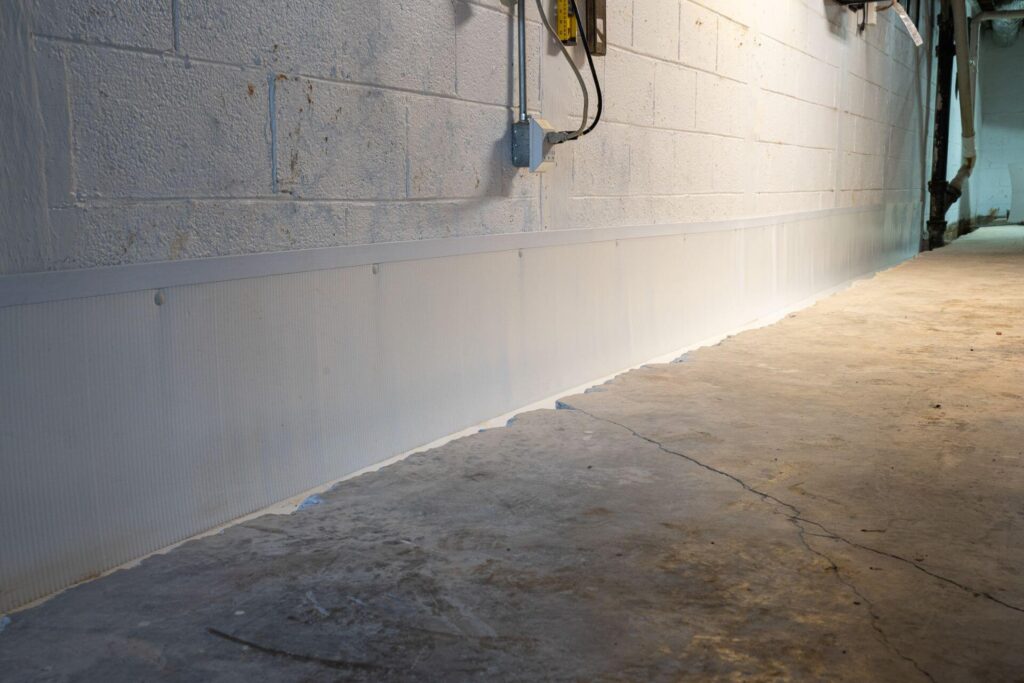
Davidson County Basement Waterproofing
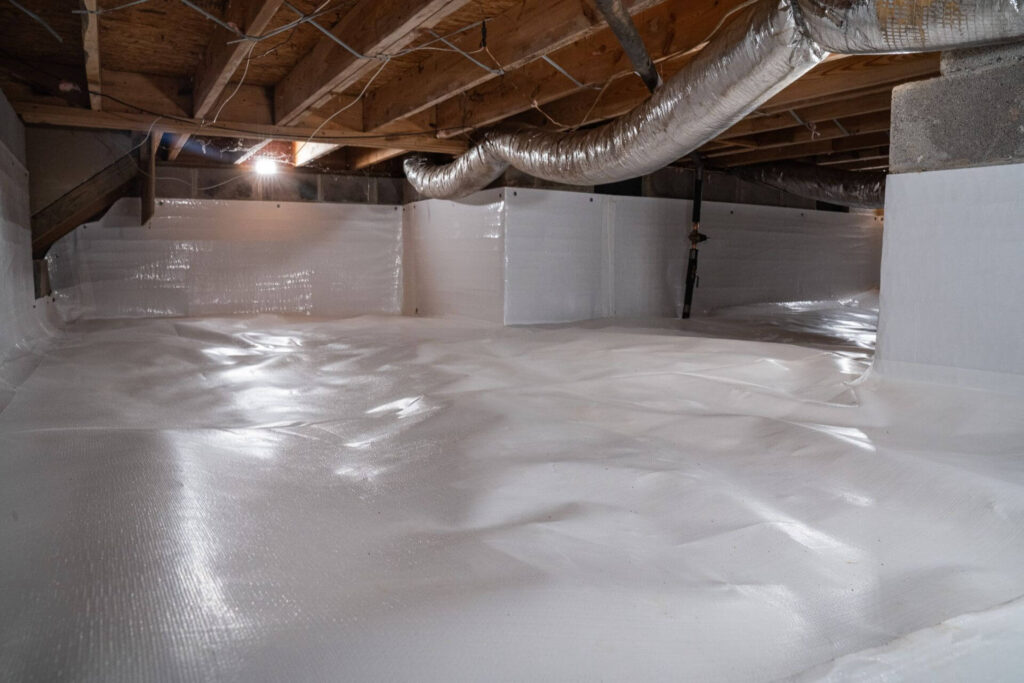
Davidson County Crawl Space Encapsulation
We respect your privacy. By submitting, you authorize '58 Foundations and Waterproofing to reach you via call, email or text for information about your project needs. We will never share your personal information with third parties for marketing purposes. You can opt out at any time. Message/data rates may apply. Consent is not a condition of purchase. Privacy Policy