
Free Estimate
888-698-1958
Call for Priority Scheduling
888-698-1958
Call for Priority Scheduling
Book Online
Seal out moisture, mold, and high humidity with crawl space encapsulation in Knoxville. ’58 Foundations & Waterproofing protects your home’s structure, air quality, and long-term comfort.
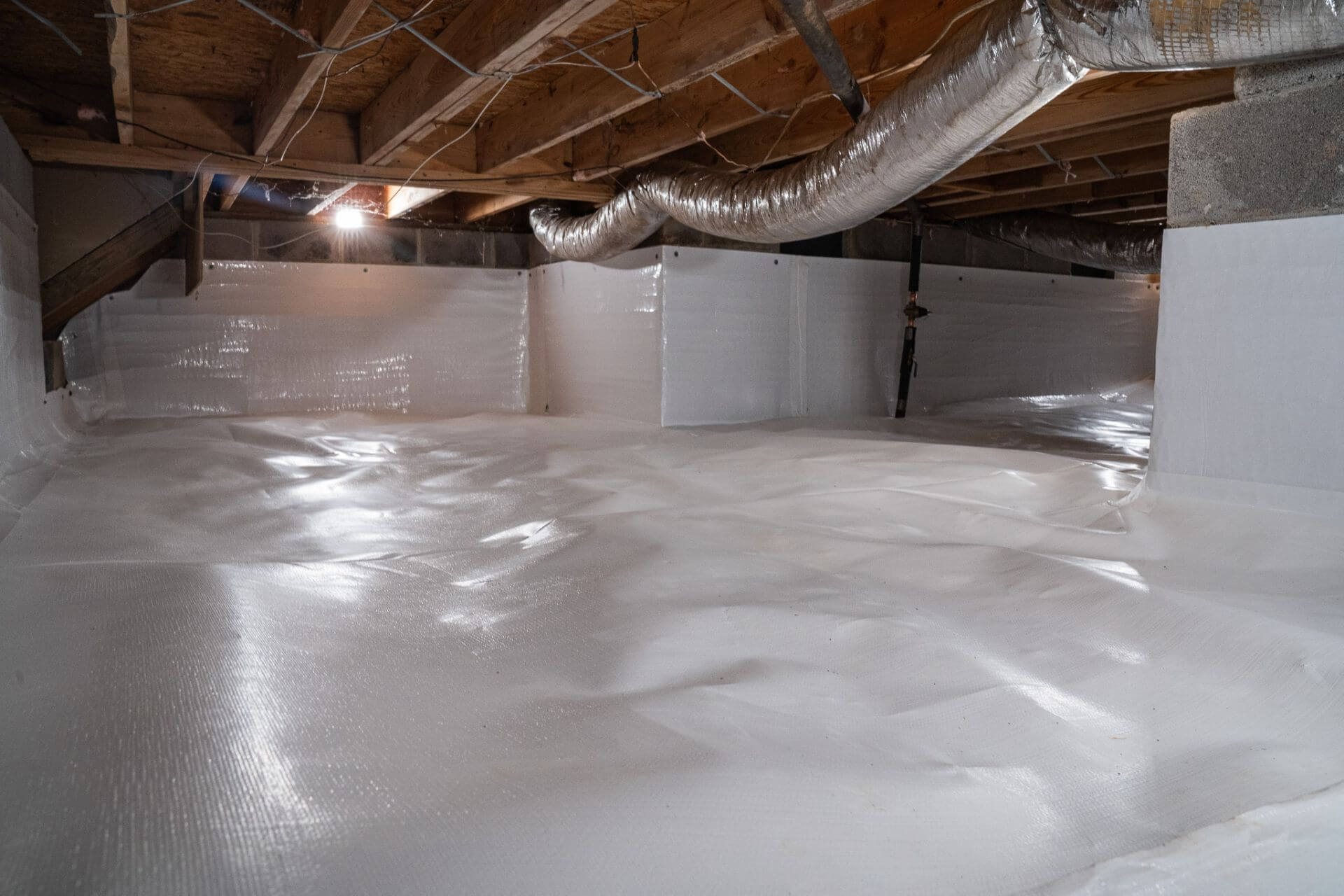




Most of Knoxville rests on red clay weathered from limestone and dolomite, and that clay holds water long after a storm drains off the surface. Add about 52 inches of rain a year and summers that stay hot and muggy from July into September, and the crawl space under your floor stays wet with no easy way to dry out. When that space has open foundation vents, a bare dirt floor, or a thin plastic sheet standing in for a real vapor barrier, the moisture works into the joists, soaks the insulation, and rises into the air your home pulls up through the floor.
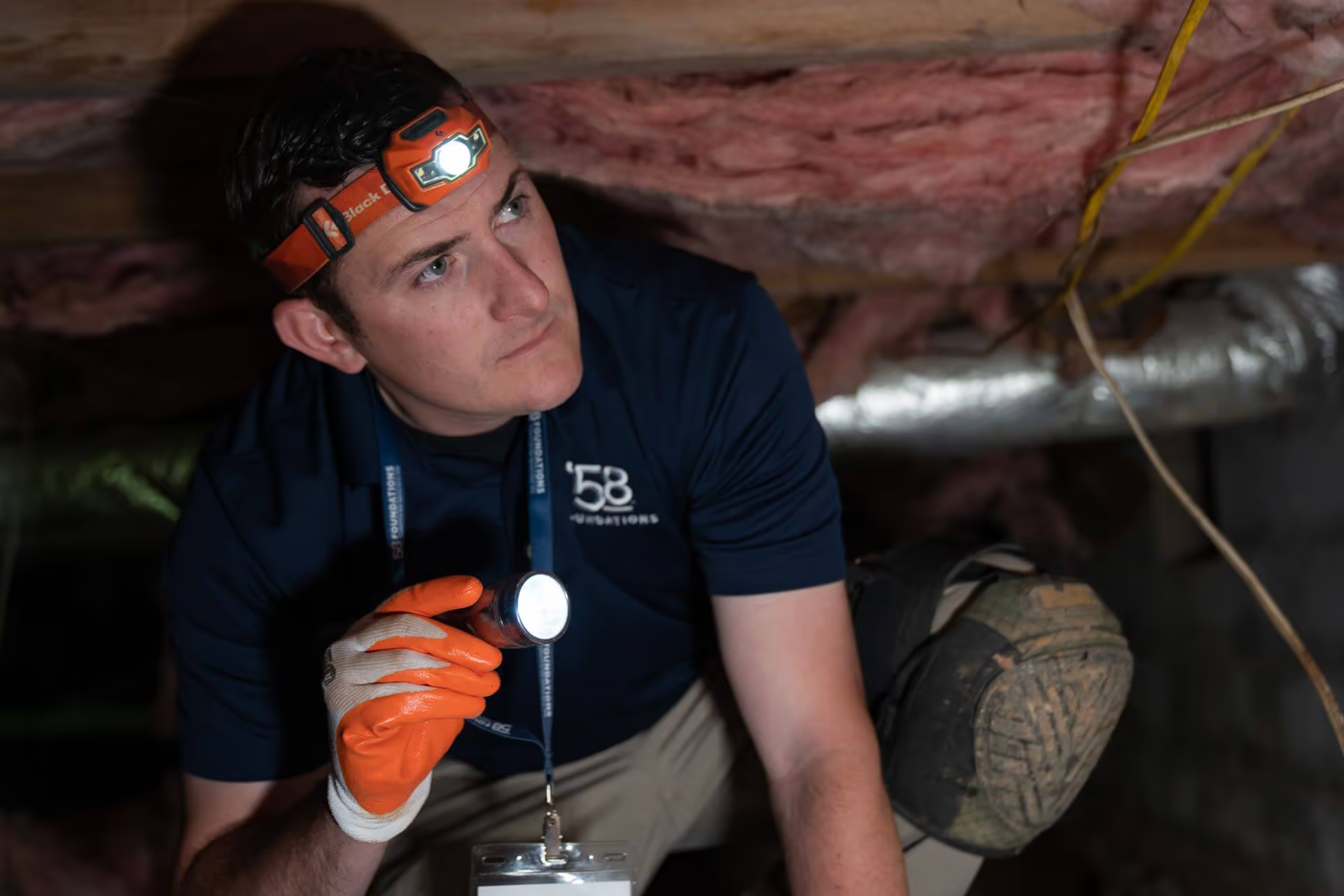
A crawl space encapsulation seals that space off from the ground and the outside air so the moisture stops feeding mold, wood rot, and high indoor humidity. '58 Foundations & Waterproofing has worked under East Tennessee homes since 1958, and every crawl space inspection is handled by a Certified Foundation Specialist who shows you what is happening below the floor and explains what it will take to correct it. The work is backed by our Life-of-the-Structure Warranty, and we never hand the job to a subcontracted crew.
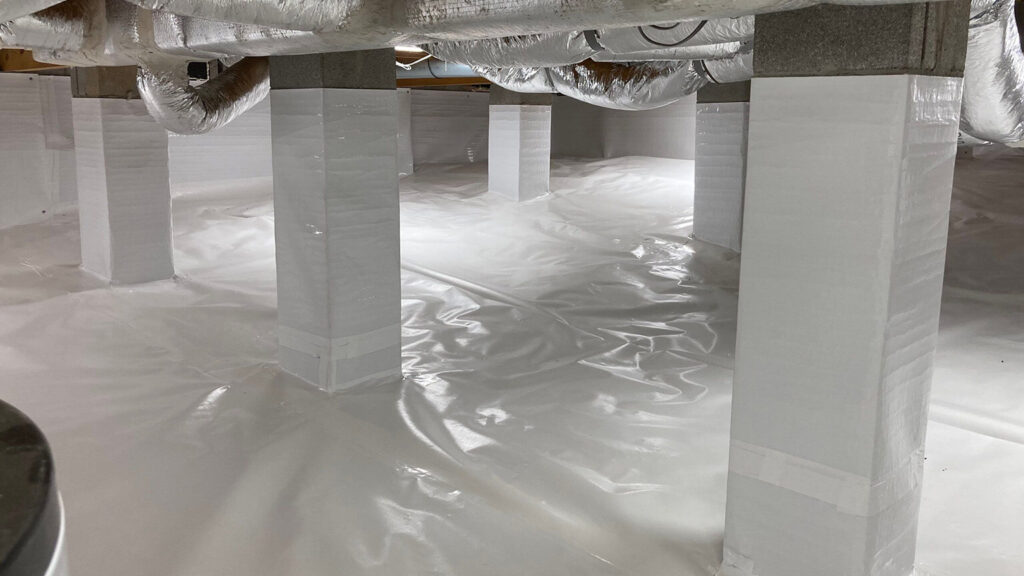
The limestone and dolomite beneath Knox County dissolve unevenly over thousands of years, leaving a pitted bedrock surface threaded with seams that carry groundwater sideways in directions you cannot read from the yard. A crawl space can show a damp seep in one corner while the ground a few feet away looks dry. Where the house sits matters as much as what runs beneath it: a home low on a lot or at the foot of one of the city's many slopes takes on the runoff shedding off everything above it, and the clay holds that water close to the foundation. More than four feet of rain falls here in an average year, and that red clay drains too slowly to carry it off.
Much of Knoxville's housing predates sealed crawl spaces entirely. The streetcar suburbs north of downtown, Old North Knoxville and Fourth & Gill among them, filled in between the 1880s and the 1930s with Victorians, foursquares, and Craftsman bungalows. The hillside neighborhoods that followed, Sequoyah Hills and Holston Hills, went up from the 1920s through World War II, and ranch homes filled the gaps after that. Most sit on raised foundations built on the old assumption that an open, vented crawl space would stay dry on its own.
That assumption fails in this climate. Warm, damp summer air drifts through the vents into the cooler crawl space, meets the framing and ductwork, and condenses into water. A space meant to breathe itself dry instead draws moisture in from late spring well into fall, and a newer home sealed over the same clay still answers to the same humidity.
Warm air rises through a house and pulls air up from below with it, so what happens in the crawl space tends to surface in the rooms you actually use. You might notice a smell, a soft spot underfoot, or a window that will not clear long before you think to look under the house. These are the signs worth checking.
A musty, earthy smell on the main floor. A damp crawl space pushes musty air up into the house, and it often gets stronger when the HVAC kicks on and starts drawing air from below.
Floors that sag, dip, or feel soft underfoot. Moisture weakens the wood framing that carries your floor, so a hallway that bounces or a soft spot near an exterior wall can point straight down to the crawl space.
Mold or rotted wood under the house. Black staining on the joists or wood that gives when you press it means the space has stayed wet long enough for decay to set in.
Windows that fog and air that never feels dry. When crawl space moisture loads the air your home circulates, indoor humidity stays high even with the HVAC running through the summer.
Insulation that sags or falls between the joists. Fiberglass that hangs loose or has dropped to the ground has soaked up moisture and lost its hold, a clear read on how wet the space below has become.
Insects or rodents near the vents and ductwork. A damp, dark crawl space draws termites, spiders, and small animals, and standing water or open vents give them an easy way in.
Any one of these can show up on its own, but they trace back to the same source: water collecting in the crawl space. The longer it sits, the further it works into the framing and the more it takes to undo. An inspection is the only way to confirm what is driving the problem and how far it has already reached.

Every crawl space we seal starts with how water is getting in, because a vapor barrier laid over a space that still takes on groundwater only traps the problem underneath it. Where water collects under the house, we install an interior drainage system that routes it to a sump pump and carries it away from the foundation, so the ground is dry before anything goes over it.
With the water handled, we encapsulate the space: a heavy vapor barrier across the floor and up the walls, vents and gaps sealed, and the open foundation closed off from the humid air that has been feeding the moisture. To hold the space dry through a Knoxville summer, we add a HumidiGuard™ dehumidifier that runs continuously and keeps humidity at a level wood and insulation can hold up against.
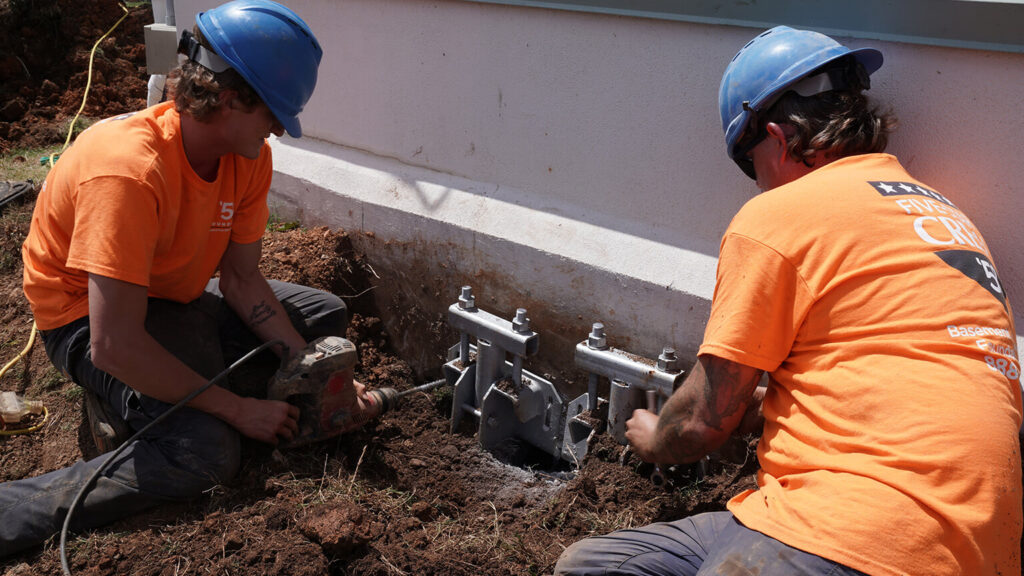
Where moisture has already reached the framing, sealing alone will not carry a sagging floor. We set 58 Strong floor stabilizers to support the joists and bring the floor back toward level, so the structure is repaired alongside the conditions that weakened it. A dry, sealed crawl space also loses its appeal to the termites, rodents, and insects that were drawn to the damp in the first place.
Every inspection and installation is handled by a Certified Foundation Specialist, never a subcontracted crew, and the work is backed by our Life-of-the-Structure Warranty.
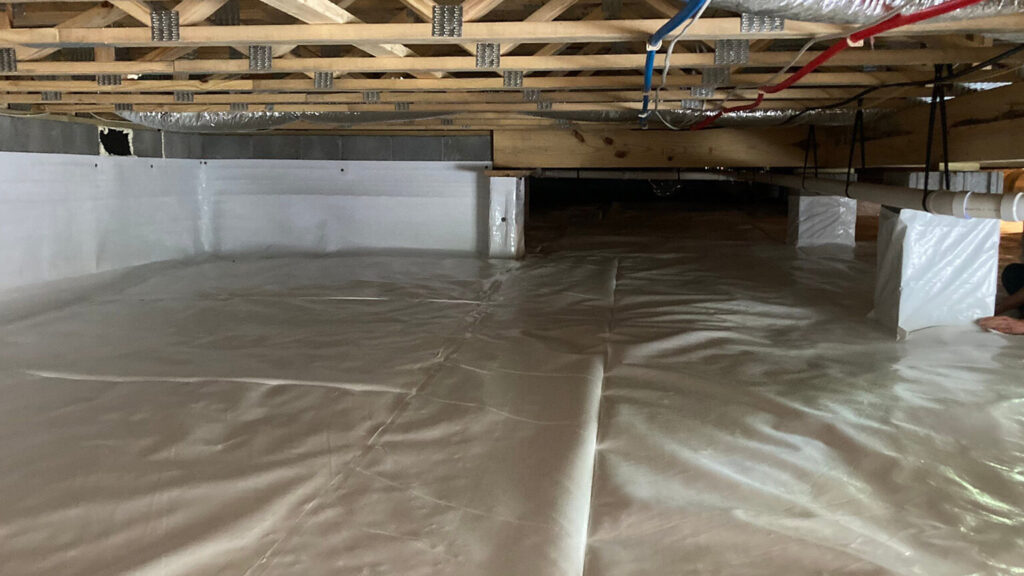
The size of the crawl space sets the baseline, since a larger footprint takes more vapor barrier, more sealing, and more labor to cover. The bigger variable is the condition underneath. A dry space that needs little more than a barrier and vent sealing sits at one end of the range, while a space with standing water, rotted framing, or mold needs drainage, structural repair, or cleanup before the seal can go in, and each of those adds to the scope.
What the system includes moves the price from there. A home collecting groundwater needs an interior drain and sump pump that a dry crawl space can skip, and a dehumidifier sized to hold the space dry through a Knoxville summer adds to it as well. Each piece earns its place by what the inspection finds, and the work it heads off is usually the costlier problem: framing repairs, mold remediation, and the higher cooling bills a damp house runs all summer.
A Certified Foundation Specialist inspects the crawl space free of charge and shows you what is driving the condition before any number is quoted. You get a clear scope and an honest estimate up front, so the cost reflects what your home actually needs.
'58 Foundations & Waterproofing has worked under homes across East Tennessee since 1958, long enough to know how Knoxville's clay, slopes, and summer humidity actually behave under a house. That experience shows up in the inspection. A Certified Foundation Specialist walks the crawl space, shows you what is driving the moisture, and explains the fix in plain terms, rather than handing you a quote for a system you cannot see the reason for.
The crew that does the work is ours. We never subcontract a job out, so the people sealing your crawl space answer to the same standard as the specialist who inspected it. That continuity is part of why the work holds up, and it is backed by a Life-of-the-Structure Warranty and a money-back guarantee if the system does not perform as promised.
The track record sits behind all of it: an A+ rating from the Better Business Bureau, a 4.8 out of 5 average across more than 2,000 reviews, and recognition from This Old House. For a Knoxville homeowner deciding who to let under the house, those are the signals that the job will be done once and done right.
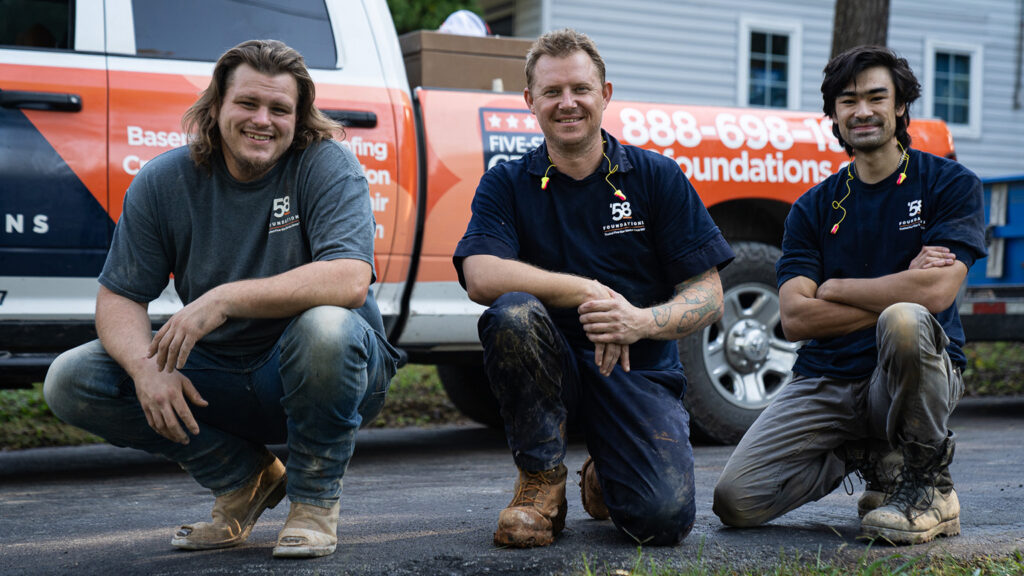
The longer a crawl space stays wet, the further the moisture works into the framing and the more it takes to put right. Catching it while the fix is still a barrier and a dehumidifier, before it becomes joist repair, is the difference a single inspection can make.
A Certified Foundation Specialist will come out, walk the space, and show you exactly what is happening under your floor and what it will take to correct it, at no cost and with no obligation to book the work. Schedule your free Knoxville crawl space inspection and find out where your home stands.
Knoxville Basement Waterproofing,
We respect your privacy. By submitting, you authorize '58 Foundations and Waterproofing to reach you via call, email or text for information about your project needs. We will never share your personal information with third parties for marketing purposes. You can opt out at any time. Message/data rates may apply. Consent is not a condition of purchase. Privacy Policy