
Free Estimate
888-698-1958
Call for Priority Scheduling
888-698-1958
Call for Priority Scheduling
Book Online
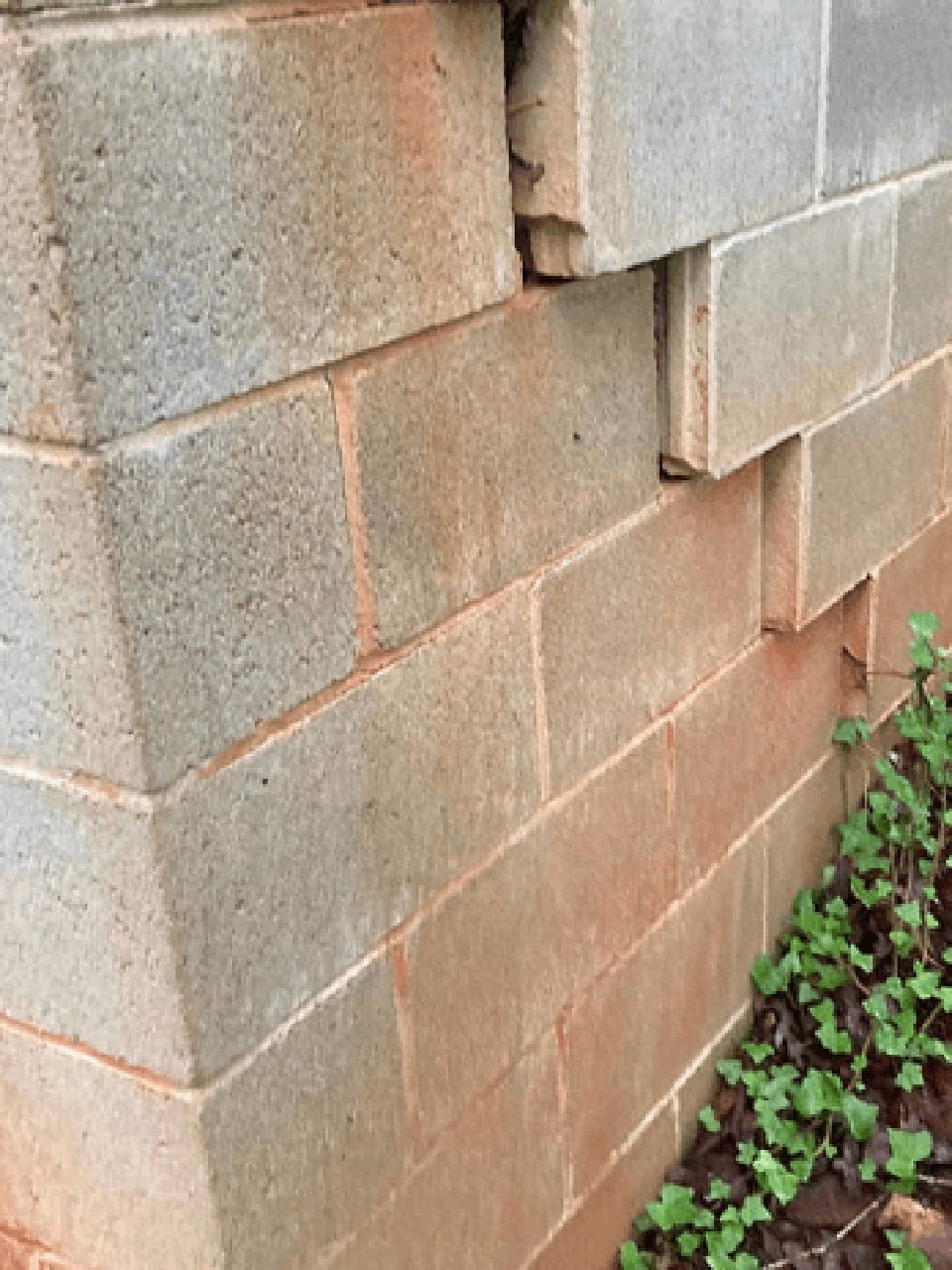
If you've spent any time digging in your yard in Charlotte, Greensboro, Spartanburg, or anywhere across the Carolina Piedmont, you already know the soil here. It's dense, it sticks to everything, and it turns a deep brick red when it's wet. That color comes from iron oxide in the clay, and the same properties that give it that distinctive look are what make it one of the more challenging soil types for a home foundation to sit in over the long term.
Red clay expands when it absorbs water and contracts when it dries out. A foundation wall built into that soil is never sitting in completely stable ground. It's sitting in ground that shifts with every rain cycle and every dry stretch, and over years and decades that movement adds up.
Red clay soil behaves differently than most soil types, and the effects build up gradually in ways that aren't always obvious until the damage is already underway. It holds water longer than sandy or loamy soil, generates more pressure against a foundation wall when saturated, and shrinks more dramatically when it dries out. That combination puts a foundation through a stress cycle that repeats with every rain event and every dry stretch. Over years and decades, homeowners start noticing things that seem unrelated but usually aren't.
These aren't random problems. In most Piedmont homes they trace back to the same source: red clay soil doing what red clay soil does over time.
Schedule a free inspection with '58 Foundations
Red clay soil doesn't cause problems in isolation. The Piedmont's rainfall pattern is what keeps the expansion and contraction cycle active. The region gets rain distributed fairly evenly across the year, but it tends to arrive in heavy events rather than slow, steady accumulation. A thunderstorm that drops two inches in an hour saturates clay soil faster than it can drain, and that sudden saturation is what spikes hydrostatic pressure against foundation walls.
Summer in the Piedmont brings the opposite extreme. Extended stretches of heat and low rainfall pull moisture out of the clay, shrinking it back and opening those gaps along the foundation. Then when fall rain returns, the dry soil absorbs the first heavy rain quickly, and the expansion cycle starts again harder than it would if the soil had stayed consistently moist.
Homeowners who have lived in their houses for years sometimes notice that basement water problems get worse over time even though nothing obvious has changed. The foundation hasn't suddenly gotten weaker. The soil has just been through enough cycles that the small gaps and cracks it opened up over the years have given water more places to get in.
Most homes across the Carolina Piedmont are built on crawl space foundations rather than full basements. That construction type sits closer to the ground, which means the floor system is directly in the zone where red clay holds moisture longest. It also means the foundation walls are shorter, and lateral pressure from saturated clay has less distance to distribute across before it concentrates at the base.
Older homes in established neighborhoods around Charlotte, Greensboro, and Spartanburg add another layer to the problem. Foundations poured decades ago were built to different standards, and the concrete and block used in that era is more porous than modern materials. Water that would bead off a newer wall works its way through an older one. Cracks that would stay hairline in more stable soil get worked open faster by the expansion and contraction cycle red clay produces.
Homes built on sloped lots, which are common across the hilly Piedmont terrain, face additional drainage pressure on the uphill side of the foundation. Water moving downslope concentrates against that wall rather than dispersing evenly around the perimeter, and the soil on that side stays saturated longer after a heavy rain than the rest of the yard.
The repairs that hold up in Piedmont soil are the ones designed around what the soil actually does. Wall anchors driven into stable ground beyond the zone of clay movement stop inward pressure on bowing walls and in many cases allow gradual straightening over time. Pier systems installed through the unstable clay layer down to load-bearing soil below address settlement by giving the foundation support that seasonal moisture changes can't affect.
For water intrusion, Channel 58 interior drainage intercepts water at the point of entry and routes it to a sump pit before it spreads. The Workhorse OT battery backup sump pump keeps the system running through the heavy storms that drive the most pressure against Piedmont foundations. In crawl spaces, encapsulation with a vapor barrier and a HumidiGuard dehumidifier manages the persistent moisture that red clay keeps feeding into the space year after year.
'58 Foundations has been doing this work since 1958. The inspection is free, the estimate is written, and the crews who do the work are '58 employees, not subcontractors.
Red clay soil puts the same pressure on a foundation every year, and the damage accumulates. What looks minor now tends to look very different after another few seasons. If you're seeing cracks, bowing walls, water in the basement, or moisture problems in your crawl space, '58 Foundations can diagnose the problem and fix it.
Schedule a free inspection with '58 Foundations and find out what the soil under your home has been doing.





We respect your privacy. By submitting, you authorize '58 Foundations and Waterproofing to reach you via call, email or text for information about your project needs. We will never share your personal information with third parties for marketing purposes. You can opt out at any time. Message/data rates may apply. Consent is not a condition of purchase. Privacy Policy